
Introduction
South Africa’s Muslim community — approximately 1.5 to 1.9 million people, concentrated in the Western Cape, KwaZulu-Natal, Gauteng, and the Eastern Cape — has built one of the most organised and mature Islamic educational networks in the African continent. Hundreds of madrasahs operate across the country, most running afternoon and Saturday sessions for Muslim children alongside their mainstream schooling. Dozens of Hifz schools provide intensive Qur’an memorisation programmes. Several Darul Ulooms offer advanced Islamic scholarship at seminary level.
These institutions are the bedrock of South African Muslim life. They have survived apartheid, post-apartheid transformation, and every economic and social disruption the country has faced. They are run, overwhelmingly, by dedicated volunteers, part-time teachers, and community committees who give their evenings and weekends to ensure Muslim children receive their Islamic education.
In 2026, that dedication operates within a more demanding environment than it did a generation ago. POPIA (the Protection of Personal Information Act) imposes real data protection obligations on any organisation holding personal information about South Africans — including madrasahs. Community expectations for structured, transparent management have risen. Parents expect regular progress reports, not just a verbal update at collection time. And the administrative burden of running a madrasah — fee collection, attendance, Hifz tracking, parent communication — is heavier than any volunteer committee should be carrying on paper.
This guide provides the complete framework for running a South African madrasah properly in 2026 — legally, administratively, and educationally.
The South African Madrasah Landscape in 2026
South African madrasahs typically fall into one of four categories:
Afternoon madrasah (most common): Operating Monday to Friday from approximately 3:30pm to 5:30pm, serving primary and early secondary school-aged children. Curriculum covers Qur’an recitation (Nazirah), Islamic Studies, and Arabic. Often mosque-attached and committee-governed.
Saturday/weekend madrasah: Operating Saturday mornings (and sometimes Sundays), typically 2–4 hours. More common in communities where weekday afternoon sessions are impractical due to distances or work patterns. Often serves a broader age range including secondary school students.
Hifz school: Dedicated Qur’an memorisation institutions, ranging from small home-based programmes to large, structured schools with full-day intensive programmes. South Africa has a rich Hifz school tradition, particularly in the Cape Malay and KwaZulu-Natal Muslim communities.
Darul Uloom: Seminary-level institutions providing advanced Islamic scholarship. South Africa has several established Darul Ulooms, including Dar al-Uloom Zakariyya (Lenasia), Madrasah In’aamiyyah (Camperdown), and others. These operate at a significantly higher level of institutional complexity than community madrasahs.
The majority of this guide addresses the afternoon/Saturday madrasah — the backbone of South African Islamic education.
Governance: Structuring Your Madrasah Committee
Sound governance is the single most important determinant of a madrasah’s long-term success. Without it, the institution depends on specific individuals — and when those individuals move, retire, or become unavailable, the institution struggles.
The Essential Governance Structure
Principal / Head of Madrasah: Educational leader — responsible for curriculum quality, teacher management, student welfare, and day-to-day operations. Reports to the committee.
Chairperson: Leads the management committee, chairs meetings, represents the institution to external bodies, and ensures governance accountability.
Secretary: Maintains committee minutes, handles correspondence, and keeps institutional records.
Treasurer: Manages all financial matters — fee collection records, bank account oversight, payment of teachers, and financial reporting to the committee.
Safeguarding / Child Protection Lead: A named individual responsible for child protection policy, staff vetting records, and responding to any welfare concerns.
Governance Best Practices
Separate the committee from operations. The committee sets direction and holds the principal accountable; the principal runs the madrasah. A committee that micromanages teaching or overrides the principal on educational decisions undermines both governance and educational quality.
Meet regularly and minute everything. Minimum: once per term. Each meeting should have an agenda, attendance record, and minutes that are approved at the next meeting and retained permanently. Minutes are the institutional memory of governance decisions.
Implement financial controls. No single person should have sole authority over the madrasah’s bank account or cash. Require two signatories for any payment above a defined threshold (typically R500 for small madrasahs). Reconcile the bank account monthly.
Term limits for committee positions. Perpetual occupancy of committee positions by the same individuals is a governance risk. Three-year terms with a maximum of two consecutive terms for any position is a reasonable standard.
Legal Structure: Charity, Section 21 Company, or Trust?
Most South African madrasahs operate under one of three legal structures:
Under a mosque’s existing legal structure: The most common arrangement. The madrasah operates as an activity of the mosque, which is itself incorporated as a Section 21 company (non-profit company) or a Trust. No separate registration required; the mosque’s legal entity covers the madrasah. The madrasah’s income and expenditure appear in the mosque’s financial statements.
As an independent Non-Profit Company (NPC) — formerly Section 21: Appropriate for larger or independent madrasahs. Registration with the Companies and Intellectual Property Commission (CIPC) is required. Provides separate legal personality, limiting personal liability for committee members. Annual financial statements must be prepared; annual returns must be filed with CIPC.
As a Trust: Registration with the Master of the High Court. Trustees have personal legal accountability. Appropriate for madrasahs holding significant assets (property, endowments). More complex to administer but provides strong asset protection.
Charitable status with SARS: Regardless of legal structure, madrasahs meeting the requirements as Public Benefit Organisations (PBOs) under the Income Tax Act can register with SARS for PBO status — exempting income from tax and enabling Section 18A tax deductions for donors. Registration with the Receiver of Revenue (SARS PBO unit) is strongly recommended for any madrasah receiving donations.
Registration: What South African Madrasahs Need
Recommended registrations for all South African madrasahs:
- SARS PBO registration: For income tax exemption and donor deduction certificates. Apply through SARS eFiling once your legal structure is in place.
- CIPC registration (if not under mosque NPC): For independent madrasahs establishing their own legal entity.
- Information Regulator registration (POPIA): Any organisation processing personal data of South Africans — which every madrasah does — must comply with POPIA. Registration with the Information Regulator is the formal compliance step.
Optional but recommended:
- Muslim Judicial Council (MJC) recognition: For Western Cape madrasahs, MJC recognition provides community credibility and connection to the broader Cape Muslim educational network.
- Jamiatul Ulama South Africa (JUSA) affiliation: For KwaZulu-Natal and Gauteng madrasahs, JUSA provides curriculum support, teacher training, and institutional recognition.
- Association of Muslim Schools (AMS-SA): The national association for Muslim schools in South Africa. Membership provides access to professional development, curriculum resources, and advocacy representation.
POPIA and Data Protection
The Protection of Personal Information Act (POPIA), which came into full effect in July 2021, applies to every organisation that processes personal information about South Africans — including community madrasahs.
What POPIA requires:
Every madrasah must have:
- A lawful reason to collect each type of personal data (registration for Islamic education — clearly legitimate)
- A privacy notice informing parents of what data is collected, why, and how it is used
- Appropriate security measures to protect personal data — encrypted storage, access controls
- A retention policy — data must not be kept longer than necessary
- A named Information Officer (typically the principal or a committee member) responsible for POPIA compliance
- A process for responding to data access requests from parents or students
What POPIA prohibits:
- Storing student personal data in insecure systems (unprotected spreadsheets, personal cloud accounts)
- Sharing student data in WhatsApp groups (each parent’s data is being shared with all other group members without their consent to that specific sharing)
- Retaining student records indefinitely after a student has left
POPIA and WhatsApp:
This is the most practically significant POPIA issue for South African madrasahs. When a teacher posts attendance information, progress notes, or any student-identifiable information in a parent WhatsApp group, that information is being disclosed to potentially 100+ other parents. Each of those parents’ phones now holds information about a child who is not their own. This is a POPIA violation — and it is happening in almost every South African madrasah every day.
For a full POPIA compliance guide: POPIA and Data Protection for South African Islamic Schools →
Curriculum: Designing Your Programme
The Standard South African Madrasah Curriculum
South African madrasahs typically cover five core areas:
1. Qur’anic Education
- Qa’idah: Arabic alphabet and basic reading — for students at foundation level
- Nazirah: Reading the full Qur’an from the Mushaf with Tajweed
- Hifz: Memorisation programme for committed students — typically offered at dedicated Hifz schools or in a separate stream
2. Tajweed
Formally taught as a subject at upper primary levels — rules of Qur’anic recitation including makharij, sifaat, and the Tajweed rules governing recitation
3. Islamic Studies (Taaleem)
- Aqeedah: Islamic theology and belief — pillars of Islam and Iman; appropriate depth by age
- Fiqh: Islamic law of worship — Salah, Sawm, Zakah, Hajj — with practical application emphasis
- Akhlaq: Islamic character and conduct — integrated throughout but explicitly taught
- Seerah: Life of the Prophet ﷺ — chronological through the school years
4. Arabic Language
- Basic Arabic reading and comprehension at lower levels
- Grammar (Nahw and Sarf basics) at upper levels for students continuing to Darul Uloom
5. Islamic History
- Khulafa ar-Rashidun and early Islamic period
- History of Islam in South Africa — the Cape Malay tradition, the history of Muslim communities in KZN and Gauteng — particularly relevant for South African students
Curriculum Documentation
A written curriculum document — even a two-page level-by-level guide — makes the difference between a madrasah that maintains educational consistency when teachers change and one that starts over each time. Document what is taught at each level. Specify the textbooks used. Set learning outcomes by end of each year.
Recommended South African Madrasah Resources
- Taalimi Board of South Africa: Provides curriculum frameworks and examinations for madrasahs, particularly in KwaZulu-Natal
- Muslim Judicial Council (MJC): Cape Town — curriculum support and teacher training for Western Cape madrasahs
- TALIM (Taaleem and Learning Islamic Materials): South Africa-specific Islamic educational materials
- Darul Uloom Zakariyya: Teacher training and curriculum support
Staffing: Finding, Vetting, and Retaining Teachers
Qualifications
For Qur’an teaching: The teacher must be a Hafiz or at minimum have completed Nazirah with strong Tajweed. For a Hifz programme specifically, the teacher must be a Hafiz — non-negotiable.
For Islamic Studies: A qualification from a South African Darul Uloom, a Darul Uloom or Islamic university abroad, or the Taalimi Board’s teacher certification programme. At lower primary levels, strong personal Islamic knowledge combined with good communication skills may be sufficient.
For general madrasah teaching: Many South African madrasahs accept teachers with strong Islamic backgrounds who receive mentoring from the principal. Formalise this with structured induction training and ongoing observation.
Vetting Requirements
Before any person — paid teacher or volunteer — begins working with students, the following must be completed:
Police Clearance Certificate: A valid police clearance certificate (obtained from SAPS or online through the Department of Justice). This is the South African equivalent of a DBS check. No person should be in contact with children at your madrasah without a current police clearance certificate on file.
Reference checks: Two professional or character references — at least one from a previous educational or Islamic institution. Speak to the references; do not rely on written letters alone.
Identity verification: A copy of the teacher’s South African ID or passport on file.
Written employment / volunteer agreement: Even for part-time or volunteer teachers, a written agreement specifying role, hours, expectations, and the madrasah’s code of conduct.
Compensation
South African madrasah teacher rates in 2026 typically range from:
- Part-time afternoon madrasah (2 hours/day, 5 days/week): R2,500–R6,000/month
- More established full-programme madrasahs: R6,000–R12,000/month for qualified teachers
- Experienced Hifz teachers: R8,000–R20,000/month depending on qualification and location
Pay on time, every month, without exception. Late payment is the most commonly cited reason for teacher departure from South African madrasahs.
Retention
The South African madrasah teacher pool is limited — qualified Huffaz and Alims who want to teach at community level are not abundant. Retention matters as much as recruitment. What retains teachers:
- Consistent, timely payment
- Clear role expectations with appropriate authority
- Recognition from the committee — a simple acknowledgement at year-end makes a significant difference
- Reduced administrative burden — a management system that handles attendance, parent communication, and reporting reduces teacher workload
- Professional development — subsidised attendance at teacher training through MJC, JUSA, or Taalimi Board
Fee Structures That Work in South Africa
Calculating Your Real Costs
| Cost Category | Example (80-student afternoon madrasah, Cape Town) |
| Teacher salaries (3 × R5,000) | R15,000 |
| Premises (mosque contribution or rent) | R2,000 |
| Materials (books, stationery) | R1,500 |
| Utilities | R500 |
| Administration | R500 |
| Reserve fund (10%) | R1,950 |
| Monthly total | R21,450 |
| Per-student monthly breakeven | R268 |
| Fee with 15% vacancy buffer | R310/month |
Typical South African Madrasah Fee Ranges (2026)
- Community-subsidised mosque madrasahs: R150–R400/month
- Independent afternoon madrasahs: R300–R800/month
- Hifz schools (intensive programmes): R800–R2,500/month
- Darul Ulooms (boarding): Varies widely — R2,000–R8,000/month
EFT and SnapScan
South African parents pay primarily by EFT bank transfer or SnapScan/Zapper (QR code payment). Provide a dedicated madrasah bank account (not a personal account). Never accept fee payments into a personal account.
For EFT payments, provide a unique reference format: student surname + first initial (e.g., “MOOSA-F”) so that bank deposits can be matched to the correct student without manual reconciliation.
Bursary Policy
Every madrasah should have a formal, written bursary policy — a clear framework for fee reduction or waiver for families demonstrating financial hardship. The policy should specify: how to apply, who decides, what documentation is required, and how decisions are recorded. This protects the institution from perceptions of favouritism and ensures that genuine hardship is addressed consistently and respectfully.
Student Records: The Minimum Required
Each enrolled student’s file must contain:
Personal: Full name, date of birth, address, parent/guardian names and contacts (minimum two), emergency contact, medical information (allergies, chronic conditions relevant to school attendance).
Academic: Class level, starting date, Qur’anic starting level, current Qur’anic position, subject assessment results.
Attendance: Per-session record for the current academic year.
Financial: Complete fee payment history, any bursary arrangement documentation.
Vetting-related: Any safeguarding notes (held separately with restricted access).
These records must be held institutionally — not on individual teachers’ personal devices or in notebooks that leave with the teacher. When a teacher resigns, their class records must remain intact and accessible.
Qur’anic Progress Tracking
The most important educational tracking function in any South African madrasah — and the one most consistently managed poorly.
For Nazirah Students
Track per session: current Surah and verse position; Tajweed quality rating; milestones (Juz completed, Khatm al-Qur’an achieved).
For Hifz Students
Track all three streams per session:
Sabak — current memorisation position (Surah and verse) and quality rating. Is the student memorising correctly and on pace?
Sabaq Para — the recently completed portion being consolidated. Quality rating. Is this material holding, or does it need reinforcement before moving forward?
Dhor — all completed memorisation on a rotation cycle. Date of last full review. Is the Dhor cycle current, or is it overdue — risking deterioration of established memorisation?
Recording only the Sabak position gives a dangerously incomplete picture. A student at Juz 20 whose Dhor of Juz 1–19 is overdue is not “making good progress” — they are at risk of significant regression. Only complete three-stream tracking reveals this in time to act.
Attendance and Safeguarding
Attendance
Take attendance at every session. For a standard afternoon madrasah: five records per week per student. The attendance record serves safeguarding (knowing who is on site), parent communication (notifying parents of absences), and educational quality (linking absences to progress gaps).
Child Protection in South African Law
South Africa’s Children’s Act 38 of 2005 (as amended) applies to all organisations working with children. Key obligations for madrasahs:
Designated Child Protection Officer: Every madrasah should name a specific person responsible for child protection — typically the principal or a senior committee member.
Mandatory reporting: Section 110 of the Children’s Act creates mandatory reporting obligations for any person who believes a child is being abused or neglected. This applies to madrasah staff. Failure to report is an offence.
No corporal punishment: Section 12 of the Children’s Act prohibits corporal punishment in all settings. This is absolute — regardless of cultural tradition or parental permission.
Safe recruitment: Police clearance certificates for all staff. Reference checks. No adult should be alone with a single child in an enclosed space — implement an open-door policy for one-to-one teaching.
Parent Communication
South African madrasah parents are among the most engaged and discerning in the country’s Islamic education landscape. They expect clear, regular, individual communication about their child’s progress — not a term-end verbal summary or a general WhatsApp group message.
What South African madrasah parents expect in 2026:
- Individual notification when their child is absent
- Regular (at minimum termly) written progress reports
- A way to see their child’s Qur’anic position without having to ask the teacher
- Prompt responses to individual queries through a designated channel (not the teacher’s personal WhatsApp)
The WhatsApp problem in South Africa:
Every South African madrasah has at least one parent WhatsApp group. Most have several — one per class, one for the whole school, sometimes one for fathers and one for mothers. These groups are useful for general announcements but actively harmful as individual communication channels — sharing student-specific information with all parents in the group violates POPIA and erodes trust.
For individual parent communication, South African madrasahs need a secure, individual channel — a parent portal through which each parent accesses their own child’s information, and through which the teacher can send direct messages that are not visible to anyone else.
For a complete guide: Parent Communication for South African Madrasahs →
Financial Management and Accountability
The Three Musts
Separate madrasah bank account: Never co-mingle madrasah funds with personal or mosque-general funds (unless the madrasah is formally a programme of the mosque with clear internal accounting separation).
Two-signatory requirement: Any payment above R500 requires two authorised signatories. This is the single most important financial control for any small organisation.
Monthly treasurer report: A one-page financial summary presented to the committee at each meeting — income received, expenses paid, closing balance. Even a simple report prevents financial surprises and builds institutional trust.
SARS Obligations
If you have SARS PBO status, you must file annual financial statements and an annual return. If you employ teachers on a formal payroll, you are obligated to register as an employer with SARS and operate PAYE (Pay As You Earn) — deducting employees’ tax at source. Many South African madrasahs are not compliant with PAYE obligations for their paid teachers. Regularise this proactively — SARS is increasingly active in the non-profit and community sector.
The Digital Infrastructure You Need
A South African madrasah running in 2026 needs digital infrastructure covering:
| Function | Key Requirement for SA Context |
| Student records | POPIA-compliant storage; not on personal devices |
| Qur’anic progress (3-stream Hifz) | Per session; Sabak + Sabaq Para + Dhor |
| Attendance | Per session; automatic parent notification |
| Fee management | EFT reference tracking; receipt generation; outstanding balance reporting |
| Parent communication | Individual, secure, not WhatsApp-based for student-specific info |
| Staff records | Police clearance tracking; employment documentation |
| Financial reporting | Monthly treasurer report; annual summary for SARS |
| Safeguarding log | Restricted access; permanent retention |
How Ilmify Supports South African Madrasahs
Ilmify provides the management infrastructure that South African madrasahs need — built specifically for Islamic educational institutions, not adapted from generic school software.
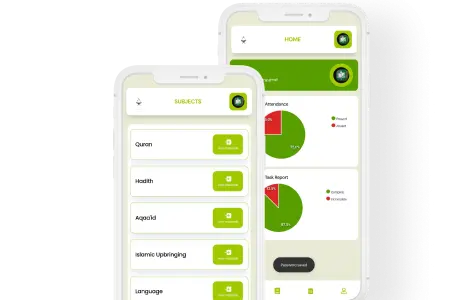
POPIA-compliant data management: Encrypted cloud storage, role-based access control (teachers see only their students; principals see all; fee data restricted to treasurer role), individual parent portal (no shared group access), audit trail for all data access and changes.
Full three-stream Hifz tracking: Sabak, Sabaq Para, and Dhor tracked per student, per session, in under 2 minutes of teacher recording time. The principal sees every student’s Hifz health status from a single dashboard.
Automatic parent notifications: Absence alerts, Hifz milestone celebrations, fee reminders — sent to individual parents automatically from session data. No manual message composition required.
Individual parent portal: Each parent has their own secure login. They see their child’s current Hifz position, Sabaq Para quality, Dhor status, attendance record, and fee balance — without messaging the teacher.
Fee management: Record EFT, SnapScan, and cash payments. Generate digital receipts. View outstanding balances by student or class. Monthly financial summaries for the committee and treasurer.
Police clearance tracking: Staff profiles include fields for police clearance certificate reference numbers and expiry dates — with alerts when renewal is due.
Tarbiyah assessment: Character development tracked across four dimensions — spiritual, moral, social, personal — with individual goal-setting and parent-facing reports. Unique to Ilmify; no other platform offers this.
South Africa-appropriate pricing: Contact the Ilmify team for current South Africa pricing. Structured for community-funded institutions.
💡 Run your South African madrasah properly — POPIA-compliant, Hifz-tracking, professionally governedThe only Islamic school management platform that understands what South African madrasahs actually need.See Ilmify for South African Madrasahs →
Conclusion
Running a South African madrasah in 2026 means holding a community trust that is centuries old — and meeting the administrative and regulatory expectations of a modern, connected South African Muslim community. Governance, POPIA compliance, staff vetting, proper Hifz tracking, individual parent communication, and transparent financial management are not optional additions to the principal’s teaching role. They are the institutional infrastructure that makes the madrasah sustainable, credible, and genuinely accountable to the families it serves.
Ilmify provides that infrastructure — built for Islamic schools, tested in Islamic educational contexts, and affordable for the community-funded institutions that form the heart of South African Muslim life.
Start managing your South African madrasah with Ilmify →
Related articles:




 Arabic
  English
  Malay
Malay  Urdu
Urdu