
Introduction
Almost every maktab starts informally.
One teacher keeps a notebook.
Another creates a WhatsApp group for parents.
Someone builds an Excel sheet for attendance.
Another tracks fees in a second spreadsheet.
And somehow, it works.
Until it doesn’t.
When the maktab grows, informal systems begin to collapse under their own weight. Messages get lost. Spreadsheets conflict. Records disappear when teachers leave. Parents demand clarity. Trustees want reports. GDPR risks increase.
The shift from WhatsApp and Excel to a proper management system is not a luxury upgrade. It is an operational necessity once a maktab passes its early stage.
Why WhatsApp and Excel Work — Until They Don’t
WhatsApp and Excel are powerful tools.
They are just not designed for institutional school management.
They were not built to:
- Store regulated student data
- Track multi-stream Hifz progression
- Generate reports
- Maintain compliance logs
- Protect personal information
- Preserve institutional memory
At 20 students and one teacher, informal tools are manageable.
At 60 students and four teachers, they become fragile.
At 100+ students, they become a liability.
The real issue is scalability. Informal systems depend on individuals. Proper systems belong to the institution.
Seven Signs Your Maktab Has Outgrown Informal Systems
1. A teacher left and progress records vanished.
Student knowledge should stay with the institution, not the individual.
2. You cannot answer parent queries immediately.
If you need to search WhatsApp and multiple spreadsheets to answer a simple question, your system is inefficient.
3. Your parent WhatsApp group is chaotic.
Important messages get buried. Student-specific information is shared publicly. Noise overwhelms clarity.
4. There are multiple versions of the same spreadsheet.
No one knows which one is accurate.
5. Fee reconciliation takes hours.
Manual bank matching every term is avoidable.
6. Parents have no structured progress visibility.
Modern parents expect transparency.
7. You would struggle with a GDPR review.
Unsecured Excel files and WhatsApp data sharing create exposure.
If even three of these apply, the maktab has reached the transition point.
The Hidden Costs of Staying Informal
The subscription cost of software is visible.
The cost of not upgrading is invisible — but larger.
Administrative Time
3–6 hours per week lost to manual admin tasks.
Over a year: 150–300 hours.
Institutional Memory Loss
Each staff change resets systems.
Parent Trust Erosion
Opacity reduces confidence.
Legal Exposure
GDPR violations can lead to investigation, fines, and reputational damage.
Opportunity Cost
Time spent managing spreadsheets is time not spent improving teaching quality.
Informal systems are rarely cheaper in the long run.
What You Actually Need (And Nothing More)
A maktab does not need enterprise software.
It needs five core systems:
1. Student Records
Secure storage of names, contacts, emergency details.
2. Attendance Tracking
Per-session recording with automated absence visibility.
3. Hifz & Nazirah Tracking
Sabak, Sabaq Para, Dhor — structured properly.
4. Fee Management
Clear payment tracking and balance reporting.
5. Secure Parent Communication
Individual student updates, not public group messages.
That is the foundation.
Everything else is secondary.
The GDPR Reality of WhatsApp
This is often misunderstood.
When you send student-specific information in a WhatsApp group:
- You are processing personal data.
- That data passes through Meta servers.
- You have no Data Processing Agreement.
- You cannot control retention.
- All parents can see other students’ information.
For logistics, WhatsApp is acceptable.
For student records, it is not compliant.
Any institution that takes safeguarding seriously must also take data protection seriously.
Common Objections — Addressed Honestly
“We cannot afford software.”
If admin time is valued even at minimum wage, most maktabs lose more money in inefficiency than they would spend on software.
“Teachers won’t use it.”
Adoption depends on simplicity. Systems must be mobile-first and take under two minutes per session. Complexity kills usage.
“We tried something before and it failed.”
Generic school software is not designed for Islamic institutions. Hifz tracking and offline mode are essential features most systems lack.
“Migration will be too difficult.”
You only need to migrate:
- Student list
- Parent contacts
- Current Hifz position
Everything else can begin fresh from go-live.
Most maktabs complete migration in under a week.
How to Choose the Right System
Evaluate systems against these criteria:
- Sabak, Sabaq Para, Dhor tracking
- Mobile-first teacher interface
- Offline capability
- Multi-language support
- GDPR-compliant storage
- Parent portal
- Simple fee tracking
- Affordable pricing
- Designed specifically for Islamic education
If a system cannot demonstrate all of these clearly, it is not fit for a maktab.
A Practical 5-Step Migration Plan
Step 1: Audit Current Data
Identify where records exist. Focus only on essential data.
Step 2: Set Up the Institution Profile
Create classes, teacher accounts, configure settings.
Step 3: Enter Core Student Records
Name, contact, current Hifz position.
Step 4: Train Teachers (30 Minutes)
Recording attendance and Hifz sessions should be simple.
Step 5: Go Live and Archive Old Systems
Stop updating Excel. Restrict WhatsApp to general notices only.
From that point forward, institutional data lives in one place.
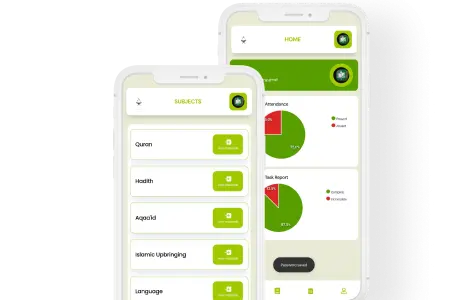
Why Ilmify Is Built for This Transition
Ilmify was designed around real maktab constraints:
- Volunteer administrators
- Limited budgets
- Poor internet connectivity
- Multi-language communities
- Hifz-centred curriculum
Key features:
- Full Sabak / Sabaq Para / Dhor tracking
- Offline recording mode
- Encrypted cloud storage
- Mobile-first teacher interface
- Secure parent portal
- Fee tracking and reporting
- Multi-language support (English, Urdu, Tamil, Malayalam, Arabic)
- Direct onboarding support
No enterprise complexity. No unnecessary modules. No desktop dependency.
Setup typically takes a few hours.
Conclusion
WhatsApp and Excel were appropriate at the beginning.
They are not appropriate for a growing institution responsible for:
- Child safeguarding
- Personal data
- Financial records
- Educational progression
The transition to proper management software is not a technological upgrade.
It is a governance upgrade.
Ilmify exists specifically to make that transition simple, affordable, and sustainable for community-run maktabs.