

Introduction
Over the past two decades, something remarkable has happened in Indonesian Islamic education. Quran memorisation — once the domain of elite Pesantren, requiring years of full-time residential study from a small number of exceptional students — has become a mainstream aspiration. Tahfiz schools (Sekolah Tahfiz) have proliferated across the country. Rumah Tahfiz (“Tahfiz houses” — neighbourhood Hifz programmes) have opened in residential areas in every major city. Government schools have integrated Tahfiz programmes into their curricula. National competitions draw thousands of Hafiz candidates.
In the past fifteen years, Indonesia has arguably become the world’s fastest-growing Tahfiz education sector. Understanding how this happened, what it looks like institutionally, and what challenges it faces is essential for anyone working in Islamic education in Southeast Asia and beyond.
The Tahfiz Movement in Indonesia — Background
Indonesian Muslims have always had Huffadh — the country’s Pesantren tradition produced Quran memorisers from its earliest years. But until the late 20th century, full Hifz was rare outside the dedicated Pesantren environment and was understood as the pursuit of a specialised Islamic scholarly path, not a mainstream educational goal.
Several factors drove the shift:
The post-Suharto Islamic revival (post-1998): After the fall of Suharto and the opening of democratic space, Indonesian Islamic expression intensified across the board. Religious observance increased, Islamic education expanded, and aspirations for Islamic knowledge — including Hifz — grew across the middle class.
Gulf influence: Indonesian workers returning from Saudi Arabia, Kuwait, and the UAE brought exposure to the Gulf’s Tahfiz culture, where Hifz programmes were more systematically organised and more widely attended than in Indonesia’s traditional Pesantren context.
Middle-class Islamic identity: As Indonesia’s Muslim middle class expanded and deepened its religious practice, raising a child who had memorised the Quran became a meaningful aspiration — a marker of Islamic seriousness and family religious investment.
Government support: From the 2000s onwards, Indonesian governments at national and regional level invested in Tahfiz education — establishing programmes in public schools, creating scholarships for Huffadh, and recognising Hifz credentials in employment and educational contexts.
Competition culture: The growth of the MTQ (Musabaqah Tilawatil Quran) competition system — from village level to national championships — created a structured achievement pathway that motivated Tahfiz participation.
The Scale of Indonesian Tahfiz Education
Precise data on Indonesian Tahfiz education is difficult to compile because of the diversity and informality of institutions. Available estimates:
| Indicator | Estimate |
| Registered Pesantren Tahfiz | ~3,000–5,000 |
| Integrated Sekolah Tahfiz | ~1,000–2,000 |
| Rumah Tahfiz (neighbourhood programmes) | ~50,000+ estimated |
| Active Tahfiz students nationally | 1–2 million estimated |
| Annual Hafiz graduates | Tens of thousands |
| Number of registered Huffadh (all ages) | 30,000+ formally recognised; many more unregistered |
These figures represent extraordinary growth from a generation ago — when full-time Tahfiz programmes barely existed outside the traditional Pesantren network. The Indonesian government’s 2019 estimate was that approximately 1 in 300 Indonesian Muslims had memorised the complete Quran — a figure that, if accurate, means Indonesia has more Huffadh in absolute numbers than most Arab countries.
Types of Tahfiz Institutions
Indonesian Tahfiz education operates through three main institutional models:
| Model | Setting | Full-time? | State qualifications? | Typical cost |
| Pesantren Tahfiz | Residential campus | Yes | Sometimes | Moderate — fees + living |
| Sekolah Tahfiz | Day school (integrated) | School hours + Hifz sessions | Yes (national curriculum) | Higher — fees for dual programme |
| Rumah Tahfiz | Neighbourhood community | No — after-hours | No | Low — community fees |
Many students move through multiple models across their educational journey — beginning Hifz at a neighbourhood Rumah Tahfiz in primary school, then transitioning to a dedicated Pesantren Tahfiz for intensive completion in secondary years.
Pesantren Tahfiz — The Traditional Model
The Pesantren Tahfiz (Tahfiz boarding school) is the most intensive and historically established Tahfiz model. Students live at the institution, follow a daily programme centred on Hifz, and complete the Quran over a period of 2–5 years depending on age and intensity.
Curriculum structure:
The traditional Pesantren Tahfiz organises memorisation around the same three-tier system universal to Hifz education globally:
| Indonesian Term | Universal Equivalent | Function |
| Sabak (also Setoran Baru) | Sabak | New daily memorisation |
| Sabak Lama / Muraja’ah Dekat | Sabqi | Recent revision (last 1–2 weeks) |
| Dhor / Muraja’ah Jauh | Dhor/Manzil | Older material revision — full cycle |
Daily sessions in a Pesantren Tahfiz typically run for 4–6 hours of Hifz-specific activity — individual recitation to the teacher (Sorogan/Setoran), group revision (Muraja’ah bersama), and self-study revision.
Major Pesantren Tahfiz:
Several Indonesian Pesantren are nationally renowned for Tahfiz quality:
- Pesantren Yanbu’ul Quran (Kudus, Central Java) — one of the oldest and most respected Tahfiz Pesantren
- Pondok Pesantren Nurul Quran (various locations)
- Pesantren Al-Quran Singaparna (West Java)
- Pesantren Tahfidzul Quran Al-Hikmah (various locations)
Sekolah Tahfiz — The Integrated School Model
The Sekolah Tahfiz (Tahfiz School) is a distinctively Indonesian innovation — a school that provides both the full national curriculum (enabling state school qualifications) and a structured Tahfiz programme, producing students who complete their Quran memorisation alongside their mainstream academic qualifications.
How the integration works:
A typical Sekolah Tahfiz runs two parallel programmes:
- Morning: National curriculum subjects (Mathematics, Indonesian, Science, Social Studies, etc.) — taught to national standards, enabling formal qualifications
- Afternoon/evening: Tahfiz sessions — individual Setoran, group Muraja’ah, Tajweed classes
The dual programme demands more of students than either a regular school or a traditional Pesantren Tahfiz alone — it requires managing both academic workload and the progressive demands of Hifz simultaneously.
The parental appeal:
The Sekolah Tahfiz addresses the anxiety that many Indonesian Muslim parents face: they want their children to memorise the Quran, but they also want them to have mainstream academic qualifications and economic opportunities. The integrated model appears to offer both.
Challenges:
The dual burden is real. Students in integrated Tahfiz schools carry a heavier load than either purely secular or purely Tahfiz peers. Research within the Indonesian Islamic education sector has raised questions about whether the dual programme produces deep Hifz quality or whether the compromise produces mediocre academic results alongside incomplete Hifz.
Rumah Tahfiz — The Neighbourhood Programme Model
The Rumah Tahfiz (“Tahfiz house”) is the most recent and fastest-growing form of Indonesian Tahfiz education — a neighbourhood programme, typically run from a private home or small community space, where children attend 1–2 hours of daily Hifz instruction alongside or instead of TPQ.
What a Rumah Tahfiz looks like:
- A dedicated teacher (Ustadz/Ustadzah) — usually a Hafiz/Hafizah — provides individual and small-group Hifz instruction
- Sessions run daily, typically in the afternoon after school
- Students progress through structured Hifz from Juz’ Amma working through the Quran
- Parents pay small monthly fees (IDR 100,000–300,000 / $6–18 USD)
- No formal state recognition; no formal qualifications
Scale and growth:
The Rumah Tahfiz movement grew explosively in the 2010s — driven by the combination of rising Hifz aspirations, social media (Instagram accounts of cute Huffadh attracted enormous followings), and the practical accessibility of neighbourhood programmes for families who could not commit to full Pesantren residential study.
Government and municipal authorities in some areas have provided small grants to Rumah Tahfiz — recognising their community function without formally integrating them into the state system.
Management challenges:
The Rumah Tahfiz faces the same management challenges as the TPQ at even greater intensity — because Hifz tracking is more complex than basic Iqra tracking. A Rumah Tahfiz teacher needs to know:
- Exactly where each student is (which Surah, which ayah)
- Which portions are in Sabak (current), Sabqi (recent), and Dhor (older) phases
- Which older portions are weakening and need reinsertion
- What the teacher before them covered, if there has been a transition
Without digital tracking, this knowledge lives in the teacher’s head — and disappears when the teacher leaves.
The Tahfiz Curriculum — How Hifz Is Taught in Indonesia
Indonesian Hifz teaching follows the same universal framework as maktabs globally, adapted to the Indonesian linguistic and cultural context:
Memorisation methods commonly used:
| Method | Indonesian Name | Description |
| Page-by-page | Metode per halaman | Memorise one page of Mushaf at a time before advancing |
| Ayah-by-ayah | Metode per ayat | Memorise verse by verse; combine before testing |
| Chunk method | Metode chunking | Memorise in natural phrase groups (waqf units) |
| Listening method | Metode Simak’i | Extensive listening before memorising — passive first |
Most Indonesian Pesantren Tahfiz use a Mushaf Al-Quran with 15 lines per page (the standard Medani Mushaf used globally for Hifz) — the same format used in South Asian maktabs.
Tajweed integration:
The level of Tajweed taught alongside Hifz varies significantly across Indonesian institutions. Some Pesantren Tahfiz treat Tajweed as integral — Hifz is not accepted without Tajweed accuracy. Others prioritise speed of memorisation and address Tajweed after completion. The former approach produces more durable, accurate Hifz; the latter produces graduates who need significant Tajweed remediation.
Muraja’ah culture:
The Indonesian Islamic educational community uses the Arabic term Muraja’ah (revision) — adapted to Indonesian as muroja’ah — extensively. There is growing awareness within the sector of the importance of systematic older revision, with Muraja’ah schedules modelled on the Manzil system becoming more common in quality Pesantren Tahfiz.
The MTQ Connection — Competition as Motivation
The Musabaqah Tilawatil Quran (MTQ) — Indonesia’s national Quran competition system — is a significant driver of the Tahfiz movement. MTQ includes dedicated Hifz competition categories at every level from village (Desa/Kelurahan) through district, province, and national championships.
Competition categories for Hifz:
| Category | Memorisation Requirement |
| 1 Juz + Tilawah | 1 Juz memorised (usually Juz’ Amma) |
| 5 Juz | 5 Juz memorised |
| 10 Juz | 10 Juz memorised |
| 20 Juz | 20 Juz memorised |
| 30 Juz | Complete Quran memorised |
The existence of partial Hifz categories (1 Juz, 5 Juz, 10 Juz) creates accessible entry points that motivate students to begin and progress in Hifz without requiring the full 30-Juz commitment before they can compete. This progressive structure has been highly effective in broadening participation.
Prizes and recognition:
MTQ winners receive significant prizes at national level — cash awards, educational scholarships, and national recognition. The national MTQ is broadcast nationally and generates enormous community interest. Provincial and district MTQ winners receive local scholarships and recognition that have concrete material benefits.
National and Government Tahfiz Programmes
Several government initiatives have institutionalised support for Tahfiz education:
Hafiz Quran preferential entry: Several Indonesian universities — including some state universities — provide preferential admission to applicants who have memorised the Quran. This creates a direct economic incentive for Hifz completion.
Hafiz Quran civil service preference: Some regional governments provide hiring preferences for Hafiz applicants in civil service and public education positions.
Pesantren Tahfiz accreditation: Under the 2019 Pesantren Law, dedicated Tahfiz Pesantren can receive formal accreditation — providing qualifications recognised by the state and access to government funding.
Government Rumah Tahfiz grants: Several provincial governments have provided small operational grants to Rumah Tahfiz — typically IDR 1–5 million ($60–300 USD) per year — recognising their community contribution without integrating them into the formal system.
Challenges Facing Indonesian Tahfiz Education
Quality vs quantity tension: The rapid expansion of Tahfiz programmes has not been matched by quality standards. Many Rumah Tahfiz and smaller Pesantren Tahfiz lack teachers with verified Ijazah — meaning Hifz is being transmitted without the chain of authentication that the tradition requires.
Dropout rates: Anecdotal evidence from educators across the sector suggests high dropout rates in integrated Sekolah Tahfiz — students who begin Hifz programmes but do not complete them. The dual burden of academic and Hifz demands is a significant factor.
Post-completion Muraja’ah: There is little systematic support for Huffadh after they complete their Hifz — the institutional framework that maintains older revision disappears when students leave the Tahfiz school. Many Indonesian Huffadh who completed decades ago report significant Hifz deterioration.
Teacher supply: The rapid growth of Tahfiz programmes has outpaced the supply of qualified Tahfiz teachers with Ijazah and teaching competency. Teacher quality is the most significant limiting factor on Indonesian Tahfiz education quality.
Record management: The vast majority of Indonesian Tahfiz institutions — including many Pesantren — have no digital Hifz tracking. Student progress lives in teacher registers and institutional memory, creating the same vulnerability to teacher transition and institutional loss seen in maktabs globally.
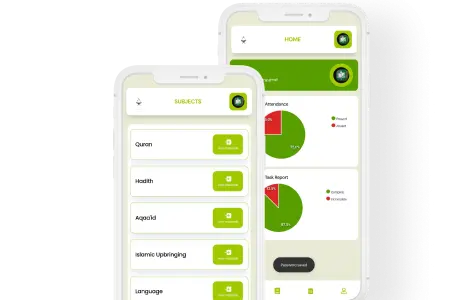
👉 Indonesian Tahfiz schools deserve Hifz tracking tools that honour the tradition’s rigour. Ilmify was built for exactly this.Explore Ilmify → ilmify.app
Conclusion
Indonesia’s Tahfiz movement is one of the most significant Islamic educational stories of the early 21st century — a country of 230 million Muslims collectively elevating Quran memorisation from an elite scholarly pursuit to a mainstream aspiration, backed by a diverse ecosystem of institutions from traditional Pesantren to neighbourhood houses. The scale of ambition is inspiring. The gaps in quality assurance, teacher supply, and management infrastructure are sobering. The opportunity for well-designed digital tools — tracking Hifz progress, supporting teacher continuity, enabling parent engagement — is enormous. Indonesia’s Tahfiz schools deserve institutional infrastructure as strong as the tradition they are trying to preserve.
👉 Support Indonesian Tahfiz schools with the Hifz tracking tools they need. Explore Ilmify → ilmify.app
Related Articles:
- 🇮🇩 Islamic Education in Indonesia: Pesantren, Madrasah, and TPQ Explained
- 📖 What Is Muraja’ah? The Islamic Science of Quran Revision
- 🚪 How to Handle Hifz Student Dropout: Causes, Prevention, and Recovery
- 📊 How to Set Up a Digital Hifz Tracking System from Scratch
- 🏆 What Is a Quran Competition (Musabaqah)? How They Work




 Arabic
  English
  Malay
Malay  Urdu
Urdu