

Introduction
Qatar’s Dar al-Quran network is distinguished from many GCC counterparts by one critical feature: direct Ministry of Awqaf operation. Rather than delegating to community committees, mosque associations, or private operators, Qatar’s Ministry of Awqaf and Islamic Affairs runs the national Quran memorisation centre network as a government service — funded, staffed, and curricula-coordinated centrally. This means Dar al-Quran centres in Qatar have consistent teacher standards, unified curriculum, national oversight, and reliable funding. For families and students pursuing Hifz and Ijazah in Qatar, this consistency is a significant benefit.
Qatar’s Dar al-Quran: A Ministry-Operated System
| Feature | Details |
| Operator | Qatar Ministry of Awqaf and Islamic Affairs |
| Coverage | National — across Qatar, not limited to Doha |
| Cost | Free — state-funded |
| Eligibility | Qatari nationals and Muslim residents |
| Programme focus | Hifz (full Quran memorisation) with Tajweed |
| Ijazah pathway | Present — qualified Shuyukh on Ministry staff |
| Gender | Separate male and female programmes; female teachers in women’s sections |
| Language | Arabic medium |
The Ministry’s direct operation means that teacher appointments, credentials, salary, and professional development are all Ministry-managed — removing the variability that affects privately operated or community-run centres.
How the Ministry of Awqaf Governs Quran Centres
The Ministry of Awqaf’s role in Qatar’s Dar al-Quran network:
| Function | How it works |
| Centre establishment | Ministry decides location and opens centres based on population needs |
| Teacher recruitment | Ministry employs teachers; credential requirements enforced at hiring |
| Curriculum | Ministry sets national Hifz and Tajweed curriculum; centres follow Ministry guidelines |
| Quality oversight | Ministry inspectors assess centre quality; teacher performance reviewed |
| Student registration | Centralised registration system; students enrolled through Ministry portal |
| Competitions | Ministry organises national competitions; Dar al-Quran centres are primary feeder institutions |
| Ijazah coordination | Ministry coordinates Ijazah granting; Shuyukh with Ijazah identified and deployed |
| Funding | Ministry budget; Awqaf endowment income; direct state allocation |
This governance structure makes Qatar’s Dar al-Quran centres among the most systematically managed in the GCC — a strength for quality but also a source of administrative reporting requirements that centres must manage.
Curriculum: From Nazra to Hifz to Ijazah
Qatar’s Ministry of Awqaf Dar al-Quran centres follow a structured national curriculum:
| Stage | Content | Duration |
| Arabic literacy / Qaida | Arabic letter recognition; Quran reading primer (Qaida Nooraniyyah or equivalent) | 2–4 months |
| Nazra (recitation) | Fluent Quran reading from Mushaf; Tajweed basics applied | 6–18 months |
| Tajweed (formal) | Systematic Tajweed rules — Makhraj, Sifat, Madd, Ghunnah, Waqf — taught as discipline | Concurrent with Nazra and Hifz |
| Hifz commencement | New daily memorisation begins — typically Juz 30 first, then back from Juz 1 | Starting 6–12 months after Nazra completion |
| Full Hifz | All 30 Juz memorised; simultaneous Muraja’ah throughout | 2–5 years |
| Muraja’ah consolidation | Full Quran in strong Muraja’ah — preparation for Ijazah | 6–12 months post-completion |
| Ijazah recitation | Full Quran recited to Shaykh; Ijazah granted | At Shaykh’s determination |
The Muraja’ah Programme
Qatar’s Dar al-Quran centres treat Muraja’ah as a formal programme component — not an afterthought:
| Component | Structure |
| Daily Muraja’ah target | Each student has a daily Muraja’ah assignment — typically one Juz or more |
| Weekly teacher review | Teacher listens to each student’s Muraja’ah recitation at least weekly |
| Quarterly full Quran review | For advanced students — teacher conducts comprehensive Muraja’ah assessment of all memorised portions |
| Muraja’ah record | Student’s Muraja’ah quality tracked alongside new Hifz progress |
| Ijazah eligibility | Student must demonstrate strong Muraja’ah across all 30 Juz before Ijazah assessment |
The Ministry’s national curriculum specifically requires centres to maintain Muraja’ah records alongside Hifz progress records — recognising that Hifz completion without strong Muraja’ah is not the programme goal.
See Muraja’ah: How Quran Revision Is Managed and Hifz and Muraja’ah in Qatar: How Quran Progress Is Tracked for full detail.
Ijazah in Qatar’s Dar al-Quran Centres
The Ijazah pathway in Qatar’s national Dar al-Quran system:
| Stage | Details |
| Hifz completion | All 30 Juz memorised; verified by teacher |
| Muraja’ah standard met | Teacher confirms full Quran Muraja’ah is strong and uniform |
| Tajweed quality confirmed | Tajweed assessed as meeting certification standard throughout |
| Shaykh identification | Student assigned to a Shaykh with Ijazah for formal Talaqqi assessment sessions |
| Recitation sessions | Student recites Quran to Shaykh in structured sessions — weeks to months |
| Ijazah determination | Shaykh determines student has met standard |
| Ijazah certificate issued | Formal certificate with Shaykh’s Sanad — student enters chain of transmission |
Qatar’s Ministry of Awqaf maintains records of which Shuyukh within its network hold Ijazah — enabling systematic deployment of qualified Ijazah-granting scholars across the Dar al-Quran network rather than leaving it to chance which centre has a qualified Shaykh.
Student Enrolment and Eligibility
| Feature | Details |
| Age range | Children from 5–6; adults also accepted in dedicated adult programmes |
| Gender | Separate male and female classes; female teachers for women’s programmes |
| Nationality | Qatari nationals and all Muslim residents (expats included) |
| Language requirement | Arabic literacy helpful but beginners accepted from Qaida stage |
| Registration | Through Ministry of Awqaf registration system |
| Placement | Assessment on enrolment to determine appropriate level entry |
| Attendance expectation | Regular daily attendance expected; absence follow-up |
Teacher Standards and Qualifications
Ministry of Awqaf teacher requirements:
| Requirement | Standard |
| Hifz completion | Mandatory — all teachers are Huffaz |
| Tajweed qualification | Formal certification in Tajweed rules |
| Ijazah (for Ijazah-granting teachers) | Ministry deploys Ijazah-holding Shuyukh specifically for Ijazah pathway students |
| Teaching experience | Ministry requires documented teaching experience |
| Arabic medium instruction | All teaching in Arabic |
| Professional development | Ministry-organised training and development |
National Quran Competitions: The Motivational Framework
Qatar’s Dar al-Quran centres feed into a national competition structure that provides external motivation and recognition:
| Level | Format |
| Centre-level competitions | Internal competitions within each Dar al-Quran |
| Regional competitions | Across multiple centres in a region of Qatar |
| National competition | Annual national championship — Ministry of Awqaf organised |
| International competitions | Qatar sends national champions to Gulf and international competitions |
| Ramadan special competitions | High-profile national events during Ramadan |
Competition results feed back into Dar al-Quran administration — strong competition performance validates centre quality; teachers whose students consistently perform well are recognised; administrators track competition readiness as a quality metric.
Administrative and Digital Needs
Qatar’s Ministry-operated Dar al-Quran network has specific administrative needs:
National reporting. Ministry requires regular reporting from each centre — student numbers, attendance rates, Hifz progress, Muraja’ah quality. Paper-based reporting to Ministry creates delays and data quality issues.
Per-student progress tracking. Each student’s individual Hifz progress (which Juz memorised) and Muraja’ah quality across all memorised portions must be tracked and reportable.
Competition readiness. Identifying which students are ready for competition submission requires systematic assessment data — not just teacher impressions.
Ijazah documentation. Recording Shaykh sessions, recitation assessment, and Ijazah eligibility progress requires structured records beyond a notebook.
Parent communication. Ministry-operated centres communicate with parents across Qatar’s diverse resident communities — Arabic-medium communication with provision for non-Arabic-speaking families.
Frequently asked questions
Q: Are Qatar’s Dar al-Quran centres open to expatriate Muslims?
Yes — the Ministry of Awqaf Dar al-Quran network serves Muslim residents of Qatar, both nationals and expatriates. Given Qatar’s demographics (majority expatriate population), the centres necessarily serve a diverse community.
Q: How does Qatar’s Dar al-Quran system differ from the UAE’s?
Qatar’s centres are directly operated by the Ministry of Awqaf — making them more uniformly governed than the UAE’s mix of IACAD-registered private and government centres. Both systems are well-funded and regulated; Qatar’s is more centralised and less diverse in format.
Q: Can adults enrol in Dar al-Quran centres in Qatar?
Yes — the Ministry runs dedicated adult Hifz programmes. Many adults who did not have the opportunity for Hifz in childhood pursue it through the Dar al-Quran network.
Q: What is the Quran competition format in Qatar?
Competitions typically involve reciting assigned portions of the Quran before a panel of qualified judges who assess Tajweed quality, fluency, and memorisation accuracy. Different categories exist for different age groups, memorisation levels (e.g., Juz 30 only vs full Quran), and gender.
Q: Does Qatar’s Dar al-Quran issue Ijazah?
Yes — Ministry-employed Shuyukh who hold Ijazah conduct formal Talaqqi assessments and grant Ijazah to qualifying students. The Ministry’s systematic deployment of Ijazah-holding Shuyukh means the pathway is available across the network rather than depending on which teacher happens to be assigned to a student.
Conclusion
Qatar’s Ministry of Awqaf-operated Dar al-Quran network — national in coverage, consistent in standards, well-funded, and connected to a motivating competition culture — is one of the Gulf’s most professionally managed Quran education systems. For centre administrators managing Ministry reporting requirements, per-student Hifz and Muraja’ah records, competition readiness tracking, and Ijazah pathway documentation, digital tools built for this structured, Ministry-accountable context are the operational need.
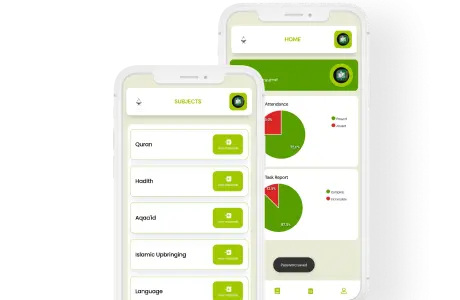
Ilmify supports Qatar’s Dar al-Quran administrators — with Ministry-compatible reporting, Hifz and Muraja’ah tracking, competition readiness management, and Ijazah pathway documentation built for Qatar’s well-governed Islamic education context. Explore Ilmify →




 Arabic
 English
 Malay
 Urdu