

Use up and down arrow keys to resize the meta box pane.
Introduction
A Dar al-Quran in the UAE is a dedicated Quran memorisation centre — the institutional expression of the Islamic commitment to Hifz, Tajweed, and the Ijazah chain of transmission, operating in one of the world’s most modern and internationally diverse Muslim societies. UAE Dar al-Quran centres share the same educational method as their counterparts in Saudi Arabia and Egypt — Talaqqi-based Hifz with Tajweed, leading to Ijazah — but operate in a context shaped by IACAD and Awqaf regulation, a predominantly expatriate Muslim student body, and the UAE’s remarkable cultural diversity. Understanding how Dar al-Quran centres in the UAE work is understanding how classical Islamic education adapts to a 21st-century, globalised Muslim community.
What Is a Dar al-Quran in the UAE?
Dar al-Quran (دار القرآن — House of the Quran) in the UAE refers to any institution dedicated primarily to Quran memorisation (Hifz) and recitation education, with qualified teachers who can conduct Talaqqi and — where they hold Ijazah — guide students toward certification.
| Feature | Details |
| Primary purpose | Quran memorisation (Hifz) with Tajweed |
| Secondary purpose | Ijazah pathway for qualifying students |
| Governance | IACAD (Dubai); Awqaf (other emirates); private registration |
| Setting | Mosque-attached or standalone |
| Student body | UAE nationals + all Muslim resident nationalities |
| Teacher | Must hold Hifz completion; Ijazah required for Ijazah-granting |
| Cost | Government/Awqaf centres: free; private: fee-paying |
| Language | Arabic medium; some centres accommodate English/Urdu |
Governance: IACAD, Awqaf, and Private
Unlike Saudi Arabia — where the Ministry of Islamic Affairs has national oversight — UAE Dar al-Quran centres are governed at emirate level:
| Emirate | Governing Authority | Registration |
| Dubai | IACAD — Islamic Affairs and Charitable Activities Department | IACAD registration mandatory |
| Abu Dhabi | General Authority of Islamic Affairs and Awqaf | Awqaf registration required |
| Sharjah | Sharjah Islamic Affairs; Sharjah Awqaf | Emirate-level registration |
| Ajman, Fujairah, RAK, UAQ | Respective emirate Awqaf authorities | Emirate-level registration |
Private Dar al-Quran centres must be registered with the relevant emirate authority regardless of their private status. IACAD in particular has a well-developed registration process that functions as quality control — teacher credentials are verified, curriculum documented, and premises assessed.
The Educational Model: Talaqqi-Based Hifz
The educational model at UAE Dar al-Quran centres follows the universal Islamic Hifz tradition:
Talaqqi — direct oral transmission — is the foundation. Students recite to the Shaykh; the Shaykh corrects every error of Tajweed or memorisation in real time. This one-to-one or small-group recitation is non-negotiable for a genuine Hifz programme.
Tajweed is taught as a formal discipline — the rules of Quranic pronunciation (Makhraj, Sifat, Madd, Ghunnah) are systematically taught and continuously applied. A student who memorises without Tajweed is not considered to have completed Hifz to the required standard.
Hifz progression is individual — each student advances at their own pace, with the Shaykh setting daily new portions (Sabak equivalent in Arabic: الجزء الجديد) based on the student’s demonstrated retention.
Muraja’ah — revision of previously memorised Quran — is given equal weight to new memorisation. The daily programme always includes revision of older portions alongside presentation of new ones. See Muraja’ah: How Quran Revision Is Managed.
Daily Programme Structure
A typical UAE Dar al-Quran session structure:
| Session | Content | Duration |
| Opening | Isti’adhah, Basmallah; group Quran recitation | 10–15 minutes |
| New Hifz presentation | Each student recites their new portion to the teacher | 5–10 minutes per student |
| Tajweed lesson | Structured teaching of a Tajweed rule or application | 20–30 minutes |
| Muraja’ah session | Students revise previously memorised portions — teacher supervision | 30–45 minutes |
| Individual Talaqqi | Teacher calls students individually for close recitation assessment | Varies |
| Closing | Du’a; daily summary; next session assignment | 5–10 minutes |
For programmes serving working adults or school-attending children, the schedule may be condensed into one or two sessions per day — morning and evening, or weekend intensives.
Hifz and Muraja’ah: The Two Pillars
UAE Dar al-Quran centres structure their programmes around two pillars:
| Pillar | What It Involves | Time Investment |
| New Hifz | Memorising new Quran portions — typically half a page to a full page per day | 1–2 hours per day |
| Muraja’ah | Revising previously memorised portions — systematic rotation through all memorised Juz | 1–2 hours per day (equal to new Hifz) |
The balance between new Hifz and Muraja’ah is a key marker of programme quality. Centres that rush students through new memorisation without building strong Muraja’ah produce students who reach Hifz completion but cannot recite the earlier portions reliably — and are not Ijazah-eligible.
A student memorising at the rate of one page per day will complete the full Quran (604 pages) in approximately 20 months if they memorise 6 days per week — but only if Muraja’ah keeps all previous portions strong throughout. In practice, a high-quality Hifz programme takes 2.5–4 years because proper Muraja’ah builds at the same time.
The Ijazah Pathway in UAE Dar al-Quran Centres
UAE Dar al-Quran centres where the Shaykh holds a valid Ijazah offer students a pathway to certification:
| Stage | Milestone |
| Hifz completion | All 30 Juz memorised; teacher verification |
| Muraja’ah consolidation | Full Quran in strong Muraja’ah — uniform quality across all 30 Juz |
| Tajweed assessment | Shaykh confirms Tajweed meets the required standard throughout |
| Full Quran recitation to Shaykh | Student recites the complete Quran to the Shaykh — multiple sessions |
| Ijazah granted | Shaykh issues certificate with Sanad |
The Ijazah pathway requires that the certifying Shaykh holds their own Ijazah — otherwise the chain of transmission is broken. Students and families should verify teacher Ijazah credentials before choosing a centre for serious Hifz with an Ijazah goal.
In the UAE, IACAD-registered centres must document teacher credentials — including Ijazah — making Dubai’s registered centres more verifiable than unregistered private operations.
See Ijazah and Talaqqi in UAE Quran Centres for the full Ijazah picture.
How UAE Dar al-Quran Differs from Saudi and Egyptian Models
| Feature | UAE Dar al-Quran | Saudi Dar al-Quran | Egyptian Dar al-Quran |
| Student body | Highly diverse — 50+ nationalities; majority expatriate | Primarily Saudi + Arab Muslim expats | Primarily Egyptian |
| Governance | Emirate-level IACAD/Awqaf | Ministry of Islamic Affairs (national) | Ministry of Awqaf (national) |
| Scale | Small to medium centres | Very large scale — national network | Very large scale — hundreds of MoA centres |
| Ijazah tradition | Present and growing; qualified Shuyukh from Egypt/Saudi often staff UAE centres | Extremely deep — Madinah chains globally prestigious | Globally prestigious — multi-Qira’at authority |
| Language diversity | High — Arabic + English + Urdu accommodations | Primarily Arabic | Primarily Arabic |
| Registration formality | IACAD/Awqaf — well-developed formal registration | Ministry-governed | Ministry of Awqaf-governed |
| Qira’at breadth | Primarily Hafs; advanced study available at Al Qasimia | Primarily Hafs; multiple Qira’at in Madinah | All ten modes at Kulliyyat al-Quran |
Serving a Multicultural Muslim Population
The UAE’s Dar al-Quran centres face a challenge unique to the Gulf — serving Muslims from dozens of countries simultaneously:
Arabic-speaking students (Egyptian, Jordanian, Syrian, Emirati) — learn in their native or near-native language; Arabic Tajweed rules are explained in Arabic; natural fit with standard Dar al-Quran methodology.
South Asian students (Pakistani, Indian, Bangladeshi) — may have excellent Quran reading from home-country background (Sabak/Dhor tradition) but limited Classical Arabic; Tajweed rules need English or Urdu explanation; some terminology differences.
Southeast Asian students (Malaysian, Indonesian) — often from Shafi’i tradition; similar Hifz goals; may need Arabic literacy building alongside Hifz.
Western Muslim students — often starting from basics; need English-medium instruction; less prior Quran background typically.
Centres that serve diverse communities effectively have:
- Arabic-medium core instruction (the Quran is Arabic; Tajweed must be taught in Arabic terms)
- English or Urdu support for students without Arabic background
- Teachers sensitive to different starting points and cultural contexts
- Patience with students who are learning Classical Arabic while memorising the Quran
Administrative Requirements
UAE Dar al-Quran centres must maintain specific records for IACAD/Awqaf compliance:
| Record | Requirement |
| Student enrolment register | Full name, nationality, Emirates ID/passport, contact details, enrolment date |
| Student Quran level records | Current Hifz level; Tajweed stage; Muraja’ah status |
| Attendance records | Daily or session-by-session attendance; follow-up on absences |
| Teacher qualifications file | Hifz certificate, Tajweed qualification, Ijazah document if applicable |
| Curriculum documentation | Programme structure; progression criteria |
| Financial records | Fee collection (private centres); receipts |
IACAD inspections require these records to be producible on request — paper systems stored in a drawer do not meet the standard.
Frequently asked questions
Q: How do I find an IACAD-registered Dar al-Quran in Dubai?
IACAD maintains a list of registered Quran memorisation centres on its website and e-services portal. You can also approach any registered mosque in Dubai — IACAD-registered mosques that run Quran programmes are listed through the same system.
Q: Are there separate Dar al-Quran centres for women in the UAE?
Yes — many centres have dedicated women’s sections with female teachers, or operate as exclusively female institutions. IACAD-registered centres serving female students are required to maintain separate facilities. Some Islamic Cultural Centres run women-only Quran programmes.
Q: How long does it take to complete Hifz in a UAE Dar al-Quran?
Typically 2–5 years for full Hifz, depending on the student’s starting level, daily hours of study, and natural aptitude. Students who start with no prior Arabic literacy take longer; students with existing Quran reading fluency can progress faster. Quality programmes prioritise strong Muraja’ah over speed.
Q: Can a UAE Dar al-Quran grant Ijazah to non-Arabic-speaking students?
Yes — an Ijazah is based on the quality of the student’s Quran recitation (Hifz with correct Tajweed), not their Arabic conversation ability. A non-Arabic-speaking student who has memorised the Quran to the required standard of Tajweed and can recite to the Shaykh’s satisfaction can receive Ijazah. However, the process is conducted entirely in the Arabic Quran context.
Q: What happens if a Dar al-Quran in the UAE is not registered with IACAD?
Operating an unregistered Islamic educational institution in Dubai is a regulatory violation. Unregistered centres may be closed. More importantly for students, teacher credentials at unregistered centres are not verified — the quality assurance that IACAD registration provides is absent.
Conclusion
UAE Dar al-Quran centres — governed by IACAD, Awqaf, and the UAE’s emirate-level Islamic affairs system — bring the classical Talaqqi-based Hifz tradition to one of the world’s most internationally diverse Muslim populations. Managing a centre that serves students from fifty nationalities, meets IACAD registration requirements, tracks Hifz and Muraja’ah individually for each student, documents Ijazah pathway progress, and communicates with parents in multiple languages is an administrative challenge that demands purpose-built digital tools.
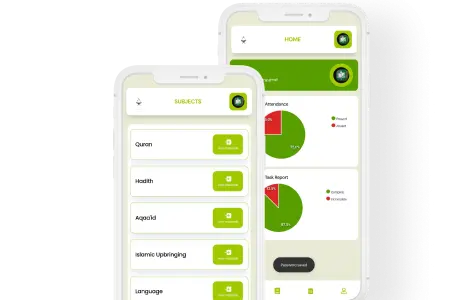
Ilmify supports UAE Dar al-Quran administrators — with IACAD-compatible record-keeping, multilingual student management, per-student Hifz and Muraja’ah tracking, and Ijazah pathway documentation in one platform designed for the Gulf Islamic education context. Explore Ilmify →




 Arabic
  English
  Malay
Malay  Urdu
Urdu