Introduction
The Muslim Association of Canada (MAC) operates the largest Islamic school network in Canada. With nine full-time Islamic schools across five provinces, plus community maktabs and weekend programmes, MAC has built the closest thing Canada has to a national Islamic school system.
For Canadian Muslim families considering full-time Islamic education, MAC schools are often the first institution they encounter. For those running Islamic schools and maktabs — or aspiring to — MAC represents the benchmark of what a well-governed, curriculum-consistent network looks like.
This guide explains what MAC is, how its schools work, what distinguishes the MAC model, and what prospective families and education professionals need to know.
What Is MAC?
The Muslim Association of Canada (MAC) is a national Islamic organisation founded in 1993. Its mission, as stated on macnet.ca, is “to participate in the establishment of a dynamic and engaged Muslim community that is deeply rooted in the Quran and Sunnah, committed to the betterment of Canada, and active in the service of humanity.”
MAC operates across multiple domains — community development, youth programming, social services, and Islamic education. Its school network is its most visible and institutionally significant activity.
MAC’s tradition:
MAC draws from the intellectual tradition of the Muslim Brotherhood and its global offshoots — emphasising an engaged, civic Islam that is active in public life rather than withdrawn from it. This orientation distinguishes MAC from institutions rooted in the Deobandi or Barelvi traditions, and it shapes MAC’s educational philosophy: producing graduates who are confident, publicly engaged Canadian Muslims.
The MAC School Network: Size and Scope
As of 2026, MAC operates nine full-time Islamic schools across Canada:
| City | School | Grades |
| Toronto (multiple locations) | MAC Islamic School Toronto | K–12 |
| Mississauga | MAC Islamic School Mississauga | K–12 |
| Ottawa | MAC Islamic School Ottawa | K–12 |
| Montreal | MAC Islamic School Montreal | K–8 |
| Calgary | MAC Islamic School Calgary | K–12 |
| Edmonton | MAC Islamic School Edmonton | K–8 |
| Vancouver | MAC Islamic School Vancouver | K–8 |
In addition to full-time schools, MAC operates Quran schools (maktab programmes) at many of its community centres — providing part-time Islamic education for children who are not enrolled in MAC full-time schools.
Scale:
MAC schools collectively serve thousands of students annually across Canada. The Toronto-area cluster — with multiple locations — is the largest, reflecting the GTA’s dominant share of Canada’s Muslim population.
What MAC Schools Teach
MAC schools deliver a dual curriculum: the full provincial academic curriculum of the province in which they operate, plus a comprehensive Islamic curriculum.
Academic curriculum:
Each MAC school follows the provincial curriculum of its province — Ontario curriculum in Ontario schools, Alberta curriculum in Alberta, BC curriculum in BC, and so on. Students sit provincial standardised assessments and graduate with provincially recognised diplomas.
Islamic curriculum:
Daily Quran recitation (all students), Islamic Studies (Fiqh, Aqeedah, Seerah, Hadith, Akhlaq — structured by grade level), and Arabic language instruction. Islamic Studies is not a marginal add-on — it is a significant component of the school day.
The Islamic environment:
Beyond formal curriculum, MAC schools provide: daily congregational prayer (Dhuhr, and Asr at schools with longer days), Islamic dress code, halal food options, an Islamic social environment, and integration of Islamic values across all subjects.
MAC’s curriculum philosophy:
MAC’s educational philosophy emphasises the integration of Islamic and academic knowledge — not two separate curricula running in parallel, but a genuine synthesis where Islamic values and worldview inform the academic curriculum. This is articulated as an Islamic approach to education, not merely Islamic content within a secular framework.
How MAC Schools Are Governed
MAC schools are governed within MAC’s national organisation structure — distinguishing them fundamentally from independent community Islamic schools run by individual mosque committees.
Network governance:
MAC’s national organisation sets the overall educational philosophy, curriculum framework, and governance standards that apply across all schools. Individual school principals operate within this national framework, providing both consistency and accountability that isolated community schools lack.
Accountability:
MAC schools are accountable to provincial education authorities (meeting curriculum requirements for provincial accreditation or registration), to CISNA (some MAC schools have pursued CISNA accreditation), and to MAC’s national governance structure.
The advantage of network governance:
A MAC school principal who faces a governance challenge — a difficult board situation, a curriculum question, a policy dispute — has the MAC national organisation as a resource and support structure. An independent Islamic school principal faces the same challenges alone.
MAC Schools vs Independent Islamic Schools
| Dimension | MAC Schools | Independent Islamic Schools |
| Governance | Network governance with national oversight | Individual mosque committee or non-profit board |
| Curriculum consistency | Consistent across network | Varies by school |
| Brand recognition | Strong — MAC is known nationally | Limited to local community |
| Size and resources | Generally larger and better resourced | Often smaller and more resource-constrained |
| Community rootedness | Strong in MAC-member communities | Often deeply rooted in specific ethnic or mosque community |
| Flexibility | Less — must follow network standards | More — can respond to specific community needs |
| Islamic tradition | MAC’s Muslim Brotherhood-influenced tradition | Varies — Deobandi, Barelvi, Salafi, JIH, independent |
Neither model is universally superior. MAC schools provide consistency and resources; independent schools provide community rootedness and tradition-specific education. Many Canadian Muslim communities that are not MAC-affiliated prefer an independent school that reflects their specific Islamic tradition.
MAC Maktab and Community Programmes
Beyond full-time schools, MAC operates Quran schools (maktabs) and community Islamic education programmes at its community centres across Canada.
MAC Quran schools:
Part-time maktab programmes — typically running evenings and weekends — providing Quran recitation, Islamic Studies, and Arabic to children who are not enrolled in full-time MAC schools. These serve a much larger population than the full-time schools, reaching families who cannot access or afford full-time Islamic education.
MAC youth programmes:
MAC runs structured youth programmes integrating Islamic education, community service, and civic engagement. These reflect MAC’s broader mission of producing engaged Canadian Muslims and extend Islamic formation beyond the classroom.
Adult education:
Many MAC community centres run adult Islamic learning circles, Quran classes, and structured Islamic Studies for adults — serving the community beyond the school-age population.
Admissions and Fees
Admissions:
MAC schools admit students without requiring MAC membership or any specific Islamic affiliation. They are open to any Muslim family seeking Islamic education for their children.
Admission typically involves an application, an assessment of the child’s academic and Islamic Studies level, and placement in the appropriate grade. Popular MAC schools — particularly in the GTA — have waiting lists, particularly at junior grades.
Fees:
MAC school fees vary by province and are significantly shaped by provincial funding:
| Province | Provincial Funding | Typical Tuition |
| Alberta | 70% of per-student grant | 3,000–3,000–3,000– 6,000/year |
| BC | 50% of per-student grant | 4,000–4,000–4,000– 7,000/year |
| Ontario | No per-student funding | 8,000–8,000–8,000– 12,000/year |
Ontario MAC school fees — reflecting the province’s refusal to fund independent schools — are significantly higher than Alberta or BC equivalents. Financial assistance and bursary programmes exist at most MAC schools; families facing financial hardship should ask directly.
MAC Schools by City
Toronto / GTA:
The GTA cluster is MAC’s largest — multiple school locations serving the dense Muslim population of Toronto, Mississauga, and surrounding communities. GTA MAC schools are among the most competitive for admissions in the country.
Ottawa:
MAC Ottawa school serves the nation’s capital Muslim community, which is substantial and growing. The school has established a strong reputation in the Ottawa Islamic community.
Montreal:
MAC Montreal school serves a linguistically distinctive market — with both French and English-medium demands. The Quebec context adds the complexity of Law 21 (restricting religious symbols for public servants) and the French language requirement.
Calgary and Edmonton:
Alberta’s favourable funding environment makes MAC schools there among the most affordable full-time Islamic schools in Canada. Both schools have strong community standing in their respective cities.
Vancouver:
MAC Vancouver serves the Lower Mainland Muslim community, which is geographically dispersed across Metro Vancouver. The school is certified under BC’s Independent School Act (Group 1 — highest funding tier).
Conclusion
MAC has built something genuinely significant in Canadian Islamic education: a national network of schools with consistent governance, shared curriculum, and the institutional scale to provide resources that isolated community schools cannot access. For thousands of Canadian Muslim families, MAC schools represent the most accessible and trusted path to integrated Islamic and academic education.
MAC does not serve every community — its tradition, its governance model, and its urban concentration mean that many Canadian Muslim families find their needs better met by independent community schools, local maktabs, or other providers. But as a reference point for what a well-governed Islamic school network looks like, MAC is without peer in Canada.
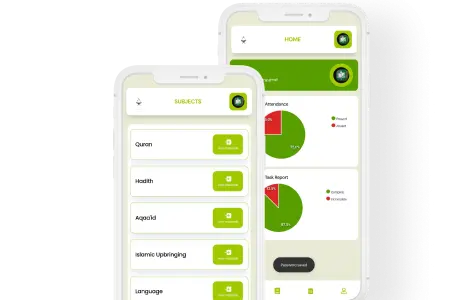
Islamic school or maktab administrator looking to professionalise operations? ilmify.app provides the digital infrastructure MAC schools and community maktabs across Canada rely on for student management, Quran tracking, attendance, and parent communication.