
Introduction
A Muslim parent in Canada seeking Islamic education for their child has more choices than at any previous point in Canadian history. Full-time Islamic day schools, after-school maktabs, weekend Sunday schools, Hifz centres, and online programmes all exist — and in major cities like Toronto, Edmonton, and Vancouver, a family may have access to several of each type within a reasonable distance.
Understanding the differences between these school types — what each teaches, how much time it requires, what it costs, and what outcomes it produces — is essential for making the right choice for your family. This guide provides the complete picture.
The Islamic Education Landscape in Canada
Canada has approximately:
- 75–100 full-time Islamic day schools (concentrated in GTA, Alberta, BC)
- 200–400 part-time maktabs and weekend schools (spread across every province with significant Muslim population)
- 50–100 Hifz programmes (standalone centres and within maktabs/full-time schools)
- Growing number of online programmes (accelerated by COVID-19 adoption)
The sector has grown significantly over the past three decades, tracking Canada’s Muslim population growth. Canada’s 1.8 million Muslims (2021 census) are the fastest-growing religious community in the country, and Islamic educational provision has grown alongside.
Type 1: Full-Time Islamic Day Schools
Full-time Islamic day schools — sometimes called Islamic academies — operate Monday to Friday during regular school hours, delivering both the provincial academic curriculum and daily Islamic Studies, Quran, and Arabic.
What they teach:
The complete provincial academic curriculum (English, maths, science, social studies, arts, PE) plus: daily Quran recitation, Islamic Studies (Fiqh, Aqeedah, Seerah, Hadith), and Arabic language instruction.
Who runs them:
Most are governed by independent non-profit boards or mosque committees. MAC (Muslim Association of Canada) operates nine schools across Canada — the country’s largest Islamic school network.
Provincial funding:
In Alberta, accredited private schools receive 70% of the public per-student grant — making Islamic day schools significantly more affordable there (
3,000–3,000–3,000–
6,000/year tuition). In BC, Group 1 certified schools receive 50%. Ontario provides no per-student funding, making GTA Islamic schools more expensive (
7,000–7,000–7,000–
12,000/year).
Best for:
Families who want comprehensive Islamic education integrated throughout the school day, not supplementary to it.
Key organisations: MAC, ISAC (Islamic Schools Association of Canada), CISNA accreditation
Type 2: After-School Weekday Maktab
The after-school weekday maktab is the most widespread model of Islamic education in Canada. It runs 2–5 evenings per week (typically Monday–Thursday), usually 5:30–7:30 pm, at a local mosque or Islamic centre.
What they teach:
Quran reading (Qaidah → Nazra → Hifz pathway), Islamic Studies (covering Fiqh, Aqeedah, Seerah, Akhlaq, Duas), and sometimes Arabic. The curriculum varies significantly by maktab — there is no single national maktab curriculum standard in Canada.
Schedule:
Most weekday maktabs run for two hours per session, 3–4 evenings per week, from September through June. Many operate year-round with reduced schedules in summer.
Cost:
Typically
50–50–50–
120/month, or sometimes free (mosque-subsidised). IPC Mississauga charges $75/month for Monday–Thursday attendance — typical of well-resourced GTA maktabs.
Best for:
Families who want structured Islamic education alongside their child’s regular schooling, without the time and cost commitment of full-time Islamic school.
Key examples: ACIC Maktab (Toronto), IPC Jame Masjid (Mississauga), Ommah Madrasah (Ottawa — free)
Type 3: Weekend Islamic School (Sunday School)
Weekend Islamic schools meet on Saturday, Sunday, or both — typically for 2–4 hours per session. They follow a curriculum similar to weekday maktabs but with significantly less instructional time.
What they teach:
Quran (though progress is slower than weekday maktab due to less frequent sessions), Islamic Studies, and Islamic identity and character development appropriate for children in a Western context.
Schedule:
One or two mornings per week, typically 9 am–12 noon or 10 am–1 pm. September through June.
Cost:
Typically
30–30–30–
80/month, often lower than weekday maktabs.
Strengths:
Lower time commitment — fits busy family schedules. Accessible to families who cannot commit to 3–4 weekday evenings.
Weaknesses:
Slower Quran progression than weekday maktab. Less immersive Islamic environment. Less consistent attendance (weekend activities compete more than weekday evenings in many communities).
Best for:
Families with scheduling constraints; younger children (age 5–7) beginning their Islamic education; secondary school students whose weekday schedules are too full for evening maktab.
Type 4: Hifz Centre and Tahfiz School
Hifz programmes are dedicated to the memorisation of the entire Quran (approximately 600 pages of Arabic text). They operate on a different pedagogical model from general maktabs — intensive, individualised, and requiring a major daily commitment.
How Hifz works:
Students memorise a new portion daily (sabak), reinforce recently memorised sections (sabqi), and cycle through older portions in systematic revision (dhor/manzil). A full-time Hifz student typically completes the programme in 2–5 years.
Models in Canada:
- Integrated Hifz within full-time school: Some Islamic day schools run a Hifz stream alongside regular academics — students do Hifz in the morning and academic subjects in the afternoon.
- Standalone Hifz centre: A dedicated centre running full-day or after-school Hifz programmes separate from regular schooling.
- Maktab-level Hifz: Some after-school maktabs run a Hifz track for committed students alongside their general Quran and Islamic Studies programme.
Commitment required:
Full-time Hifz is a very significant commitment — typically requiring withdrawal from regular schooling or parallel home education. Part-time Hifz within a maktab programme is more accessible but extends the completion timeline to 7–10+ years.
Best for:
Families with strong commitment to Hifz completion; children with demonstrated Quran aptitude and consistent attendance habits.
Type 5: Online Islamic Education
Online Islamic education has grown significantly since 2020. It ranges from fully asynchronous courses to live, teacher-led sessions delivered via Zoom or similar platforms.
What is available online in Canada:
- One-on-one Quran recitation with a qualified Quran teacher (online talaqqi)
- Structured Islamic Studies courses by age group
- Alimah / Alim programmes for older students (16+) and adults
- Arabic language courses
- Dedicated homeschool Islamic curriculum (e.g., Alfajr Online Homeschool, Quranic Tarbiyah Curriculum)
Strengths:
Geographic flexibility — families in smaller cities or towns with no local maktab can access quality Islamic education. Schedule flexibility. Often lower cost than in-person programmes.
Weaknesses:
No Islamic environment and community — children learn alone, not surrounded by peers in an Islamic setting. Inconsistent teacher quality across platforms. Screen fatigue, particularly for younger children. Quran correction quality varies by teacher and platform.
Best for:
Supplementary Islamic education (Islamic Studies or Arabic) alongside an in-person Quran maktab; families in areas with no local Islamic education provision; secondary/adult learners.
Type 6: Adult and Community Islamic Learning
Many Canadian mosques run Islamic education programmes for adults — Quran classes, Islamic jurisprudence circles, Arabic courses, and structured programmes leading to Islamic studies credentials.
Key formats:
- Evening or weekend Quran circles (halaqat) — group learning led by an imam or scholar
- Structured adult Alimah/Alim programmes (leading to Islamic studies credentials)
- Occasional seminars and intensives from visiting scholars
Best for:
Muslim adults who did not receive comprehensive Islamic education in childhood; parents who want to improve their own Islamic knowledge alongside their children’s maktab attendance; community members seeking ongoing learning.
Comparison Table: Which Model Is Right for Your Child?
| Type | Time/week | Cost/month | Quran pace | Islamic depth | Community | Age range |
| Full-time Islamic school | 25–30 hrs | 300–300–300– 1,000 | Fast (daily) | Deepest | Strong | 4–18 |
| Weekday maktab (4 nights) | 8 hrs | 60–60–60– 120 | Good | Strong | Good | 5–15 |
| Weekend school (2 days) | 4–6 hrs | 30–30–30– 80 | Slow | Moderate | Moderate | 5–15 |
| Full-time Hifz | 25–30 hrs | 500–500–500– 1,500 | Specialised | Hifz focus | Moderate | 7–16 |
| Part-time Hifz in maktab | 8–10 hrs | 60–60–60– 150 | Slow/extended | Hifz + IS | Good | 8–18 |
| Online (live) | 3–6 hrs | 50–50–50– 200 | Variable | Variable | Minimal | 6+ |
How Canadian Families Combine Models
Many Canadian Muslim families combine multiple school types for different purposes:
Common combination 1: Child attends weekday maktab (Quran + Islamic Studies 3–4 evenings) + weekend school (additional Islamic Studies reinforcement). This provides both Quran pace and Islamic Studies depth.
Common combination 2: Child attends full-time Islamic school (complete Islamic + academic education) + parents attend adult Quran circle. The entire family is engaged in Islamic learning at appropriate levels.
Common combination 3: Child in public school attends weekday maktab + online Arabic course. The maktab provides Quran and Islamic Studies; online Arabic develops language that the maktab cannot teach in depth.
The consideration:
Children have limited energy and attention. Too many educational commitments — public school, maktab, online, sports, music — produces overwhelmed children who engage superficially with everything. The best Islamic education investment is usually doing one or two things consistently and well, rather than many things inconsistently.
Conclusion
Canada’s Islamic education sector offers more options than ever before — from full-time Islamic academies to free community maktabs to online Quran instruction. The right choice depends on your family’s priorities, schedule, budget, and location.
For most Canadian Muslim families, the foundation is a consistent, quality weekday maktab — providing Quran recitation and Islamic Studies within a Muslim community environment. Everything else builds from there.
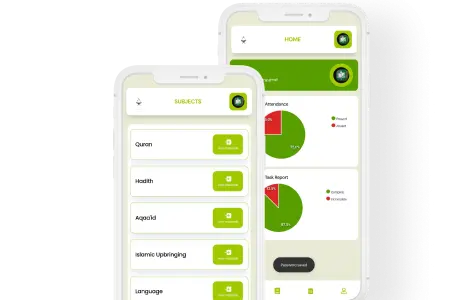
Managing a Canadian Islamic school or maktab? ilmify.app provides student management, Quran progress tracking, attendance, fees, and parent communication for every type of Canadian Islamic education institution.