

Introduction
When parents say they want an “Islamic preschool” for their child, they almost always mean the same thing: a school where Islam is central, not peripheral. But what does that actually look like in practice? What subjects are taught? What outcomes should a child achieve? And how does a genuinely Islamic curriculum differ from a standard national curriculum with Islamic Studies added as one subject among many?
These are the questions this guide answers. Understanding what an Islamic preschool curriculum in Malaysia actually contains — and what distinguishes a deep Islamic curriculum from a surface-level one — is the most important thing a parent can know before choosing a preschool for their child.
The National Baseline: KSPK
Every registered Malaysian preschool — Islamic or otherwise — must follow the Kurikulum Standard Prasekolah Kebangsaan (KSPK), published by the Kementerian Pendidikan Malaysia (KPM). This is the national preschool curriculum standard for children aged 4 to 6.
KSPK organises early childhood learning into six strands:
| KSPK Strand | What It Covers |
| Communication | Language development — BM, English, and mother tongue |
| Spiritual, Attitudes & Values | Islamic Studies (for Muslim children), character, values |
| Humanities | People, environment, community awareness |
| Science & Technology | Basic scientific enquiry, technology familiarity |
| Physical Development | Gross and fine motor, health, hygiene |
| Creativity & Aesthetics | Arts, music, creative expression |
Source: Kementerian Pendidikan Malaysia KSPK; ilmify research, March 2026
The Spiritual, Attitudes & Values strand is where Islamic content enters the national curriculum. For Muslim children, this includes foundational aqidah, basic ibadah practices (solat, wudhu, doa), and Islamic character.
This is the minimum. A quality Islamic preschool goes significantly beyond this baseline.
What Makes a Curriculum Islamic
There is a meaningful difference between:
- A national curriculum with Islamic Studies added — Islam is one subject taught at allocated times; the rest of the day is secular in framing
- A curriculum with Islamic integration — Islamic values and references are woven into all subjects; Science becomes exploration of Allah’s creation, Mathematics becomes encounter with His order
- A curriculum organised around Islamic formation — Islam is the organising principle; the entire curriculum exists to produce a Muslim child who embodies Islamic character, Quranic foundations, and the identity of a khalifah (steward) of Allah
Most quality Islamic preschools in Malaysia aim for levels 2 or 3. The distinction matters because it determines whether your child’s day is Islamic throughout or Islamic only during scheduled Islamic Studies lessons.
The Five Core Domains of Islamic Early Childhood Education
Across Malaysia’s Islamic preschool brands, five domains appear consistently in quality Islamic curricula:
1. Aqidah (Islamic Faith)
Aqidah covers the foundational beliefs of Islam — the oneness of Allah (tawhid), the names and attributes of Allah (asmaul husna), belief in prophets and angels, the Last Day, and divine decree. For young children, aqidah is delivered through stories, songs, questions and answers, and the simple naming of what they already encounter: the sky, animals, plants — as signs (ayat) of Allah.
What it looks like at preschool age: A four-year-old at a quality Islamic preschool can identify basic names of Allah, knows that Allah created everything, and can articulate in simple terms that they are Muslim and what that means.
2. Ibadah (Islamic Practice)
Ibadah covers the daily and weekly practices of Islam — solat, wudhu, doa (supplications for daily activities), fasting (introduced as a concept), and the five pillars. For preschool children, the target outcomes are wudhu performed independently and the solat movements and words learned (with independent solat typically targeted by age 6).
What it looks like at preschool age: Daily class solat practice. Wudhu before solat. Doa before eating, leaving the house, entering the bathroom, sleeping. These practices are not extras — they are woven into every transition of the school day.
3. Al-Quran (Quranic Learning)
Quranic learning at preschool level has two tracks: Iqra’ (learning to read Arabic/Quranic script) and hafazan (memorisation of short surahs and doas). The Iqra’ method — developed by Ustaz As’ad Humam in Indonesia — is the standard learning-to-read Quran approach used across Malaysian Islamic preschools.
Typical targets for a quality Islamic preschool:
| Year | Iqra’ Target | Hafazan Target |
| Year 1 (age 4–5) | Iqra’ Books 1–3 | 3–5 short surahs, key doas |
| Year 2 (age 5–6) | Iqra’ Books 4–6 (completion) | 7–12 surahs, full doa repertoire |
Source: Islamic preschool curriculum benchmarks; ilmify research, March 2026
4. Akhlak & Adab (Islamic Character)
Akhlak covers Islamic moral character — honesty, kindness, patience, gratitude, generosity, respect for elders, care for creation. Adab covers Islamic etiquette — the specific manners of eating, greeting, speech, and conduct that the Prophet ﷺ modelled and taught.
At preschool level, akhlak and adab are less a taught subject and more a cultivated environment: teachers model Islamic character consistently, Islamic etiquette is practised daily (saying bismillah before eating, responding to greetings correctly, saying shukran and thanking), and stories of the Prophet ﷺ and the Companions are used to bring Islamic character to life.
5. Seerah (Prophetic Biography)
Seerah introduces children to the life of the Prophet Muhammad ﷺ as the primary model of how to live as a Muslim. At preschool level, seerah is delivered through age-appropriate stories — the Prophet’s ﷺ kindness to animals, his care for the poor, his truthfulness, his love for children.
How Islamic Outcomes Are Delivered: Subject vs Integrated Approach
The delivery method of Islamic content varies significantly between schools:
| Approach | How It Works | Typical Brands |
| Subject-based | Islamic Studies taught at specific times; other lessons are secular | Standard national Tadika with Islamic supplement |
| Partially integrated | Islamic framing used in some subjects; dedicated Islamic Studies also taught | Most quality Islamic franchises |
| Fully integrated | Islam is the interpretive lens for every subject; no secular/Islamic distinction | Rumi Montessori, some Alimkids practice |
Neither approach is inherently superior — what matters is whether the outcomes (aqidah foundation, Iqra’ completion, hafazan, ibadah practice, akhlak formation) are achieved. The integrated approach tends to produce children for whom Islamic identity is more deeply embedded, because Islam is present throughout their day rather than compartmentalised.
Source: Islamic preschool pedagogy literature; ilmify editorial research, March 2026
Islamic Curriculum Across Malaysia’s Major Preschool Brands
Different brands deliver Islamic curriculum through different frameworks. Understanding these helps parents match the school to their values.
| Brand | Islamic Curriculum Framework | Key Distinguishing Feature |
| Brainy Bunch | SPICE: Iman + Academic + Fitness + Life-Skills + Emotion Excellence | Montessori tools used for Islamic sensorial learning |
| Little Caliphs | TLCP: 13 modules including Iqra’, Hafazan, Islamic Science, Islamic Leadership | Islamic Leadership for Children module — unique |
| Genius Aulad | Genius-Balanced: Here & Hereafter framing; Arabic Funworks, Little Qari, Practical Solat | Strongest Arabic language component among franchises |
| Bir Ali | Sunnah-centred: dedicated Hadith & Sunnah module; JAIS-recognised | Most explicit Sunnah/hadith focus in the market |
| Nimblebee | Deeniyyah Intensive + Islamic entrepreneurial formation | Archery as prophetically-grounded physical education |
| Alimkids | 5As: Aqidah, Akhlak & Adab, Academic, Al-Quran, Amal | Pioneer Islamic playgroup — ages from 18 months |
| Rumi Montessori | Islam as interpretive lens throughout AMI Montessori curriculum; Seerah Curriculum | AMI/MACTE certified — deepest Montessori-Islamic integration |
Source: Brand official websites; ilmify research, March 2026
What to Look For When Evaluating a School’s Islamic Curriculum
Use these benchmarks when visiting or researching any Islamic preschool:
| What to Look For | Strong Signal | Weak Signal |
| Iqra’ target | “Children complete all 6 books by age 6” | “Children do Iqra’ every day” (no completion target) |
| Hafazan target | Specific number of surahs by year group | “We teach short surahs” (no specific target) |
| Solat outcome | “Independent solat by age 6” with daily practice | “We introduce solat” |
| Akhlak delivery | Described daily practices and teacher modelling system | “We teach Islamic values” |
| Curriculum documentation | Published or shareable curriculum guide | No documentation available |
| Teacher Islamic background | Described qualification or training | “Our teachers are Muslim” |
| Islamic environment | Described daily schedule with Islamic components | Islamic branding without described practice |
Conclusion
An Islamic preschool curriculum in Malaysia is not one thing — it is a range of approaches to the same fundamental goal: raising a Muslim child who knows Allah, loves the Prophet ﷺ, can read the Quran, performs solat, and embodies Islamic character in their daily life.
The national KSPK curriculum provides a baseline. Quality Islamic preschools go far beyond it. The five domains — Aqidah, Ibadah, Al-Quran, Akhlak & Adab, Seerah — are the substance of what an Islamic preschool should deliver. How they deliver it matters less than whether they deliver it — and the only way to know is to ask specific questions, read curriculum documentation, and visit in person.
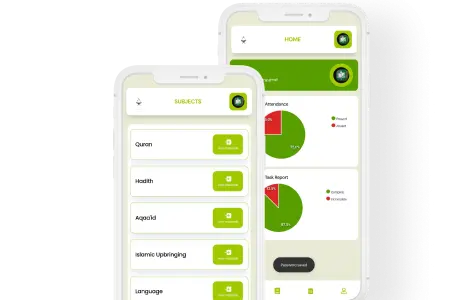
For Islamic preschool operators looking to deliver and track these Islamic outcomes systematically across their campuses, ilmify.app provides the tools to manage Quran progress, report Islamic milestones to parents, and maintain curriculum consistency at scale.
👉 See How ilmify Supports Islamic Curriculum Delivery →
Related Articles
You might also find these helpful:
- 📚 Tadika vs Taska vs Kindergarten — The Complete Muslim Parent’s Guide
- 🕌 Quran & Iqra’ in Preschool: When Should Your Child Start?
- 🕌 Play-Based Islamic Learning: What It Means & Why It Works
- 🕌 Fitrah-Based Education: The Islamic Approach to Early Learning
- 🏫 Brainy Bunch vs Little Caliphs vs Genius Aulad — Which Is Right for Your Child?
- ✅ 10 Questions to Ask When Visiting an Islamic Preschool in Malaysia
- 💰 How Much Does Islamic Preschool Cost in Malaysia? (2026 Price Guide)
- ⚙️ Why Every Islamic Preschool Franchise Needs a Centralised Management System




 Arabic
  English
  Malay
Malay  Urdu
Urdu