
Introduction
Alongside the full-time Arabic Colleges that form Sri Lanka’s formal Islamic education sector, the island has a large network of Quran madrasas — part-time institutions providing mosque-based Islamic education to children who attend secular government or private schools during the day. These are Sri Lanka’s maktabs — the community-level Islamic education infrastructure that reaches children across the country.
Quran madrasas in Sri Lanka have grown significantly in number over recent decades, spurred by both genuine religious demand and external influences from the Gulf and other parts of the Muslim world. Their registration, governance, curriculum, and the debates around their growth form a significant part of Sri Lanka’s Islamic education landscape.
What Is a Quran Madrasa in Sri Lanka?
A Quran madrasa in Sri Lanka is a part-time Islamic education institution that:
- Operates in the evenings, weekends, or other times outside government school hours
- Teaches Quran recitation, basic Islamic practice, and foundational Islamic studies
- Is attached to or operates from a mosque
- Serves children from the local Muslim community
- Is governed by the mosque committee or a dedicated Islamic education committee
| Feature | Details |
| Session timing | After-school (typically 4–7pm); some weekend sessions |
| Duration per session | 1.5–2 hours |
| Student age | 5–14 years primarily |
| Medium | Tamil + Arabic |
| Curriculum focus | Quran recitation, Tajweed, basic fiqh, Islamic practice |
| Teacher | Local Quran teacher; sometimes the mosque imam |
| Fees | Small — typically LKR 200–600/month |
Scale and Distribution
Sri Lanka has an estimated 2,000–3,000+ Quran madrasas, with DMRCA-registered institutions numbering over 1,000 and a significant additional number operating informally. They are concentrated in:
| Region | Notes |
| Eastern Province | Highest density — large Muslim population in Ampara, Batticaloa, Trincomalee districts |
| Western Province | Significant — Colombo and suburban Muslim communities |
| Northern Province | Growing — Muslim communities in Mannar and other areas |
| Central Province | Significant — Muslim communities in Kandy, Nuwara Eliya |
| Southern Province | Smaller Muslim communities; fewer institutions |
The growth in Quran madrasa numbers over the past two decades has been significant — driven by increased religious observance, Gulf connections, and a broader South Asian trend toward intensified Islamic education for children.
DMRCA Registration: Requirements and Process
DMRCA registration for Quran madrasas (as distinct from Arabic Colleges) has become increasingly important post-2019. Requirements typically include:
| Requirement | Details |
| Application | Submission to local DMRCA office with institution details |
| Premises | Evidence of suitable space — mosque hall or dedicated room |
| Teacher qualification | Qualified Quran teacher — Hafiz/Hafiza or recognised certificate |
| Curriculum | Basic Islamic curriculum submission |
| Committee | Mosque or managing committee details |
| Student records | Enrolment list |
For smaller community Quran madrasas, the registration process can be a significant administrative hurdle. DMRCA has been conducting registration drives and many previously unregistered institutions have been brought into the formal system since 2019.
Curriculum: What Students Learn
The standard Sri Lankan Quran madrasa curriculum progresses through:
| Stage | Content | Approximate Duration |
| Qaida | Arabic alphabet; basic harakat; letter joining | 3–6 months |
| Nazra | Quran reading — correct recitation with basic Tajweed | 1–2 years |
| Tajweed focus | Rules of Tajweed applied systematically | 6–12 months |
| Selected memorisation | Al-Fatiha; last 20–30 surahs; key duas | Throughout |
| Basic fiqh | Purification, prayer, fasting basics — Shafi’i tradition | Ongoing |
| Islamic history | Prophet’s ﷺ life; companions; early Islam | Ongoing |
| Islamic identity | What it means to be Muslim; Pillars of Islam and Iman | Ongoing |
Unlike the Deobandi-tradition maktabs of India and Pakistan, Sri Lankan Quran madrasas follow Shafi’i fiqh — meaning some details of wudu, prayer, and other practices differ from the Hanafi instruction typical of North Indian and Pakistani maktabs.
The Teaching Day
A typical Sri Lankan Quran madrasa session:
| Activity | Duration |
| Opening — recitation of Bismillah and opening du’a | 5 minutes |
| Individual Quran recitation to teacher | 30–45 minutes |
| Group Tajweed practice | 15–20 minutes |
| Islamic studies lesson (fiqh, seerah, or aqeedah) | 20–30 minutes |
| Memorisation practice (selected surahs/duas) | 10–15 minutes |
| Closing du’a | 5 minutes |
The individual recitation session — where each child reads to the teacher while others practice — is the core of the learning. The teacher provides corrections, guidance on Tajweed, and assigns the next portion. This is essentially the same model used in maktabs across South Asia.
The Arabisation Debate
One of the most significant debates in Sri Lankan Muslim education over the past two decades has been the Arabisation trend — a shift in some Quran madrasas and Islamic educational settings toward Arabic medium instruction, Arabic dress codes (particularly the full-face niqab for women and teachers), and curriculum content influenced by Gulf-based Salafi interpretations.
This has been a source of tension within Sri Lanka’s Muslim community:
| Perspective | Position |
| Traditional mainstream | Sri Lankan Muslim identity is Tamil-medium, Shafi’i, Sufi-tradition; Arabisation is culturally foreign and theologically imported |
| Reform-oriented | Greater Arabic literacy enables direct access to Islamic sources; Gulf-influenced practice is legitimate Islamic education |
| Government/security | Post-2019 concern that Arabisation correlates with radicalisation — contested but influential |
The Arabisation debate is not simply about language — it encompasses theological tradition, cultural identity, and the influence of Gulf funding on Sri Lanka’s Muslim institutions. It has made Quran madrasa governance a politically sensitive topic in ways it is not in India or Bangladesh.
Funding and Sustainability
| Source | Notes |
| Student fees | Small monthly fees — most common funding source |
| Mosque collections | Friday collections directed to the madrasa |
| Community donations | Individual donations from Muslim community members |
| Gulf/diaspora donations | Significant in some cases — subject to post-2019 scrutiny |
| Government grants | Available to DMRCA-registered institutions |
Quran madrasa finances are modest. The teacher’s salary is typically the largest expense, and many community Quran madrasas struggle to pay competitive salaries — resulting in reliance on part-time or low-paid teachers.
Post-2019 Governance Changes
The April 2019 Easter Sunday bombings prompted significant changes in how Sri Lanka’s government approaches Quran madrasas:
- DMRCA registration requirements were strengthened and more actively enforced
- Curriculum content review was initiated — looking for content that might promote intolerance
- A Presidential Task Force examined Islamic educational institutions
- Government officials visited and inspected madrasas in some areas
- Foreign funding disclosure requirements were strengthened
The mainstream Muslim educational community cooperated with these reviews, generally welcoming transparency measures while objecting to the implicit framing of all Quran madrasas as potential security risks. The practical outcome has been a more formalised registration system and greater administrative requirements for institutions.
For full coverage of this topic, see The Islamic Education Reform Challenge in Sri Lanka: Post-Easter 2019.
Administrative Challenges
Sri Lankan Quran madrasas face similar administrative challenges to mosque maktabs across South Asia:
Paper-based records. Student enrolment, attendance, and Quran progress are typically recorded in physical registers or the teacher’s notebook. DMRCA registration now requires basic student records, creating compliance pressure on previously informal operations.
No parent reporting system. Parents receive verbal updates; there is no structured written communication on Quran progress or attendance.
Fee management. Cash collection with manual receipts; no financial summary for committee review.
Teacher documentation. DMRCA registration requires teacher qualification records — many smaller institutions struggle to document this properly.
Quran progress tracking. Where Hifz is offered alongside Nazra, the Sabak/Sabak Para/Dhor/Manzil tracking system is maintained on paper — with all the limitations that implies.
Frequently asked questions
Q: What is the difference between a Quran madrasa and an Arabic College in Sri Lanka?
A Quran madrasa is part-time — children attend in the evenings or weekends while continuing government school during the day. An Arabic College is full-time — students attend during regular school hours and receive a comprehensive Islamic education curriculum. Arabic Colleges are more intensive and produce more advanced Islamic education qualifications.
Q: Are all Sri Lankan Quran madrasas affiliated with a particular theological tradition?
Most follow the mainstream Shafi’i tradition dominant among Sri Lankan Muslims. Some institutions influenced by Gulf connections have adopted more Salafi-oriented content and practice. The Arabisation debate reflects this theological diversity within the Quran madrasa sector.
Q: Can a child attend both a government school and a Quran madrasa?
Yes — this is the standard pattern. Quran madrasas are designed precisely to complement secular government school attendance. Children attend government school during the day and Quran madrasa in the evening.
Q: Do Sri Lankan Quran madrasas follow a national curriculum?
There is no single mandatory national curriculum. DMRCA provides curriculum guidelines for registered institutions, but in practice there is significant variation in what individual Quran madrasas teach. Larger organisations and mosque networks provide curriculum frameworks to their affiliated madrasas.
Q: What qualifications do Quran madrasa teachers need?
DMRCA registration requires teachers to hold recognised qualifications — typically a Hifz certificate or an Arabic College qualification. Jamiya Naleemiya graduates are well-positioned to teach in Arabic Colleges and Quran madrasas. In practice, teacher qualification standards vary significantly across the sector.
Conclusion
Sri Lanka’s Quran madrasas provide foundational Islamic education to tens of thousands of children — operating from mosque premises in the evenings, teaching Quran recitation, Tajweed, and basic Islamic practice in Tamil and Arabic. Their growth over recent decades has been significant; their governance, funding, and curriculum have come under much closer scrutiny since 2019. For administrators managing these institutions — balancing DMRCA compliance, community expectations, and modest resources — digital tools that produce clean records are both a practical help and an act of institutional transparency.
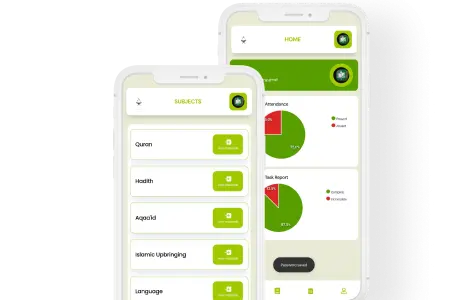
Ilmify supports Sri Lankan Quran madrasas — simple student enrolment, attendance tracking, Quran progress records, fee management, and parent communication in one affordable mobile-first platform. Explore Ilmify →




 Arabic
  English
  Malay
Malay  Urdu
Urdu