
Introduction
The Arabic College is Sri Lanka’s primary full-time Islamic educational institution — the functional equivalent of what India and Pakistan call a madrasa or Darul Uloom, and what Bangladesh calls a Qawmi or Aliya madrasa, but with a name that reflects Sri Lanka’s historical emphasis on Arabic language as the foundation of Islamic learning.
There are over 1,000 DMRCA-registered Arabic Colleges across Sri Lanka, with estimates of the total (including unregistered institutions) running significantly higher. Understanding how Arabic Colleges in Sri Lanka work — their governance through DMRCA, their Shafi’i-tradition curriculum, their registration requirements, and their place in the broader Islamic education landscape — is the starting point for anyone engaged with Sri Lankan Islamic education.
What Is an Arabic College?
An Arabic College in Sri Lanka is a full-time Islamic educational institution that:
- Offers a multi-year curriculum in Islamic sciences, Arabic language, and Quran studies
- Is intended as a primary (and often residential) institution for its students
- Is registered with or seeks registration from DMRCA
- Follows the Shafi’i madhab — the dominant tradition among Sri Lankan Muslims
- Operates primarily in Tamil (for explanation) and Arabic (for classical texts)
- May include Hifz (Quran memorisation) as a separate track within the institution
| Feature | Details |
| Institution name | Arabic College (sometimes: Madrasa; Darul Uloom in some communities) |
| Governance | DMRCA-registered |
| Curriculum tradition | Shafi’i Sunni — adapted from classical Islamic sciences |
| Language | Tamil + Arabic |
| Duration | Varies — typically 5–10 years for full programme |
| Student profile | Children 6–18; some adult learners |
| Residential/day | Both — residential more common in rural areas |
DMRCA: The Governing Body
The Department of Muslim Religious and Cultural Affairs (DMRCA) is Sri Lanka’s government body with responsibility for Muslim religious institutions, including Arabic Colleges. DMRCA’s role in the Arabic College sector includes:
- Registration: Arabic Colleges must apply to DMRCA for registration. Registration confers official recognition and certain benefits (access to government grants; legal standing).
- Standard-setting: DMRCA sets minimum standards for registered institutions — including curriculum guidelines, teacher qualification requirements, and physical facility standards.
- Oversight: Post-2019, DMRCA’s oversight role has been strengthened. Registered institutions are subject to periodic inspection.
- Examination: DMRCA administers or coordinates examinations for Arabic College students at certain levels.
- Support: Some government financial support is available to registered Arabic Colleges.
DMRCA is a small government department with limited capacity relative to the sector it oversees. Its effectiveness as a regulator varies, and enforcement of standards for the many hundreds of smaller Arabic Colleges is inconsistent.
Registration Requirements
To register with DMRCA, an Arabic College must typically demonstrate:
| Requirement | Details |
| Physical premises | Suitable building with adequate classroom space |
| Qualified teaching staff | Teachers with recognised Islamic education qualifications |
| Curriculum compliance | Programme following DMRCA-approved or acceptable Islamic curriculum |
| Governing committee | A managing committee with defined responsibilities |
| Financial management | Basic financial records and accountability |
| Student records | Enrolment records maintained |
Post-2019, DMRCA registration has become more important — both for legitimacy and because government policy has moved toward requiring all Islamic educational institutions to be registered. Many smaller Quran madrasas and Arabic Colleges that previously operated informally have come under pressure to formalise.
Curriculum: What Arabic Colleges Teach
The Arabic College curriculum covers the core Islamic sciences, with the Shafi’i tradition at its centre:
| Subject | Content |
| Quran | Recitation, Tajweed, memorisation (Hifz track) |
| Arabic language | Grammar (Nahw), morphology (Sarf), reading, writing |
| Fiqh | Shafi’i jurisprudence — from basic ibadah through advanced topics |
| Aqeedah | Islamic theology — Ash’ari tradition dominant |
| Hadith | Study of Hadith collections and their application |
| Tafsir | Quran commentary |
| Seerah | Prophetic biography |
| Islamic history | Early Islamic history and Muslim civilisation |
| Tamil language | For communication and teaching in the Tamil medium |
The curriculum draws on both the classical Islamic sciences tradition and local adaptations for the Sri Lankan Shafi’i context. Some larger Arabic Colleges have also introduced supplementary secular subjects (English, Mathematics) in recognition that students need basic general education skills — though this is not mandated by DMRCA.
Levels of Study
Arabic Colleges typically offer a multi-level programme:
| Level | Approximate Age | Content Focus | Duration |
| Ibtidaiyya (Foundation) | 6–10 | Qaida, basic Quran, basic Islamic practice | 2–3 years |
| Mutawassita (Intermediate) | 10–14 | Quran reading (Nazra), fiqh basics, Arabic introduction | 3 years |
| Ulya (Higher) | 14–18 | Advanced fiqh, Hadith, Tafsir, Arabic literature | 3–4 years |
| Post-graduate | 18+ | Advanced specialisation — some larger colleges only | Variable |
This structure is less formally codified than India’s Aliya/Qawmi systems or Bangladesh’s BMEB levels — individual Arabic Colleges have some flexibility in how they structure their programmes. The absence of a standardised national examination system (comparable to BMEB in Bangladesh) means qualifications are more institution-specific.
The Shafi’i Distinction
The Shafi’i madhab is the most important theological distinction between Sri Lankan Arabic College education and the predominantly Hanafi Islamic education of India, Pakistan, and Bangladesh.
| Feature | Sri Lanka (Shafi’i) | India/Pakistan/Bangladesh (Hanafi) |
| Madhab | Shafi’i | Hanafi |
| Fiqh texts | Tuhfat al-Muhtaj, Minhaj al-Talibin | Hidayah, Quduri |
| Prayer differences | Some differences in detail | Standard Hanafi practice |
| Curriculum texts | Different classical texts | Different classical texts |
| Tradition | Arab-origin; Southeast Asian Shafi’i tradition | Deobandi/Barelvi — South Asian Hanafi |
This means that the curriculum used in Sri Lankan Arabic Colleges is distinct from Dars-e-Nizami (the Indian/Pakistani/Bangladeshi standard). Sri Lankan institutions have their own textbook tradition, drawing on Shafi’i classical sources and locally produced Arabic educational materials.
Language of Instruction
| Language | Role in Arabic College Education |
| Tamil | Primary explanation language — teachers explain concepts, conduct discussion, and communicate with students in Tamil |
| Arabic | Language of classical texts — Quran, Hadith, fiqh manuals, aqeedah texts are studied in Arabic |
| Sinhala | Minimal — used in Sinhala-speaking areas but not the primary Islamic education language |
| English | Growing — some urban Arabic Colleges use English as a medium or supplement |
The Tamil-Arabic combination means Sri Lankan Arabic College graduates are typically tri-literate — Tamil, Arabic, and basic English in more urban or internationally-connected institutions.
Types of Arabic Colleges
| Type | Description |
| Large urban Arabic Colleges | 200–500+ students; multiple teachers; full curriculum; may have Hifz department |
| Mid-sized town Arabic Colleges | 50–200 students; most common type; typically day-scholar |
| Small rural Arabic Colleges | Under 50 students; often single-teacher; basic curriculum |
| Residential Arabic Colleges | Boarding students from outside the local area; typically larger and more comprehensive |
| Affiliated to mosque | Operating from mosque premises under mosque committee governance |
| Independent institution | Operating under a separate Islamic trust or society |
Staffing and Teacher Qualifications
Arabic College teachers in Sri Lanka typically hold qualifications from:
- Jamiya Naleemiya — Sri Lanka’s own Islamic university (see Jamiya Naleemiya)
- Al-Azhar University, Egypt — a significant pathway for Sri Lankan Islamic scholars
- South Asian madrasas — some Sri Lankan teachers trained in India, Pakistan, or Bangladesh
- Saudi Arabian institutions — particularly for Shafi’i fiqh specialists
DMRCA sets minimum teacher qualification standards for registered institutions, but enforcement is uneven and smaller colleges often struggle to attract qualified teachers.
Funding and Fees
| Source | Notes |
| Student fees | Most Arabic Colleges charge modest fees — more than Qawmi Pakistan but less than Aliya Bangladesh |
| Community donations | Mosque collections, individual donations from the Muslim community |
| Government grants | Available to registered institutions through DMRCA — limited but meaningful |
| Zakat | Some community Zakat channelled to Arabic Colleges |
| Foreign donations | Gulf and diaspora donations — subject to post-2019 scrutiny |
| Waqf income | Limited — some institutions have endowed properties |
Arabic Colleges are significantly less free than Pakistani Qawmi madrasas — most charge fees, though at levels accessible to ordinary Muslim families. Government registration unlocks access to modest government financial support.
Frequently asked questions
Q: Why are they called “Arabic Colleges” rather than madrasas?
The name reflects the historical emphasis on Arabic language education in Sri Lanka’s Muslim community — Arabic was seen as the key to Islamic knowledge, and institutions emphasising it became known as Arabic Colleges. The term is entirely equivalent to “madrasa” in function; the name is a Sri Lankan convention.
Q: Are Arabic College qualifications recognised by Sri Lanka’s university system?
Recognition is limited and has been a long-standing issue. Jamiya Naleemiya qualifications are the closest to university-level recognition. DMRCA has been working toward greater formal recognition of Arabic College qualifications, but progress has been slow. Most Arabic College graduates pursue careers in the Islamic education sector rather than mainstream employment.
Q: Do Arabic Colleges teach secular subjects?
Most Arabic Colleges focus on Islamic curriculum with limited secular content. Some larger urban colleges have introduced English and Mathematics alongside Islamic subjects in recognition of practical needs. There is no equivalent to Bangladesh’s Aliya system of government-mandated secular integration.
Q: How many DMRCA-registered Arabic Colleges are there?
Over 1,000 institutions are DMRCA-registered. The total number of institutions (including unregistered) is estimated to be significantly higher — perhaps 1,500–2,000 — though post-2019 registration drives have brought more institutions into the formal system.
Q: Can women attend Arabic Colleges?
Yes — many Arabic Colleges have female sections, and dedicated female Arabic Colleges also operate. Female Islamic education in Sri Lanka is well-developed, with strong female participation in both Arabic College programmes and Hifz education.
Conclusion
Arabic Colleges are the backbone of Sri Lanka’s formal Islamic education — over 1,000 DMRCA-registered institutions teaching Shafi’i-tradition Islamic sciences in Tamil and Arabic to children and young people across the island. Their governance through DMRCA, their Shafi’i curriculum, and their Tamil-medium instruction make them distinct from the predominantly Hanafi, Urdu/Bengali-medium institutions of India, Pakistan, and Bangladesh.
For Arabic College administrators managing their institutions under increasing DMRCA scrutiny and with growing community expectations of governance transparency, digital tools for student records, attendance, fees, and parent communication make a practical difference.
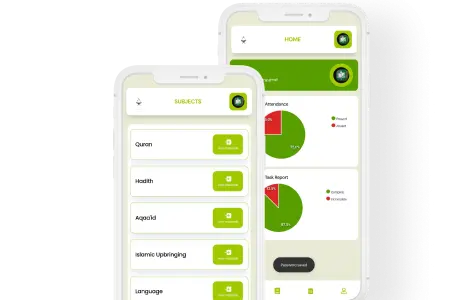
Ilmify supports Sri Lankan Arabic Colleges — student management, Hifz and Aamuktha tracking, fee management, and parent communication in one mobile-first platform. Explore Ilmify →




 Arabic
  English
  Malay
Malay  Urdu
Urdu