Introduction
Every functioning maktab started with a decision by a small group of people — usually a mosque committee, a parent, a teacher, or a community elder — who looked around and saw that the children in their area had no accessible Islamic education and decided to do something about it. What followed that decision was, in most cases, improvised: a room borrowed from the mosque, a teacher found through word of mouth, a timetable scrawled on a whiteboard, fees collected in cash and recorded in a notebook.
This improvised approach produces maktabs that serve their communities — but also maktabs that collapse when the founding teacher leaves, maktabs that have no records when a safeguarding question arises, maktabs that cannot tell an interested parent how much they charge or what their curriculum actually covers. Starting well does not require a large budget or a professional management team. It requires thinking through the right things in the right order — before the first student walks through the door.
This guide covers how to start a maktab from scratch: the legal and structural decisions, the curriculum and staffing choices, the administrative systems to put in place, and the common mistakes that cause new maktabs to struggle in their first year.
What Is a Maktab?
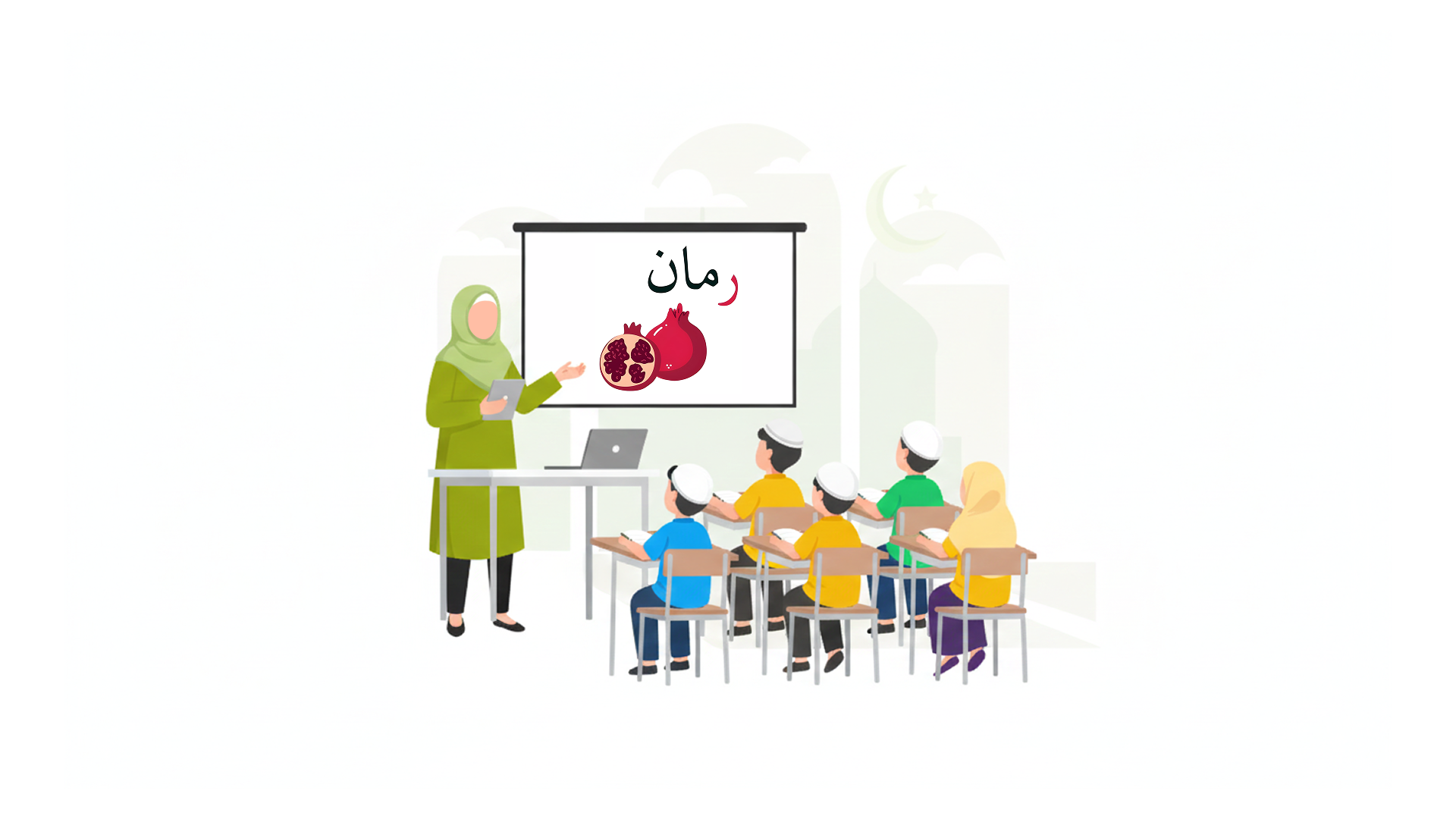
A maktab (مَكْتَب, plural: makatib) is a community Islamic school — typically an after-school or weekend supplementary institution — where children receive Quranic education (Nazra, Hifz, Tajweed) and basic Islamic studies alongside their mainstream schooling. The maktab is the most widespread form of Islamic education in the world: estimates suggest more than 10–20 million children attend maktabs in India alone, with comparable numbers in Pakistan, Bangladesh, and large communities across the UK, USA, Canada, and Australia.
Unlike a full-time madrasah, a maktab typically operates for 1.5–3 hours per day — either in the late afternoon after school, in the morning before school, or on weekends. It is usually community-funded, mosque-affiliated or mosque-based, and staffed by one to five teachers.
Step 1: Define Your Purpose and Model
Before any practical step, the founding committee must answer three questions clearly:
1. What is this maktab for?
Is the primary goal Hifz (complete Quran memorisation)? Nazra (Quran recitation by sight)? General Islamic education (Fiqh, Seerah, duas, Islamic values)? A combination? Different goals require different teachers, different curricula, and different timetables.
2. Who is it for?
Age range, gender, local community background, and academic level of the students all affect how the maktab should be structured.
3. What model will it follow?
| Model | Description | Best For |
| After-school weekday | 3–5 evenings per week, 1.5–2 hours | Families wanting regular Islamic education alongside school |
| Weekend only | Saturday and/or Sunday, 2–3 hours | Families with busy weekday schedules; smaller communities |
| Morning (before school) | Early mornings, 1 hour before school starts | Families who prefer mornings; dedicated Hifz students |
| Full Hifz programme | Daily, longer sessions, Hifz-focused | Students committed to memorising the Quran |
| Hybrid | Mixed weekday and weekend sessions | Larger maktabs serving multiple age groups |
Write down the answers to these three questions before proceeding. Everything else — venue, staffing, timetable, fees — flows from this foundation.
Step 2: Legal and Governance Setup
The legal and governance structure of a maktab varies by country. Most small maktabs operate informally — particularly in South Asia — but in the UK, USA, Canada, and Australia, there are important legal and regulatory considerations.
United Kingdom:
- A maktab operating as a supplementary school does not need to register with Ofsted if it meets for fewer than 18 hours per week
- If it receives public funding or operates as a registered charity, different rules apply
- GDPR applies regardless of size — the school must have a privacy policy and data handling procedures
- Safeguarding requirements apply to anyone working with children — DBS checks are mandatory for all teachers and regular volunteers
India / Pakistan / Bangladesh:
- Most maktabs operate under the governance of a mosque trust or an education board (e.g. Idara-e-Deeniyat, Samastha, BEFAQ)
- Registration with the relevant state or national board is strongly recommended for curriculum credibility and examination access
- Trust documentation protects the institution if disputes arise over premises or governance
Minimum governance structure for any maktab:
| Role | Responsibility |
| Chair / Principal | Overall governance, teacher management, strategic decisions |
| Secretary | Minutes, communications, correspondence |
| Treasurer | Fee collection, fee records, expense management |
| Lead Teacher / Head of Studies | Curriculum, student progress, teacher supervision |
Even a tiny maktab with 20 students benefits from having these four roles clearly assigned — ideally to different people.
Step 3: Secure a Venue
Most maktabs begin in a mosque, community hall, or school building. Key considerations:
| Factor | Questions to Answer |
| Space | Is there enough room for your expected student numbers? Minimum: 1.5 sq metres per student |
| Timing | Can you secure regular, consistent booking? One-off approvals create timetable instability |
| Safety | Is the space compliant with fire safety and safeguarding requirements for children? |
| Facilities | Are there toilets, wudu facilities, and a clean prayer space? |
| Ownership | Is the venue owned or rented? What are the terms? What happens if the arrangement ends? |
| Accessibility | Can parents safely drop off and collect children? Is there parking or good transport links? |
Practical advice: Get any venue agreement in writing, even between mosque committees and affiliated maktabs. Verbal agreements about room usage have ended many maktabs when committee memberships or priorities changed.
Step 4: Design Your Curriculum
Your curriculum defines what students learn, in what sequence, and how progress is measured. For a new maktab, the curriculum should be:
Structured by level, not just age. Students arrive with different Quranic starting points. A 10-year-old who has never read the Quran starts at Qaidah alongside a 6-year-old — and that is fine. Levels, not ages, determine class grouping.
Standard levels in a full-curriculum maktab:
| Level | Content | Duration (Typical) |
| Qaidah | Arabic alphabet, basic letter joining, short vowels, Madd | 4–12 months |
| Nazra | Quran recitation by sight — Juz’ Amma through to completion | 1–3 years |
| Hifz | Quran memorisation — Sabak, Sabqi, Dhor framework | 3–10 years |
| Islamic Studies | Fiqh (prayer, purity, fasting), Aqeedah basics, Seerah, duas, Arabic | Ongoing alongside above |
Curriculum sources to consider:
- Established maktab board syllabi: Idara-e-Deeniyat (India), Samastha (Kerala), Wifaq ul Madaras (Pakistan), BEFAQ (Bangladesh) — using an established board’s curriculum gives credibility and a ready-made examination system
- Independent curriculum: allows more flexibility but requires more design work and lacks external examination structure
- Hybrid: follow a board syllabus for core Quran education; add your own Islamic studies content
Step 5: Hire and Onboard Your Teacher(s)
Your teachers are your maktab. Everything else — venue, curriculum, fees — is infrastructure. The teacher standing in front of your students every day is the school.
Minimum qualification standards for Quran teachers:
| Role | Minimum Qualification |
| Qaidah / Nazra teacher | Hafiz or strong Nazra with demonstrated Tajweed; teaching experience preferred |
| Hifz teacher | Hafiz with documented Ijazah (unbroken chain to the Prophet ﷺ); experience in Hifz supervision |
| Islamic Studies teacher | ‘Alim qualification (completed Islamic studies programme) or equivalent Islamic education |
Hiring process:
- Write a job description — even one page setting out the role, hours, qualification expectations, and salary. This filters serious applicants from informal ones.
- Interview with a practical assessment — ask the candidate to recite a portion of the Quran and demonstrate their Tajweed. Do not hire on CV alone.
- Check references — speak to previous schools or mosques they have taught at.
- In the UK: Complete a DBS check before the teacher begins work. This is a legal requirement, not optional.
- Agree terms in writing — hours, salary, notice period, and expectations. A verbal agreement creates disputes.
Onboarding a new teacher:
- Walk them through your curriculum framework
- Introduce the tracking system (whether paper or digital) and show them how to record sessions
- Explain your parent communication expectations
- Assign them a mentor teacher or hold a weekly check-in for the first month
Step 6: Set Your Fee Structure
A maktab’s fee structure must balance three realities: covering costs, remaining accessible to low-income families, and being predictable enough for parents to plan around.
Common fee models:
| Model | Description | Pros | Cons |
| Fixed monthly | Same fee every month regardless of attendance | Simple; predictable for both school and family | Families feel they are paying for missed sessions |
| Per-session | Fee calculated per class attended | Feels fair to families | Variable income; difficult to budget |
| Termly / annual | Fee paid once per term or year | Reduces collection frequency | Large lump sum may be difficult for some families |
| Sliding scale | Fee varies by family income | Most equitable | Administratively complex; requires sensitive conversations |
| Donation-based | Families give what they can | Accessible; community spirit | Unpredictable income; sustainable only with external funding |
Practical guidance:
- Monthly fixed fees are the most sustainable model for most maktabs
- Set the fee to cover teacher salaries, venue costs, and basic materials — with a small surplus for maintenance and unexpected costs
- Build in a hardship waiver process — document it, do not discuss it openly, and apply it consistently
- Collect fees through a digital system from the start — cash collection creates disputes and losses
Sample cost breakdown for a maktab of 60 students:
| Item | Monthly Cost (estimate) |
| 2 part-time teachers (15 hrs/week each) | £1,200 |
| Venue hire | £300 |
| Materials (Masahif, books, stationery) | £50 |
| Administration (software subscription) | £30 |
| Total | £1,580 |
| Per-student monthly fee needed | £27 |
Figures are illustrative. Adjust for your local market, teacher salaries, and venue costs.
Step 7: Build Your Administrative Systems
This step is where most new maktabs fail — not through bad intentions but through under-investment in the invisible infrastructure that makes a school run.
Minimum administrative systems for a new maktab:
| System | What It Covers | Tool |
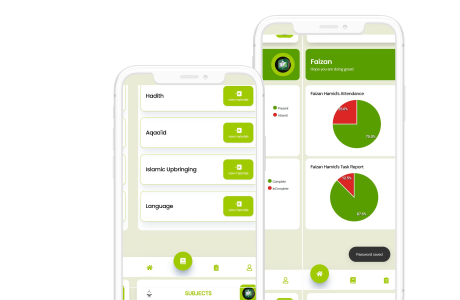
| Student records | Enrolment details, Hifz position, attendance history | Ilmify or structured spreadsheet |
| Hifz tracking | Sabak, Sabqi, Dhor — per session, per student | Ilmify (purpose-built) |
| Fee management | Monthly fees, payment records, outstanding balances | Ilmify or accounting spreadsheet |
| Parent communication | Progress updates, announcements, individual queries | Ilmify parent portal or structured WhatsApp (with limits) |
| Teacher records | Contracts, DBS records (UK), session logs | Secure folder (physical or digital) |
| Governance records | Meeting minutes, committee decisions, annual accounts | Secure folder |
Critical rule: Build these systems before the first student enrols — not after the first crisis. A maktab that starts with proper records and then maintains them is infinitely easier to run than one that tries to reconstruct records retroactively.
Step 8: Enrol Your First Students
Enrolment process:
- Assessment session — before enrolment, assess each student’s current level (can they read the Quran? Which Surah? What is their Tajweed standard?) to assign them to the correct class
- Enrolment form — collect: student name, date of birth, address, parent names, emergency contact, any medical conditions, current Islamic education level
- Parent declaration — have parents sign a document confirming they understand the fee structure, attendance expectations, and school rules
- Issue a welcome letter — outline the timetable, the teacher’s name, what to bring, and how to contact the school
Enrolment form essential fields:
| Field | Why It Matters |
| Student full name | Records and reporting |
| Date of birth | Age-appropriate grouping; safeguarding |
| Home address | Emergency contact; UK regulatory requirement |
| Medical conditions / allergies | Safeguarding and emergency response |
| Parent/guardian name + phone | Day-to-day communication |
| Secondary emergency contact | Safeguarding |
| Current Quran level | Correct class placement |
| Fee agreement signed | Reduces disputes |
Step 9: Communicate with Parents
Parent communication strategy from the start determines whether your maktab builds a reputation for professionalism or for informality. The tone is set in the first week.
Communication channels to establish:
| Channel | Purpose |
| Digital progress reports (via Ilmify) | Individual student Hifz progress, attendance, Tajweed notes |
| School announcement group (WhatsApp) | Term dates, holiday announcements, events — whole-school only |
| Individual parent portal (Ilmify) | Personal child’s records — accessible 24/7 |
| Termly parents’ meeting | Face-to-face review of student progress; address collective concerns |
From day one, establish these norms:
- Teachers do not share their personal phone numbers with parents
- Individual queries go through the school’s administrative channel, not the class WhatsApp group
- Feedback and complaints are directed to the principal, not aired in public groups
- Progress updates are provided through the digital system — parents are not expected to chase the teacher for updates
Common First-Year Mistakes
| Mistake | Consequence | Prevention |
| No written governance structure | Disputes between committee members with no resolution mechanism | Write a simple constitution before opening |
| Informal teacher agreement | Teacher leaves with no notice; school has no recourse | Written contract from day one |
| No fee records | Disputes with parents; inability to track sustainability | Digital fee management from enrolment |
| No assessment before enrolment | Mixed-ability classes that frustrate both advanced and beginner students | Assessment session for every student before first day |
| WhatsApp as sole management tool | Records lost, communication chaos, teacher privacy breached | Implement digital management software from the start |
| No safeguarding policy (UK) | Legal exposure; inability to respond to incidents | DBS checks and basic safeguarding policy before opening |
| Overpromising to parents | Damaged trust when expectations are not met | Communicate curriculum and progress expectations clearly at enrolment |
Maktab Setup Checklist
code Codedownloadcontent_copyexpand_less
PRE-OPENING CHECKLIST

GOVERNANCE
[ ] Purpose, model, and target students defined in writing
[ ] Committee roles assigned (Chair, Secretary, Treasurer, Head of Studies)
[ ] Governance document / constitution drafted
[ ] Bank account opened in the school's name (not a personal account)

LEGAL (UK)
[ ] DBS checks completed for all teachers and regular volunteers
[ ] Basic safeguarding policy written and shared with all staff
[ ] GDPR privacy notice drafted for parents
[ ] Venue agreement in writing

VENUE
[ ] Regular booking confirmed in writing
[ ] Space adequate for expected student numbers
[ ] Fire safety and basic safety checks completed
[ ] Wudu facilities available or arranged

CURRICULUM
[ ] Levels defined (Qaidah, Nazra, Hifz, Islamic Studies)
[ ] Board affiliation decided (or independent curriculum designed)
[ ] Assessment criteria for each level documented

STAFFING
[ ] Teacher(s) hired with written contracts
[ ] Qualifications and Ijazah (where applicable) verified
[ ] References checked
[ ] Onboarding completed (curriculum, tracking system, parent communication norms)

ADMINISTRATION
[ ] Student record system set up (Ilmify or equivalent)
[ ] Hifz tracking framework configured
[ ] Fee structure set and documented
[ ] Enrolment form designed

ENROLMENT
[ ] Assessment process designed
[ ] Enrolment forms ready
[ ] Welcome letter / parent information pack prepared
[ ] Parent communication channels established
👉 Starting a maktab right means building the systems before the students arrive.Ilmify is the management platform built specifically for maktabs — Hifz tracking, fees, attendance, and parent communication in one place.Set up your maktab on Ilmify → ilmify.app
Conclusion
Starting a maktab is an act of service to your community — and like all acts of service, it is done best when it is done well. The nine steps above — from defining your model to communicating with parents — provide the framework for a maktab that is stable, professional, and sustainable from its first day. The communities that need maktabs most are often the communities with the fewest formal resources; which is exactly why the institutions they build must be structured to last.
👉 Build your maktab on the right foundation from day one. Explore Ilmify → ilmify.app
Related Articles:
- 📅 How to Write a Maktab Timetable That Actually Works
- 👨🏫 How to Hire and Retain Good Madrasa Teachers
- 💻 How to Transition a Maktab from Paper to Digital: A 5-Step Migration Guide
- 📱 WhatsApp vs School Management Software: When to Upgrade Your Maktab
- 🇬🇧 How to Run a Maktab in the UK in 2026: The Complete Operational Guide
- 📊 Hifz Tracking Using Sabak, Sabqi, and Dhor — A Complete Guide



 at
at