

Introduction
An estimated 5–6 million people of Turkish Muslim heritage live in Western Europe — the legacy of the labour migration programmes that brought workers from Turkey to Germany, the Netherlands, Belgium, Austria, France, and Switzerland from the 1960s onwards. Three generations later, this community maintains a substantial Islamic education infrastructure: hundreds of DITIB mosque schools in Germany, weekend Quran courses across Dutch and Belgian Turkish communities, community-based Islamic education in every country with a significant Turkish population.
What this community does not have is adequate management tools for that infrastructure. Turkish diaspora Islamic education is almost entirely administered informally — paper enrolment, WhatsApp parent groups, teacher notebooks, cash collection. The same gap that exists for private Kuran kursları in Turkey exists for diaspora mosque schools in Germany, but compounded by the absence of any Diyanet state infrastructure, a linguistic environment that mixes Turkish and the host country language, and volunteer governance that turns over frequently.
This guide covers the Turkish diaspora Islamic education landscape in full: who the communities are, what institutions they have built, how Islamic education currently works, and what professional management tools can do for this overlooked segment.
The Turkish Muslim Diaspora in Europe: Scale and Geography
The Turkish Muslim community in Western Europe is one of the continent’s largest Muslim minorities, distributed across six major host countries:
| Country | Est. Turkish Muslim Population | Main Cities | Islamic Education Network |
| Germany | ~3.5 million | Berlin, Cologne, Frankfurt, Stuttgart, Munich | DITIB (~900 mosques), IGMG (~300 mosques), independent |
| Netherlands | ~400,000 | Amsterdam, Rotterdam, The Hague, Utrecht | Diyanet Netherlands, Millî Görüş, independent |
| Belgium | ~350,000 | Brussels, Antwerp, Ghent, Liège | DITIB Belgium, Millî Görüş Belgium |
| Austria | ~350,000 | Vienna, Graz, Linz | ATIB (DITIB equivalent), Millî Görüş Austria |
| France | ~500,000 | Paris, Lyon, Strasbourg, Marseille | DITIB France, Millî Görüş France, independent |
| United Kingdom | ~150,000 | London, Birmingham, Manchester | Turkish Cypriot + mainland communities; independent mosques |
Source: Pew Research Center Muslim population estimates; DITIB Germany; community organisation data
Germany hosts the largest concentration by a significant margin — approximately 3.5 million people of Turkish heritage, including both first-generation immigrants and German-born subsequent generations. The community is now in its third and fourth generations, meaning many individuals have tenuous connections to Turkish as a first language but strong connections to Islamic identity and community.
How Turkish Muslims Got to Europe: A Brief History
The Turkish presence in Western Europe began with bilateral labour agreements. Germany signed the first such agreement with Turkey in 1961, actively recruiting Turkish workers (Gastarbeiter — guest workers) for its post-war economic expansion. Similar agreements followed with the Netherlands (1964), Belgium (1964), Austria (1964), and France (1965).
The original expectation — shared by both the workers and the receiving governments — was that these workers would return to Turkey after a period of employment. Most did not. By the time Germany sought to end the programme in 1973 amid an economic slowdown, hundreds of thousands of Turkish workers had settled, brought families through family reunification provisions, and begun building permanent communities.
The Islamic infrastructure that the Turkish diaspora built reflects this permanent settlement: mosques, Kuran courses, weekend Islamic schools, community centres, and cultural organisations. The Diyanet recognised early that it could extend its influence to these communities — and in 1985 established DITIB (Diyanet İşleri Türk-İslam Birliği) in Germany as its primary overseas operating organisation.
The Diyanet Abroad: DITIB and Turkey’s Religious Reach in Europe
The Diyanet İşleri Başkanlığı — Turkey’s state Presidency of Religious Affairs — operates internationally through a network that spans over 145 countries. Its total international presence includes over 2,000 mosques and religious centres abroad. In Western Europe, this international reach is primarily channelled through DITIB.
How the Diyanet extends abroad:
The Diyanet’s standard model for diaspora communities is to send imams from Turkey on rotation — typically 2 to 4 year assignments. These imams are Turkish civil servants, employed by the Diyanet, who serve diaspora communities but remain on the Turkish state payroll. They bring Turkish-language Islamic education, Friday sermons, and Quran course teaching to the diaspora mosque they are assigned to.
This model has been both the Diyanet’s greatest strength (consistency, state funding, professional training) and its greatest weakness (imams with limited host-country language skills, high rotation reducing community integration, political controversies around Turkey’s influence on diaspora communities).
The Diyanet’s international scale:
| Metric | Scale |
| Countries of operation | 145+ |
| Mosques abroad (DITIB Germany alone) | ~900 |
| Imams sent abroad annually | Thousands |
| Countries with dedicated DITIB organisations | Germany, France, Netherlands, Belgium, Austria, Switzerland, Denmark, and others |
Source: Diyanet İşleri Başkanlığı; Wikipedia Presidency of Religious Affairs
DITIB Mosque Schools in Germany: How They Work
DITIB (Diyanet İşleri Türk-İslam Birliği) is the largest Islamic organisation in Germany, operating approximately 900 mosques through a federation of local mosque associations (Vereine). It is governed as a German registered association (eingetragener Verein) but is operationally and ideologically connected to the Turkish Diyanet.
What DITIB mosque schools do:
Every DITIB mosque in Germany with sufficient community size runs a Kuran kursu (Quran course) — typically for children on Saturday and Sunday mornings, running 1–2 hours per session. These are direct equivalents of Turkish Kuran kursları, using the same Diyanet curriculum materials, taught primarily in Turkish, and focused on:
- Arabic alphabet (Elif-Bâ) for beginners
- Quran recitation (yüzüne okuma) progression
- Basic Islamic knowledge (Dini Bilgiler)
- Memorisation of short surahs and daily duas
- Hafızlık for motivated students where a qualified hafız teacher is available
Who teaches: DITIB mosque teachers are a mix of Diyanet-sent imams (whose teaching is part of their civil service assignment), locally trained community volunteers with İmam Hatip or İlahiyat backgrounds, and in some larger mosques, locally-hired professional teachers.
The governance challenge: Individual DITIB mosque associations are independent legal entities — they own their mosque buildings and hire (or accept) their staff. The DITIB umbrella organisation provides guidance and channels Diyanet relationships, but does not directly manage day-to-day operations at each mosque. This creates significant variability in quality, staffing, and educational practice across the network.
Millî Görüş (IGMG): The Alternative Network
Alongside DITIB, the second major Turkish Islamic organisation in Germany and Europe is IGMG — İslami Cemaat Millî Görüş (Islamic Community Millî Görüş). Rooted in the Islamist political tradition of Necmettin Erbakan (Prime Minister of Turkey in 1996–97, deposed in the 1997 military intervention), IGMG represents a different theological and political orientation from the Diyanet-affiliated DITIB.
IGMG operates approximately 300 mosque communities across Germany and several hundred more across other European countries. It runs its own Quran courses, weekend Islamic schools, and youth programmes. Its relationship with Turkey is more complex and often more contentious than DITIB’s — IGMG has historically been more critical of the Turkish state and more aligned with political Islam.
For Islamic education purposes: IGMG mosque schools function similarly to DITIB mosque schools — Quran courses for children, weekend sessions, Turkish-language Islamic education. The curriculum and community culture reflect IGMG’s more Islamist political character, but the practical educational activities are comparable.
Management situation: Like DITIB mosques, IGMG mosque schools have no purpose-built management tools. Paper enrolment, WhatsApp, and teacher notebooks.
Turkish Islamic Education in the Netherlands, Belgium, and Austria
Beyond Germany, the Turkish diaspora communities of the Netherlands, Belgium, and Austria have built comparable, if smaller, Islamic education infrastructures.
Netherlands: The Dutch Turkish Muslim community (approximately 400,000) is served primarily by the Diyanet Netherlands organisation (a direct equivalent of DITIB) and by Millî Görüş Netherlands. Amsterdam, Rotterdam, and The Hague have the largest Turkish mosque communities. Dutch Turkish children typically attend state schools during the week and Quran courses at the mosque on weekends. The Netherlands has stricter regulations around mosque funding and foreign influence than Germany, creating some friction with the Diyanet-linked model.
Belgium: The Belgian Turkish community (approximately 350,000) is concentrated in Brussels, Antwerp, and Ghent. DITIB Belgium and Millî Görüş Belgium are the main organisations. Belgium’s unusual federal structure — with separate Flemish and Walloon governance — creates complexity for Islamic educational recognition. Turkish Quran courses operate informally within mosque communities.
Austria: ATIB (Avusturya Türk-İslam Birliği — Austrian Turkish-Islamic Union) is the DITIB equivalent for Austria, serving approximately 350,000 Turkish Muslims primarily in Vienna and other major cities. Austria has enacted specific laws regulating foreign funding of religious organisations (the Islam Act of 2015) that have created challenges for the Diyanet-linked model of sending and funding imams from Turkey.
France: The French Turkish community (approximately 500,000) is linguistically distinctive — a significant proportion of French Turks have French as a primary language or alongside Turkish, more so than German Turks who often maintain stronger Turkish. DITIB France and Millî Görüş France operate, but the French laïcité (strict secularism) framework creates different regulatory constraints than Germany.
What Turkish Diaspora Islamic Education Looks Like in Practice
Setting aside the institutional names and governance structures, the practical reality of Turkish diaspora Islamic education at the mosque level is remarkably consistent across countries. A typical Saturday morning at a DITIB or IGMG mosque school in Germany, the Netherlands, or Belgium looks like this:
9:00 AM: Children arrive for the first session. Parents drop them off at the mosque entrance. A volunteer (often a parent on roster) takes informal attendance — names ticked on a paper list or mentally noted by the teacher.
9:00–11:00 AM: Quran recitation class. Children sit in groups roughly sorted by level — beginners working on Elif-Bâ with one teacher, more advanced students continuing their yüzüne okuma with another. A few students may be doing hafızlık preparation with a teacher who is herself a hafıza.
11:00 AM: Break. Children move to a community room; parents may have tea.
11:00–12:00 PM: Dini Bilgiler (Islamic knowledge) class. Stories of the prophets, the five pillars, basic Islamic ethics — typically in Turkish, though some teachers mix in German or Dutch for children more comfortable in the local language.
12:00 PM: Children leave. Parents collect them or they walk home.
The administration: The teacher has a notebook with attendance marks. Enrolment was done by word of mouth at the beginning of the year — parents told to bring their children’s names and phone numbers to the mosque office one Saturday in September. A WhatsApp group exists for communication with parents. There are no fee invoices; parents contribute what they can to the mosque fund. There is no progress tracking system; the teacher knows informally which children are at which level.
This is the dominant reality across hundreds of DITIB and IGMG mosque schools in Western Europe.
The Language Challenge: Turkish, Arabic, and the Host Country Language
The linguistic situation in Turkish diaspora Islamic education is genuinely complex — more so than in Turkey itself or in South Asian diaspora maktabs.
Three languages are in play:
- Turkish: The historical language of instruction for Diyanet-connected Kuran courses. Teachers sent from Turkey teach in Turkish. Older-generation parents expect Turkish. But third and fourth generation Turkish-Germans, Turkish-Dutch, or Turkish-Belgians may have limited Turkish proficiency.
- Arabic: The language of the Quran. All Quran recitation is in Arabic. Basic Arabic alphabet instruction is the first educational task. Diaspora children learn Arabic script without necessarily understanding Arabic as a spoken language — the same situation as in Turkey.
- The host country language (German, Dutch, French, etc.): The dominant language of the children’s daily lives, schooling, and peer relationships. Some diaspora mosque teachers — particularly locally-raised volunteers — switch into German or Dutch to explain concepts. Others strictly maintain Turkish, believing this reinforces heritage language alongside Islamic education.
This linguistic complexity has no parallel in Turkey’s domestic Kuran kursları (which teach in Turkish to Turkish-speaking children) or in South Asian UK maktabs (which typically use the community heritage language — Urdu, Sylheti, Punjabi — alongside Arabic). It is a distinctive diaspora challenge.
What Diaspora Turkish Islamic Schools Need from Management Software
Turkish diaspora mosque schools are among the most underserved institutions in the entire Islamic education management software market. They have:
- No state infrastructure (no EHYS, no e-Okul)
- No dedicated management software
- Volunteer governance that changes frequently
- Small budgets — everything is community-funded
- Multi-language operational environment
- Parents who may be more comfortable in German or Dutch than Turkish for formal communication
Their management needs, however, are identical to those of any Islamic school — just at a smaller scale and with different language requirements.
| Management Need | Current Reality | What Would Help |
| Student enrolment records | Paper list, often lost year to year | Simple digital enrolment with persistent records |
| Attendance tracking | Paper notebook, often incomplete | Mobile attendance logging — 30 seconds per class |
| Quran progress (yüzüne okuma level) | Teacher memory / personal notebook | Digital progress tracker per student |
| Hafızlık tracking (ezber/pekiştirme/tekrar) | Teacher notebook, no visibility for parents | Three-stream hafızlık tracking module |
| Parent communication | WhatsApp group — chaotic, no records | Parent portal with push notifications |
| Progress reporting to parents | Verbal, at drop-off | Digital progress reports sent termly |
| Teacher records | Informal | Basic teacher profile and class assignment |
| Volunteer governance handover | Knowledge loss when volunteers change | Persistent institutional records |
Source: Ilmify diaspora market research, 2026
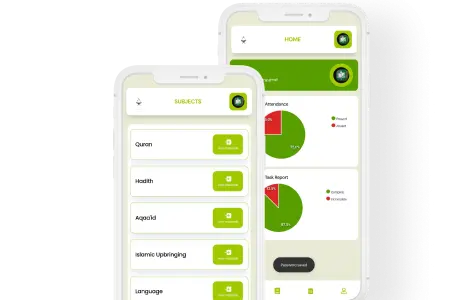
The key insight for diaspora Islamic schools is scale-appropriate simplicity. A 60-student Saturday mosque school in Cologne does not need enterprise school management software. It needs something simple enough for a volunteer teacher to use on a smartphone, persistent enough to survive committee handovers, and professional enough to give parents meaningful visibility into their child’s progress.
Conclusion
The Turkish Muslim diaspora in Western Europe has built a substantial Islamic education infrastructure over six decades — from the first generation of Gastarbeiter who pooled resources to rent prayer rooms, to today’s network of DITIB and IGMG mosques offering Quran courses across Germany, the Netherlands, Belgium, and Austria. What this infrastructure has not built is professional management tools. Hundreds of mosque schools serving tens of thousands of children are administered through WhatsApp, paper, and the memory of volunteer committee members who rotate out every few years.
The needs are not complex. Digital enrolment. Attendance tracking on a smartphone. A Quran progress record that survives teacher turnover. Parent notifications in the language the family actually reads. Progress reports at the end of term. These are basic capabilities that any professional institution provides — and that Turkish diaspora Islamic education communities deserve, regardless of their size or budget.
👉 See how Ilmify supports diaspora Islamic education communities →
Related Articles
You might also find these helpful:
- 🕌 Islam and Islamic Education in Türkiye: A Complete Overview
- 📚 Kuran Kursu in Turkey: How the Diyanet’s Nationwide Quran Education Network Works
- 📚 Hafızlık in Turkey: How Quran Memorisation Is Structured, Tracked, and Certified
- ⚙️ Islamic School Management Software for Turkey: What Kuran Kursu Directors Need
- 🕌 Women’s Islamic Education in Turkey: Kuran Kursları, Vaizeler, and Female Religious Staff
- 📚 GDPR for Maktabs and Supplementary Islamic Schools in the UK
- 📚 UK Supplementary School Management: Your Complete 2026 Guide




 Arabic
  English
  Malay
Malay  Urdu
Urdu