
Introduction
The single most acute tension in Indian Muslim educational choice is between two legitimate and deeply felt imperatives: Islamic education and mainstream academic qualifications. The classical madrasa provides deep Islamic knowledge — Quran, Hadith, Fiqh, Arabic — but issues no secular certificate that the mainstream Indian economy or higher education system recognises. The government or private school provides the Class 10 and Class 12 board credentials that open university admission and professional employment, but delivers little or no Islamic education.
For decades, Indian Muslim families managed this tension through parallel or sequential approaches — maktab by evening alongside government school by day, or Hifz during the teenage years followed by resuming secular education. Both models extracted a cost: either Islamic education happened in the margins of a child’s day, or mainstream academic progress was interrupted.
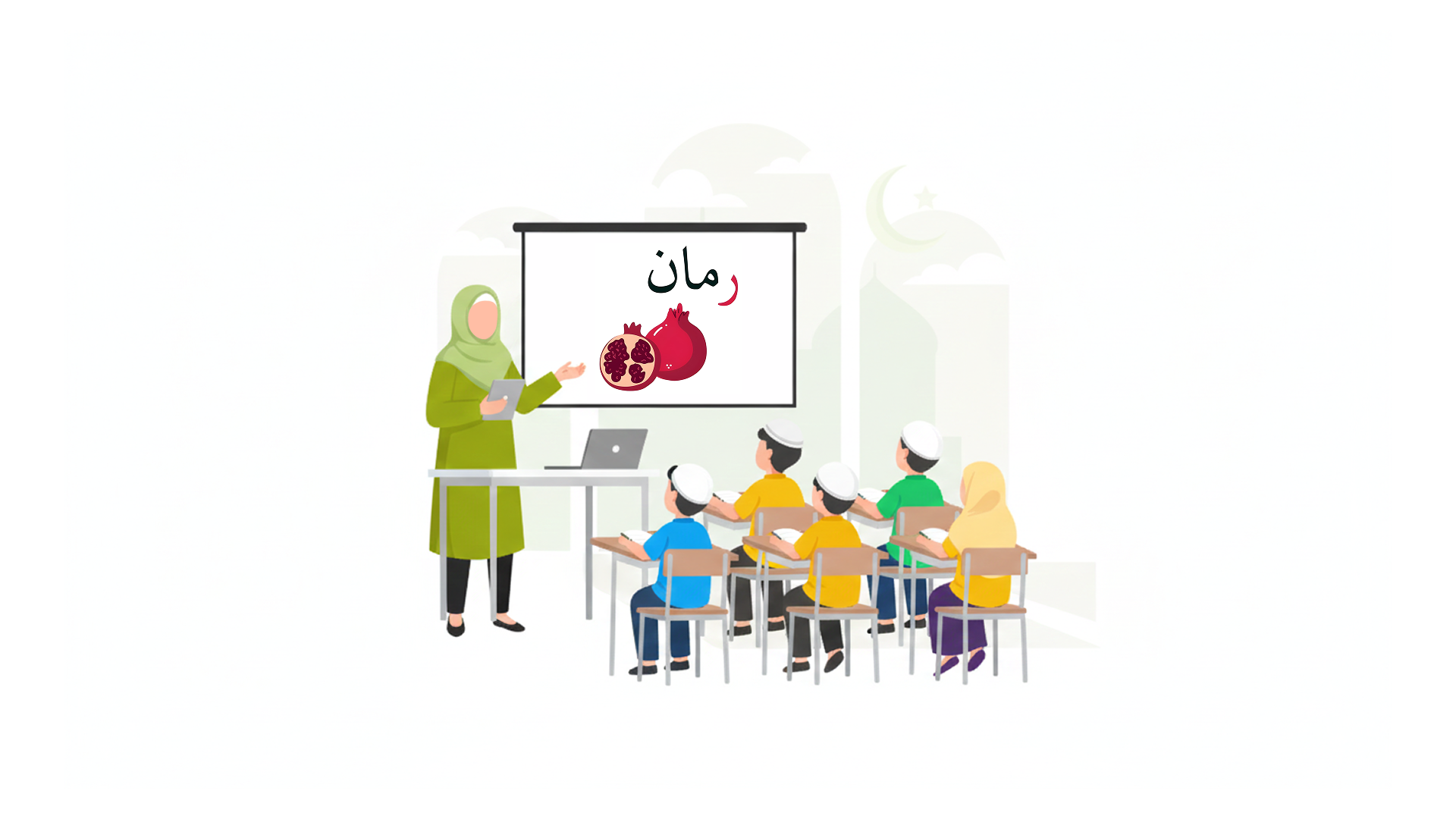
The integrated Islamic school is the sector’s structural solution: a single institution that delivers both tracks simultaneously, under one roof, within one school day.
What an Integrated Islamic School Delivers
An Integrated Islamic School (also called an Islamic English Medium School, Islamic Residential School, or loosely a “modern Islamic school”) is a full-time educational institution that holds both:
Full mainstream academic accreditation:
- CBSE, ICSE, or state board affiliation — enabling students to sit for Class 10 and Class 12 board examinations
- The standard academic subjects: English, Mathematics, Science, Social Studies, Hindi or regional language
- The same terminal qualification as any recognised private or government school
- For residential campuses: boarding facilities, dining hall, health services
A parallel Islamic curriculum:
- Quran recitation (Nazra completion) and memorisation (Hifz) embedded within the school schedule
- Daily Salah with Tajweed instruction
- Islamic Studies as formal subjects: Fiqh, Hadith, Aqeedah, Seerah
- Arabic language throughout the schooling years
- Islamic character development (Tarbiyah) as the school’s cultural ethos
How the day looks in practice: A student at a typical integrated Islamic school in Tamil Nadu studies CBSE Mathematics and English in morning sessions, attends a Quran recitation and Arabic class after the midday prayer, takes Fiqh and Seerah in the early afternoon, and completes Science and Social Studies homework in the evening. They graduate with a CBSE Class 12 certificate and an institutional Islamic Studies certificate — two credentials for a single investment of time.
Why South India Leads This Sector
The integrated Islamic school model is significantly more developed in South India than in the Hindi-speaking North, for reasons rooted in economics, culture, and educational tradition.
Kerala has the highest density of integrated Islamic schools in India. The state’s high literacy rate and its highly educated, economically active Muslim community — with millions working in the Gulf and sending remittances home — produces the demand and funding for quality Islamic education that does not compromise mainstream academic aspirations. The Samastha Kerala Sunni Vidyabhyasa Board’s 12-year maktab curriculum was specifically designed to integrate with government schooling; the integrated school is an extension of that same philosophy into a full-time institution.
Tamil Nadu has a significant and growing network, particularly in districts with large Muslim populations — Chennai, Vellore, Tirunelveli, Coimbatore. Many Tamil Nadu integrated schools are affiliated with Islamic trusts and include residential facilities.
Karnataka has similar patterns, particularly in Bengaluru — where a large, prosperous Muslim professional community wants both tracks — and in coastal Mangaluru, where the Beary community’s Shafi’i tradition has historically prioritised Arabic and Islamic education.
North India: A Different Landscape
The integrated Islamic school model has been slower to take root in North India’s Hindi belt, for several structural reasons:
The Deobandi tradition’s resistance: The dominant North Indian Islamic educational tradition — Deobandi — has historically treated the integration of secular subjects into the Dars-e-Nizami as a dilution of the classical curriculum. The proper response to the secular/Islamic tension, in this view, is sequential rather than simultaneous: complete Islamic education first, then pursue secular credentials if desired.
State-affiliated madrasas as an existing solution: The well-established UP, Bihar, and West Bengal state madrasa board systems already integrate NCERT secular subjects with Islamic education. For many North Indian Muslim families, the state-affiliated madrasa provides a “good enough” resolution — children receive both the Maulvi/Alim certificate and secular subject exposure at no cost to the family.
Economics: Private integrated schools with CBSE affiliation charge fees of Rs. 3,000–8,000 per month plus residential costs — affordable for urban middle-class families, but out of reach for the lower-income rural communities that form the majority of the North Indian madrasa student population.
Delhi and NCR emerging sector: The exception is Delhi and the National Capital Region, where a growing Muslim professional class has created demand for integrated Islamic schools. Several CBSE-affiliated schools with Islamic Studies and Arabic have established themselves in Delhi — catering to upper-middle-class families who want both tracks and have the income to pay for them.
Management Requirements: Where Integrated Schools Differ
The integrated Islamic school creates management complexity that neither standard school management software nor Islamic education software alone can meet:
Unified student profile with two progress records: Every student needs a single, coherent record containing both their CBSE academic data (board exam registration, subject grades, attendance for affiliation purposes) and their Islamic education record (Quran progress, Hifz stage, Arabic level, Tajweed assessment, Islamic Studies grades). Switching between two separate systems for the same student is a practical failure that integrated school administrators consistently cite.
Dual reporting to parents: Parents who chose an integrated school because they want both tracks will demand progress reports on both. A single progress report should show “Class 9 Mathematics: 78%, Science: 83%” alongside “Hifz: Completed 18 Juz, currently on Surah Al-Muminun, Tajweed: Needs work on Madd rules.” These two data sets should appear together, not in separate systems.
Hifz tracking within school constraints: Unlike a full-time Hafizia where Hifz is the only activity, an integrated school student doing Hifz alongside CBSE studies faces real time constraints. A student cannot maintain 2–3 pages of new Sabak daily while also preparing for board examinations. The Hifz module in an integrated school context needs to support realistic, adjustable pacing — slowing during exam periods, accelerating during vacations — with the teacher and parents informed of current targets.
The Timetable Challenge
Two calendar systems running simultaneously: The CBSE/state board academic year runs April–March with board examinations in February–March. The Islamic school year traditionally starts after Eid al-Fitr, and Ramadan requires timetable adjustments. The two calendars must coexist in a single scheduling system.
Two types of teacher, two types of timetable: Secular subject teachers (qualified for CBSE affiliation purposes, often from mainstream teacher education backgrounds) and Islamic studies teachers (Alim or Hafiz qualifications, often from traditional madrasa backgrounds) need to share a building, share a timetable, and — ideally — share a management platform.
Prayer schedule integration: The integrated Islamic school’s commitment to daily Salah means the timetable must be built around Zuhr and Asr prayer times. Lesson scheduling, lunch breaks, and activity periods must all accommodate the five daily prayers. In a standard school management system, this is simply not a parameter — the integrated school needs a system that understands prayer-time-driven scheduling.
CBSE Compliance alongside Islamic Quality
CBSE affiliation requires specific documentation — teacher qualifications for each subject, minimum teaching days, infrastructure standards, inspection readiness. Islamic education quality requires Quran teacher qualification records, Hifz room documentation, ablution facility compliance, and prayer schedule evidence.
Both compliance frameworks must be managed through the same system, not in separate paper files:
| Compliance Area | CBSE Requirement | Islamic Requirement |
| Teacher records | Subject-wise qualification, B.Ed certification | Alim degree, Ijazah in Hifz for Hafiz teachers |
| Attendance | Board-format attendance registers, minimum 75% for examination eligibility | Prayer attendance tracking, Hifz session attendance |
| Infrastructure | Classrooms, library, lab, playground | Wudu facilities, Musalla (prayer area), Hifz room |
| Examinations | Board registration, internal assessment records | Hifz completion certificates, Islamic Studies assessments |
The Software Opportunity
The integrated Islamic school represents the most technically demanding segment of Indian Islamic education management — precisely because it is the segment where the costs of a management gap are highest. A school that cannot demonstrate CBSE compliance loses its affiliation. A school that cannot demonstrate Hifz progress to parents loses its Islamic education reputation. Both failures are catastrophic and both are preventable by a management system purpose-built for the integrated context.
No generic school management software handles Hifz tracking. No generic Islamic education software handles CBSE examination registration. The integrated Islamic school has an unmet software need that is both specific and commercially significant — particularly as the sector grows rapidly in South India and begins to emerge in Delhi and other urban North Indian centres.
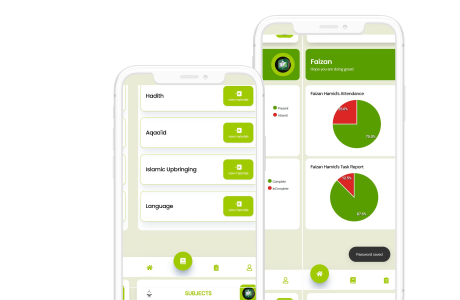
Ilmify is the only platform that handles both sides of this equation in a single unified system — the CBSE compliance records and the Hifz tracking, the board examination registration and the Nazra progress, the secular academic parent report and the Islamic education parent report, all from a single student profile.
See Ilmify for integrated Islamic schools →
Conclusion
The integrated Islamic school is one of the most significant institutional innovations in Indian Muslim education — a response to the fundamental tension between Islamic identity and mainstream participation that millions of Indian Muslim families navigate every day. By delivering both a recognised board credential and a genuine Islamic education within a single institution, it offers a resolution that neither the traditional madrasa nor the conventional school provides alone.
The management challenge these schools face is equally distinctive — dual curriculum tracking, dual compliance frameworks, dual parent reporting, and the specific demands of Hifz management within a board school context. Standard software fails on both sides. A purpose-built platform that handles both simultaneously is not a luxury for integrated Islamic schools: it is an operational necessity.
Ilmify is that platform — built from a deep understanding of how integrated Islamic schools actually work, and what they actually need from a management system.
See how Ilmify serves integrated Islamic schools in India →
Related articles:

 at
at