
Introduction
If there is one principle that defines authentic Quran education across the Middle East — in the Dar al-Quran schools of Saudi Arabia, the Al-Azhar Institutes of Egypt, the IACAD-registered centres of the UAE, and the Ministry of Awqaf programmes of Qatar — it is Talaqqi. The direct, oral, face-to-face transmission of Quran recitation from a qualified teacher to a student is not a pedagogical preference; it is the method through which the Quran has been preserved and transmitted for 1,400 years. Understanding Talaqqi in Quran learning is essential for understanding why Middle Eastern Islamic education institutions are organised the way they are — and why the teacher-student relationship is at the centre of everything.
What Is Talaqqi?
Talaqqi (تلقي) means “receiving” or “taking directly.” In the context of Quran education, it refers to the method of learning through direct oral transmission — the student recites to the teacher, the teacher listens, corrects, and transmits the correct recitation back. The student receives the Quran not from a book, a recording, or an app, but directly from a living teacher who has themselves received it from a living teacher.
| Feature | Details |
| Method | Student recites; teacher listens and corrects |
| Relationship | Personal, one-to-one or small group — teacher knows each student |
| What is transmitted | Not just words — pronunciation, rhythm, Tajweed application, breath control |
| Validation | Teacher’s approval that the recitation is correct |
| Outcome | Unbroken chain of transmission — the foundation of Ijazah |
| Authority | The Quran cannot be learned without a teacher; text alone is insufficient |
The Linguistic and Scholarly Meaning
The root of Talaqqi — l-q-y (لقي) — means to meet, encounter, or receive face to face. The term is used in the Quran itself (in other contexts) and has deep resonance in the Islamic scholarly tradition as the mode of receiving knowledge directly, not mediated by text.
The famous principle in Islamic scholarship: “Knowledge is taken from mouths, not from pages” (العلم يؤخذ من الأفواه لا من الصحف) expresses precisely what Talaqqi represents. Even the most authoritative written text cannot substitute for a living teacher who has themselves received from a living chain.
This is why the Sanad — the chain of named transmitters — matters so much. Each link in the Sanad is a Talaqqi relationship: a student who sat with a teacher and received directly. See Ijazah and Sanad: The Quranic Certification System Explained.
Why Talaqqi Is the Foundation of Quran Learning
The primacy of Talaqqi in Quran education rests on several scholarly and practical grounds:
Pronunciation cannot be learned from text. Arabic has sounds that do not exist in most other languages and cannot be accurately conveyed by written symbols. The correct articulation of letters, the application of Madd (elongation), Ghunnah (nasalisation), and the subtleties of Tajweed can only be demonstrated orally and received aurally.
Mistakes are invisible in text. A student reading alone from the Mushaf (Quran text) may recite for years with errors they cannot detect. Only a qualified teacher hearing the recitation can identify and correct those errors.
The chain of preservation. The Quran has been preserved to an extraordinary standard of textual fidelity partly because of the Talaqqi tradition — every generation has recited to and been corrected by a teacher, maintaining the standard of the original revealed recitation.
The authority of transmission. In Islamic scholarship, knowledge received directly from a qualified teacher carries a different authority from knowledge self-taught. The Ijazah — the formal certification — cannot be granted without Talaqqi.
How a Talaqqi Session Works
A typical Talaqqi session in a Middle Eastern Tahfiz centre or Dar al-Quran:
| Stage | What Happens |
| Preparation | Student has memorised and revised the assigned portion (Muraja’ah) |
| Opening | Student and teacher begin with Isti’adhah and Basmallah |
| Recitation | Student recites the assigned portion to the teacher — from memory or from the Mushaf depending on the stage |
| Teacher listening | Teacher listens actively — tracking Tajweed, pronunciation, tempo, errors |
| Correction | Teacher interrupts immediately on error — demonstrates the correct recitation; student repeats |
| Completion | Student completes the portion; teacher provides overall assessment |
| Assignment | Teacher sets the next portion — new Hifz or further Muraja’ah |
| Closing | Session closed with du’a |
The intimacy of this format — teacher and student together, full attention on the recitation — is what makes it effective and what makes large class sizes incompatible with true Talaqqi. Effective Talaqqi typically involves groups of 5–10 students maximum, with significant individual attention time.
Talaqqi and the Ijazah System
Talaqqi and Ijazah are inseparable:
- Ijazah cannot be granted without Talaqqi — the student must recite the full Quran to the Shaykh directly
- The Shaykh’s Talaqqi with the student is the act through which the Sanad chain is extended
- The quality of Talaqqi — the rigour of the Shaykh’s listening and correction — determines the integrity of the chain
| Without Talaqqi | With Talaqqi |
| No Ijazah possible | Ijazah path open |
| No personal verification of recitation | Teacher has personally heard and corrected |
| No chain of transmission | Student enters the Sanad |
| Self-taught — no scholarly authority | Transmitted knowledge — scholarly authority |
This is why institutions seeking to offer genuine Ijazah programmes must have qualified Shuyukh on staff who conduct regular, rigorous Talaqqi with students — not just administrative oversight of memorisation.
Talaqqi Across Different Middle Eastern Contexts
| Country | Talaqqi Practice |
| Saudi Arabia | Extremely formalised — individual Talaqqi sessions with Shaykh are standard; Sanad precision emphasised; large Dar al-Quran centres have multiple Shuyukh for small groups |
| Egypt | Al-Azhar tradition of Talaqqi is centuries-old; individual recitation to the Shaykh is the norm; Kulliyyat al-Quran students sit with Shuyukh regularly |
| UAE | Formalised through IACAD-registered centres; Halaqah-based Talaqqi in mosque circles alongside dedicated centre sessions; Maktoum Centres use structured Talaqqi schedules |
| Qatar | Ministry of Awqaf Tahfiz centres run scheduled Talaqqi sessions; Ijazah programmes require verified Talaqqi records |
| Bahrain/Kuwait | Mosque-based Halaqah is primary Talaqqi context; smaller scale; Awqaf-supported |
| Oman | Community mosque-based — imam as Talaqqi teacher; traditional model; less institutionally formalised |
Online Talaqqi: The Scholarly Debate
The question of whether video-based recitation to a teacher satisfies the Talaqqi requirement has become one of the most practically significant questions in contemporary Islamic education:
| Position | Arguments | Proponents |
| Traditional (physical presence required) | Talaqqi must be face-to-face; the transmission chain has always been physical; spiritual dimensions of direct presence cannot be replicated | Many traditional Saudi and Egyptian scholars |
| Permissive (video accepted) | The essential element is hearing and being heard, not physical location; video replicates the auditory transmission; hardship of travel justifies accommodation | Growing number of scholars; many online Quran platforms |
| Conditional | Video Talaqqi acceptable for learning but not for Ijazah granting; or acceptable only with verified identity and stable connection | Intermediate position |
In practice, the Middle East’s established institutions — Dar al-Quran centres, Al-Azhar-affiliated institutions — maintain the physical Talaqqi standard for Ijazah. Online platforms offer recitation classes and some offer “online Ijazah” whose scholarly standing varies.
For institutions, the practical implication is clear: physical Talaqqi sessions with qualified Shuyukh remain the gold standard, and software that tracks and documents those sessions adds institutional rigour to the Talaqqi record.
What Talaqqi Requires of Institutions
Running genuine Talaqqi-based Quran education places specific demands on institutions:
Qualified Shuyukh. The teacher must hold their own Ijazah and be competent to conduct Talaqqi and correct errors. Hiring unqualified teachers — however enthusiastic — undermines the entire Talaqqi framework.
Small group sizes. Individual attention during Talaqqi is essential. An institution claiming Talaqqi-based teaching with classes of 30+ students per teacher cannot deliver the individual recitation assessment Talaqqi requires.
Session documentation. Which student recited what portion to which teacher, when, with what feedback — these records form the institutional evidence that genuine Talaqqi is taking place.
Student progression tracking. Talaqqi-based teaching advances student by student — each at their own pace. Managing this across a cohort of 50–200 students requires systematic tracking of which student has progressed to which point.
Parent communication. In centres with younger students, parents need to know what their child recited in Talaqqi, what errors were noted, and what the teacher has assigned for next time.
Frequently asked questions
Q: Is Talaqqi only for Quran or does it apply to other Islamic knowledge?
Talaqqi is the traditional method for all Islamic knowledge transmission — Hadith, fiqh, aqeedah, and other disciplines also have their own chains of transmission (Sanad). However, Talaqqi is most prominently associated with Quran education because of the precision required in Tajweed and the central importance of the Quran’s exact recitation.
Q: Can a child learn Quran without Talaqqi?
A child can learn to read Arabic and recite the Quran from a text, from recordings, or from apps. But from a traditional Islamic scholarly standpoint, learning without a qualified teacher means the child has no chain of transmission and cannot eventually receive Ijazah. For families who want their children to earn Ijazah, Talaqqi with a qualified teacher is essential from the start.
Q: How is Talaqqi different from a normal Quran class?
In a normal Quran class, the teacher may teach Tajweed rules, explain meaning, or lead group recitation. Talaqqi specifically means the student recites individually to the teacher — the teacher’s attention is entirely on that student’s recitation. It is more demanding of teacher time and more effective for catching individual errors.
Q: How many students can a Shaykh do Talaqqi with?
A rigorous Talaqqi schedule allows perhaps 10–15 students per day if sessions are 20–30 minutes each. This is why qualified Shuyukh are a limited resource, and why institutions that offer genuine Talaqqi-based Ijazah programmes need multiple Shuyukh for larger student bodies.
Q: What does “receiving Talaqqi” mean on a CV or certificate?
When a scholar says they “received Talaqqi from Shaykh X,” they mean they personally recited the Quran (or a specific Qiraa’ah) to that Shaykh and the Shaykh heard, corrected, and accepted their recitation. It is a statement of direct transmission, not just study. It is typically listed in a scholar’s Ijazah document as part of their Sanad.
Conclusion
Talaqqi — the direct oral transmission of Quran recitation from teacher to student — is not a teaching method among others but the method through which the Quran has been preserved and transmitted across 1,400 years. It is the foundation on which the Ijazah system is built, the requirement for entering the Sanad chain, and the quality marker that distinguishes serious Tahfiz institutions from those offering memorisation without transmission. For administrators of Quran centres and Tahfiz schools across the Middle East, supporting genuine Talaqqi means investing in qualified Shuyukh, maintaining small teacher-student ratios, and documenting sessions with the rigour the system demands.
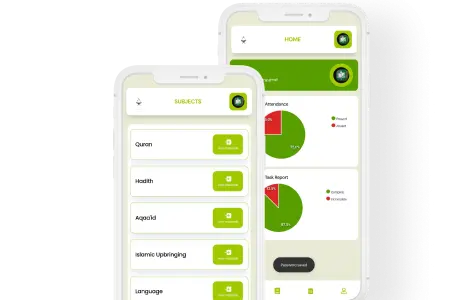
Ilmify helps Quran institutions manage Talaqqi-based programmes — tracking individual student recitation sessions, Tajweed assessment, teacher feedback, and progression toward Ijazah in one platform built for Middle Eastern Islamic education. Explore Ilmify →




 Arabic
  English
  Malay
Malay  Urdu
Urdu