

Introduction
Kuwait’s Dar al-Quran network is one of the Gulf’s best-resourced Quran memorisation systems — operated directly by the Ministry of Awqaf and Islamic Affairs with state funding that reflects Kuwait’s serious commitment to Quran education as a national priority. What distinguishes Kuwait’s system from its Gulf neighbours is a notably structured approach to evaluation: periodic assessments, tracked Muraja’ah cycles, and a competition culture that creates visible milestones throughout the Hifz journey. This guide covers how Kuwait’s Dar al-Quran and Tahfiz schools work in practice — for families considering enrolment and for administrators seeking to understand the regional standard.
Kuwait Dar al-Quran: Context and Structure
| Feature | Detail |
| Governing authority | Ministry of Awqaf and Islamic Affairs — direct operation |
| Funding | State-funded from Awqaf endowment income and government budget |
| Coverage | All six governorates (Capital, Hawalli, Farwaniya, Ahmadi, Jahra, Mubarak Al-Kabeer) |
| Separate from school | After-school programme — does not replace government school Islamic studies |
| Programme type | Full Hifz (Tahfiz) programmes; Tajweed-only programmes; adult programmes |
| Fees | Free — state subsidised |
| Facilities | Ministry of Awqaf operates purpose-built centres; some mosque-attached |
How Dar al-Quran Centres Work in Kuwait
| Element | Detail |
| Teaching method | Talaqqi — direct oral recitation from student to teacher |
| Session frequency | Daily for intensive students; 3–4 times per week for standard programmes |
| Session structure | Opening with Muraja’ah review → New memorisation → Tajweed correction |
| Class size | Typically 8–15 students per teacher — smaller than South Asian maktab model |
| Teacher qualification | Ministry of Awqaf licensed and assessed before appointment |
| Progress tracking | Teacher records new memorisation, Muraja’ah quality, and Tajweed notes each session |
| Parent communication | Regular progress reports; some centres use WhatsApp for parent updates |
Hifz Evaluation: Kuwait’s Structured Approach
Kuwait’s Dar al-Quran system is notable for its structured, multi-stage evaluation approach:
| Evaluation Type | Frequency | Content |
| Ongoing teacher assessment | Every session | New memorisation quality; Muraja’ah quality; Tajweed |
| Monthly progress review | Monthly | Summary of Juz’ memorised; Muraja’ah cycle coverage |
| Midpoint evaluation | After 15 Juz’ memorised | Formal recitation of first half of Quran to senior assessor |
| Completion examination | On finishing all 30 Juz’ | Full Quran recitation before examining committee |
| Hifz certificate | On passing completion exam | Formal certification of full memorisation |
| Ijazah recitation sessions | Post-certificate | Additional sessions toward Ijazah with qualified Sheikh |
This multi-stage evaluation structure distinguishes Kuwait’s system from less formally assessed contexts — students know what is expected at each milestone, and parents receive transparent progress information.
Muraja’ah Management in Kuwait Centres
Kuwait centres treat Muraja’ah with the same seriousness as new memorisation:
| Muraja’ah Feature | Detail |
| Assigned Muraja’ah | Teacher assigns which Juz’ to revise each session — not left to student choice |
| Recorded | Each Muraja’ah session logged — which Juz’, quality, teacher notes |
| Cycle tracking | How many complete Quran revision cycles completed tracked over time |
| Quality threshold | Muraja’ah below standard flagged — student required to repeat before advancing new memorisation |
| Post-Hifz maintenance | Students who complete Hifz continue on a formal Muraja’ah maintenance schedule |
Kuwait’s emphasis on Muraja’ah reflects an understanding that Hifz is not a one-time achievement but an ongoing discipline. A student who has “completed” Hifz but cannot maintain it has not truly achieved Hifz in the tradition’s sense.
Tajweed Assessment
| Aspect | Detail |
| Standard | Hafs ‘an ‘Asim — consistent across all Kuwait state centres |
| Assessment method | Teacher corrects errors during recitation in real time; patterns of errors tracked |
| Written records | Some centres maintain a Tajweed error log per student — recurring issues flagged |
| Tajweed certificate | Some Kuwait centres issue a Tajweed proficiency certificate separate from Hifz completion |
| Advanced Tajweed | More advanced Tajweed theory available at Kuwait University level |
The Ijazah Pathway in Kuwait
| Stage | Detail |
| Hifz completion | Full 30 Juz’ memorised and formally certified |
| Muraja’ah stability | Demonstrated ability to maintain the complete Quran through multiple revision cycles |
| Tajweed standard | Recitation meets the required standard consistently |
| Ijazah recitation | Full Quran recited to the Sheikh — or by portions over multiple sessions |
| Sheikh assessment | Teacher evaluates Tajweed, Makhraj, and overall recitation quality |
| Ijazah grant | Formal certificate issued — with teacher’s Sanad chain |
| Sanad tradition | Kuwait’s Awqaf-appointed scholars typically hold Sanad chains connecting through Egyptian or Saudi scholarly tradition |
Incentive Programmes and Competition Culture
Kuwait’s strong Hafiz culture is reinforced through incentive programmes:
| Incentive Type | Detail |
| School-level recognition | Students with Hifz progress publicly recognised in government schools |
| Ministry of Awqaf competitions | Annual competition programme across multiple age groups and memorisation levels |
| Financial prizes | Competition winners receive prize money — in addition to certificates and public recognition |
| Social prestige | Hafiz title carries genuine social respect in Kuwaiti society — family achievement |
| International competitions | Top Kuwaiti students sent to GCC and international Quran competitions |
| Employer recognition | Some Kuwait government employers recognise Hifz in hiring — particularly for roles in Islamic affairs |
Private Tahfiz Schools in Kuwait
Beyond the Ministry of Awqaf network, private Tahfiz schools and Quran academies operate in Kuwait:
| Type | Detail |
| Private Quran academies | Small-group or individual instruction — often offering more flexible scheduling |
| Mosque-based private teachers | Individual scholars offering personal Talaqqi and Hifz training |
| Online Kuwaiti platforms | Some Kuwait-based platforms offering online Hifz with local teachers |
| Fees | Private centres charge fees — varies widely by centre and teacher |
Private Tahfiz schools sometimes offer more intensive programmes or smaller class sizes — for families who want faster progress than the standard Ministry programme.
Key Statistics
| Statistic | Figure |
| Kuwait Ministry of Awqaf | One of the most financially endowed in the GCC |
| Governorates | 6 |
| Standard Riwayah | Hafs ‘an ‘Asim |
| Competition programme | Annual national — Ministry of Awqaf organised |
| Typical Hifz completion age | 12–16 for dedicated starters at age 6–8 |
Frequently asked questions
Q: What is the pass standard for the Kuwait Dar al-Quran Hifz completion exam?
The examination committee assesses overall recitation quality — Tajweed correctness, consistency, and Muraja’ah ability. The specific passing standard is determined by the Ministry of Awqaf’s assessment guidelines. Students who do not pass are given further time to prepare.
Q: Can a student receive Ijazah without winning a competition?
Yes — competitions and Ijazah are separate. Competitions assess memorisation publicly; Ijazah is a certification by a specific qualified scholar. Most students who receive Ijazah never compete.
Q: Is there a minimum age for the Ijazah recitation process in Kuwait?
No fixed minimum age — but Ijazah is typically pursued after full Hifz is stable, which practically means most students begin the Ijazah recitation process at age 14+.
Q: How is Muraja’ah quality assessed?
The teacher listens to the student’s revision recitation and applies the same Tajweed standards as for new memorisation. Common issues — dropped words, transposed passages, Tajweed errors — are noted. A revision session that does not meet the standard is marked as incomplete and must be repeated.
Q: Does Kuwait have Qira’at education beyond Hafs?
Limited — Kuwait’s Dar al-Quran network focuses on Hafs ‘an ‘Asim. For Qira’at study in other modes, Kuwaiti students travel to Egypt or Saudi Arabia.
Conclusion
Kuwait’s Dar al-Quran and Tahfiz system is among the most structured and well-funded community Quran education frameworks in the Gulf. The Ministry of Awqaf’s direct operation, the multi-stage evaluation system, and the competition culture together create an environment where Hifz is genuinely pursued to a high standard — not just completed nominally. For families in Kuwait, the Dar al-Quran is an institution worth taking seriously; for administrators, the structured Kuwaiti model offers a useful reference point for what well-managed Quran education can achieve.
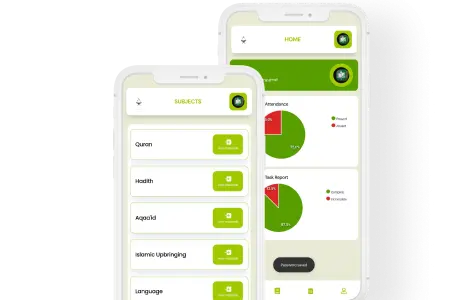
Ilmify supports Kuwait Dar al-Quran institutions with Arabic-interface Hifz tracking, structured Muraja’ah management, evaluation records, and Ijazah workflow tools. Explore Ilmify →




 Arabic
  English
  Malay
Malay  Urdu
Urdu