
Introduction
In the Islamic scholarly tradition, knowledge has always been transmitted person to person — from teacher to student, mouth to ear, generation to generation, in an unbroken chain reaching back to the Prophet Muhammad ﷺ himself. The Ijazah is the formal certificate that authorises a student to transmit what they have received. The Sanad is the chain of named scholars through whom that transmission has passed. Together, Ijazah and Sanad form the most rigorous knowledge-authentication system in Islamic education — and one that is deeply institutionalised across the Middle East, from Saudi Arabia’s Dar al-Quran schools to Egypt’s Kulliyyat al-Quran to UAE’s IACAD-registered centres. Understanding how this system works is essential for anyone engaged with Quran education in the GCC or Egypt.
What Is an Ijazah?
Ijazah (إجازة) literally means “permission” or “authorisation.” In the context of Quran education, an Ijazah is a formal certificate granted by a qualified Shaykh or scholar that authorises the recipient to recite or teach the Quran — or a specific Qiraa’ah (mode of recitation) — based on verified mastery demonstrated directly to that Shaykh.
| Feature | Details |
| What it certifies | That the holder has mastered Quran recitation to a scholarly standard |
| Who issues it | A qualified Shaykh who themselves holds an Ijazah |
| What it grants | Permission to recite publicly and/or to teach and grant Ijazah to others |
| What distinguishes it | The chain (Sanad) connecting the certificate to the Prophet ﷺ |
| Where it is most formalised | Saudi Arabia, Egypt, UAE, Qatar |
An Ijazah is not simply a completion certificate — it is an authorisation to join a living chain of transmission. The Shaykh who grants it is personally vouching for the student’s mastery and adding their name to a lineage of scholarship.
What Is a Sanad?
Sanad (سند) means “chain” or “support.” In Quran education, the Sanad is the named chain of scholars through whom a specific recitation tradition has been transmitted — from the student receiving the Ijazah, back through their teacher, their teacher’s teacher, and so on, all the way to the Prophet ﷺ.
A typical Sanad might read:
Student X received from Shaykh A, who received from Shaykh B, who received from Shaykh C… who received from the Companion [name], who received from the Prophet Muhammad ﷺ.
| Feature | Details |
| What it records | Every named scholar in the chain of transmission |
| Its purpose | Authenticates that the recitation is genuinely connected to the Prophetic source |
| Length | Typically 20–30+ names spanning 1,400 years |
| Where it is most emphasised | Saudi Arabia, Egypt — countries with the deepest Ijazah culture |
| Relationship to Ijazah | Every Ijazah comes with its Sanad; they are inseparable |
How Ijazah and Sanad Work Together
The Ijazah and Sanad are two sides of the same coin:
- The Sanad is the chain — the lineage of scholars
- The Ijazah is the formal act of authorisation at each link in that chain
When a Shaykh grants an Ijazah to a student, they are:
- Certifying that the student has recited the entire Quran (or a specific Qiraa’ah) to a satisfactory standard
- Authorising the student to transmit what they have received
- Adding the student’s name as the newest link in the Sanad chain
- Passing on their own Sanad — so the student now has a chain connecting them to the Prophet ﷺ
The Ijazah document itself typically contains:
- The student’s name
- The Shaykh’s name and their own Ijazah authority
- The Qiraa’ah (mode of recitation) being certified
- The Sanad — the full chain of transmitters
- The date and place of completion
The Chain Back to the Prophet ﷺ
The Sanad’s claim — that every named Ijazah holder can trace their recitation back to the Prophet ﷺ — is not metaphorical. The chain is literally named, link by link, through every generation of Muslim scholarship. The most well-documented chains pass through:
| Route | Key Companions and Early Transmitters |
| Hafs ‘an ‘Asim | The most widely used recitation globally — transmitted through Asim of Kufa, via the Companion Abdullah ibn Mas’ud |
| Warsh ‘an Nafi’ | Predominant in North Africa — transmitted through Nafi’ al-Madani, a student of the Companions |
| Other Qira’at | Seven or ten canonical modes — each with its own authenticated chain |
The fact that these chains exist, are documented, and can be verified is part of what makes the Quran’s textual preservation one of the most rigorously attested in human history. Scholars in Saudi Arabia and Egypt in particular place enormous emphasis on maintaining these chains — preferring Shuyukh with short chains (fewer links between them and the Prophet ﷺ) as a mark of scholarly closeness.
Types of Ijazah
Not all Ijazahs are identical. The main categories:
| Type | What It Covers | Who Receives It |
| Ijazah fil-Hifz | Full Quran memorisation with Tajweed | Hafiz/Hafiza who have memorised under a Shaykh |
| Ijazah fil-Qiraa’ah (Hafs) | Recitation in the Hafs ‘an ‘Asim mode specifically | Most common type globally |
| Ijazah fil-Qira’at al-‘Ashr | All ten canonical modes of recitation | Advanced scholars — rare; Egypt and Saudi speciality |
| Ijazah fil-Tajweed | Teaching authority for Tajweed specifically | Tajweed teachers |
| Ijazah al-Hadith | Chains of Hadith transmission | Separate from Quran Ijazah — different scholarly tradition |
| General Ijazah (Ijazah ‘Ammah) | Broad scholarly permission | Senior scholars granting general transmission authority |
For most Quran education institutions across the Middle East, the Ijazah fil-Hifz and Ijazah fil-Qiraa’ah (Hafs) are the primary certification goals.
Who Can Grant an Ijazah?
Only a qualified Shaykh who already holds a valid Ijazah with an authenticated Sanad can grant an Ijazah to a student. The Shaykh must:
- Hold their own Ijazah — typically in the specific Qiraa’ah they are certifying
- Have personally heard the student’s full recitation of the Quran (or the specific Qiraa’ah)
- Be satisfied that the student’s Tajweed and memorisation are to the required standard
- Be willing to add their name to the Sanad as the transmitting link
The personal, oral nature of Ijazah transmission is non-negotiable. An Ijazah cannot be earned by examination alone, by correspondence, or without direct oral recitation to and approval by the Shaykh. This is the foundation of Talaqqi — the direct teacher-to-student oral transmission that distinguishes authentic Islamic scholarship. See Talaqqi: Why Direct Oral Transmission Is the Foundation of Quran Learning.
How a Student Earns an Ijazah
The path to Ijazah is demanding and personal:
| Stage | What Happens |
| 1. Find a qualified Shaykh | Identify a scholar who holds Ijazah and is willing to take students |
| 2. Complete Hifz | Memorise the full Quran (or the specific Qiraa’ah) to a high standard |
| 3. Master Tajweed | Learn and apply the rules of Tajweed throughout the memorisation |
| 4. Recite to the Shaykh (Talaqqi) | Recite the full Quran orally to the Shaykh — corrected, reviewed, and approved |
| 5. Muraja’ah under supervision | Ongoing revision maintained to the Shaykh’s satisfaction |
| 6. Shaykh’s assessment | Shaykh determines the student is ready |
| 7. Ijazah granted | Shaykh issues the formal Ijazah document with Sanad |
The recitation to the Shaykh is not a single event — it typically involves reciting the entire Quran in sessions over weeks or months, with the Shaykh correcting every Tajweed error, clarifying the application of rules, and assessing the depth of the memorisation. Only when fully satisfied does the Shaykh grant the Ijazah.
Ijazah Across the Middle East
| Country | Ijazah Culture | Key Institutions |
| Saudi Arabia | Extremely strong — Sanad precision is a scholarly marker; Jami’at al-Islamiyyah produces chains of global authority | Dar al-Quran centres; Jami’at al-Islamiyyah |
| Egypt | Globally authoritative — Al-Azhar Ijazah chains are among the most respected in the world | Al-Azhar Institutes; Kulliyyat al-Quran; Dar al-Quran |
| UAE | Formalised through IACAD and Awqaf — institutions must meet standards; Ijazah available through registered centres | IACAD Maktoum Centres; Al Qasimia University; Holy Quran Academy Sharjah |
| Qatar | Ministry of Awqaf coordinates Ijazah programmes; strong institutional focus | Dar al-Quran Qatar; Ministry of Awqaf centres |
| Bahrain/Kuwait | Community and Awqaf-supported; Ijazah available through qualified Shuyukh | Mosque-based Dar al-Quran centres |
| Oman | Traditional — mosque-based; Ibadi tradition has its own transmission chains | Community Quran schools |
Why Ijazah Matters for Institutions
For Islamic education institutions, the Ijazah system has concrete operational implications:
Teacher credentialing. An institution’s claim to quality rests partly on whether its teachers hold Ijazah — and which Sanad that Ijazah comes from. Tracking teacher Ijazah credentials is an institutional governance requirement.
Student progression. The pathway to Ijazah eligibility — completion of Hifz with Tajweed, verified Muraja’ah, readiness for Shaykh assessment — is a multi-year progression that institutions need to track systematically.
Shaykh-student relationship records. Which Shaykh has assessed which student, at what level, on what date — these records are the institutional documentation of an Ijazah programme.
Institutional reputation. A Tahfiz centre whose graduates regularly earn Ijazah, particularly from Shuyukh with strong Sanads, builds reputational standing in the community and internationally.
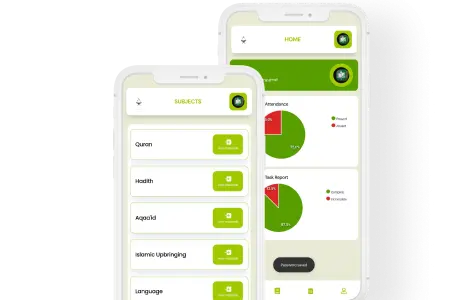
For Quran centres and Tahfiz schools managing students toward Ijazah, software that tracks Hifz completion, Muraja’ah status, Tajweed assessment, and Shaykh sessions provides the operational infrastructure the Ijazah pathway requires.
Frequently asked questions
Q: Can an Ijazah be earned online?
Online Ijazah has become a topic of significant scholarly debate. The traditional position is that Talaqqi — direct oral recitation to the Shaykh — requires physical presence. A growing number of scholars accept video-based Talaqqi as sufficient, particularly for students who cannot travel to qualified Shuyukh. Institutions offering “online Ijazah” vary widely in their scholarly rigour; the Sanad and the Shaykh’s own qualifications remain the critical factors.
Q: How long does it take to earn a Quran Ijazah?
It varies significantly. A student who has already completed Hifz to a high standard may earn Ijazah after several months of revision and recitation sessions with a Shaykh. A student beginning from the start may take 5–10 years of study before reaching Ijazah level. The timeline is set by the Shaykh’s assessment of readiness, not by a fixed curriculum schedule.
Q: Does every Hafiz have an Ijazah?
No. Millions of people have memorised the Quran without seeking or receiving a formal Ijazah. An Ijazah requires not just memorisation but recitation with verified Tajweed to a qualified Shaykh who holds their own Ijazah. Many Huffaz are not Ijazah holders; Ijazah is the mark of a higher scholarly standard of transmission.
Q: Is Ijazah the same across all Qira’at?
No — each canonical Qiraa’ah (mode of recitation) has its own chain of transmission and requires its own Ijazah. Most students earn Ijazah in Hafs ‘an ‘Asim — the most widely practised recitation. Advanced scholars may earn Ijazah in multiple Qira’at, and those with Ijazah in all ten are extremely rare and highly esteemed.
Q: Are Ijazah chains still unbroken today?
Yes — the chains have been maintained continuously. Every living Shaykh who grants Ijazah holds a Sanad that names every transmitter back to the Companions. The shortness of the chain (fewer living links between a Shaykh and the Prophet ﷺ) is itself a mark of honour — Saudi and Egyptian scholars with short chains are particularly sought after.
Conclusion
The Ijazah and Sanad system is the scholarly spine of Quran education across the Middle East — a 1,400-year-old chain of named, verified transmission that connects every certified Quran reciter to the Prophet Muhammad ﷺ himself. For Tahfiz centres, Dar al-Quran schools, and Quran memorisation institutes in Saudi Arabia, UAE, Qatar, Egypt, and the wider GCC, managing the pathway to Ijazah — tracking Hifz completion, Muraja’ah quality, Tajweed assessment, and Shaykh sessions — is at the heart of institutional purpose.
Ilmify supports Quran institutions on the Ijazah pathway — with Hifz and Muraja’ah tracking, Tajweed assessment records, teacher-student session logs, and student progression management built for the Middle Eastern Islamic education context. Explore Ilmify →




 Arabic
  English
  Malay
Malay  Urdu
Urdu