
The Dar al-Quran in Egypt: An Overview
Egypt is home to one of the world’s largest concentrations of Quran memorisation institutions. The Dar al-Quran (دار القرآن — House of the Quran) is the formal name for dedicated Hifz institutes operating under the oversight of Egypt’s Ministry of Awqaf, and Egypt has thousands of them — ranging from purpose-built multi-storey institutes in Cairo to single rooms attached to rural mosques in Upper Egypt’s Governorates.
This scale is not incidental. Egypt’s tradition of Hifz education is ancient — rooted in the Kuttab tradition, deepened by Al-Azhar’s scholarly culture, and sustained by a popular religious commitment to Quran memorisation that transcends class, geography, and era. The Hafiz in Egyptian society is a respected figure; a family that produces a Hafiz gains community standing; a mosque that runs a quality Hifz programme attracts the most religious families.
The Dar al-Quran as a formal institutional category is the Ministry of Awqaf’s systematisation of this tradition — bringing regulatory standards, teacher certification, and formal Ijazah pathways to an activity that previously happened in informal settings. But the informal layer — mosque circles, private teachers, family-run Hifz groups — remains vast alongside the formal network.
Governance: Ministry of Awqaf’s Role
Egypt’s Ministry of Awqaf (وزارة الأوقاف) is the primary governing authority for Dar al-Quran institutions:
| Ministry Function | Detail |
| Registration and licensing | All formal Dar al-Quran must be registered with the Ministry |
| Curriculum standards | Ministry sets the Hifz and Tajweed curriculum for registered centres |
| Teacher certification | Ministry certifies Quran teachers; requires Ijazah in Hafs ‘an ‘Asim minimum |
| Funding | State-funded centres receive Awqaf budget allocation; private centres self-fund |
| Ijazah certification oversight | Ministry maintains records of Ijazah granted through registered centres |
| Quality inspection | Periodic inspection of registered centres |
| National competition | Ministry organises national Quran competitions |
Egypt’s Ministry of Awqaf is one of the largest Islamic endowment authorities in the world — managing thousands of mosques and their associated Quran education programmes across Egypt’s 27 governorates. This gives the Ministry both significant reach and significant administrative complexity.
The Al-Azhar institution operates parallel Quran education through its Institutes network (detailed in X2), which is governed separately under Al-Azhar’s own authority. The two systems — Ministry of Awqaf Dar al-Quran and Al-Azhar Institutes — are distinct but interconnected: students from Dar al-Quran programmes often progress to Al-Azhar Institutes; Al-Azhar Institutes refer students to Dar al-Quran for intensive Hifz.
Types of Dar al-Quran in Egypt
Egypt’s Hifz education network encompasses several distinct types:
| Type | Description | Governance |
| Ministry of Awqaf Dar al-Quran | Formal, purpose-built or mosque-annexed; full Hifz curriculum | Ministry of Awqaf directly |
| Al-Azhar-affiliated Hifz circles | Operating within Al-Azhar Institutes; Hifz alongside academic curriculum | Al-Azhar |
| Mosque Quran circles (Halaqat) | Informal to semi-formal; run by mosque imam or dedicated teacher | Mosque/Ministry via imam |
| Private Dar al-Quran | Privately operated; may charge fees; Ministry-registered | Private operators |
| Charitable Dar al-Quran | Run by Islamic charities; often free; serve underserved communities | Charitable foundations |
The Ministry of Awqaf’s direct Dar al-Quran network and the Al-Azhar-affiliated network are the most formally structured. Mosque Halaqat are the most numerous but least formally tracked. Private Dar al-Quran are a growing category, particularly in Cairo and Alexandria, serving families who want dedicated Hifz education outside the public system.
The Curriculum: From Qa’idah to Ijazah
The standard Hifz curriculum in Egypt’s Dar al-Quran follows a progression from basic literacy to full certification:
1. Qa’idah (Quran Reading Foundation)
Students who cannot yet read Arabic script begin with a systematic reading primer. In Egypt, the Qa’idah Nooraniyyah and Qa’idah Baghdadiyyah are the most commonly used. Completion takes 2–6 months depending on the student’s age and starting literacy level.
2. Nazra (Sight Reading)
The student reads through the full Quran with the teacher — not memorising, but developing fluency and beginning Tajweed training. This may take 6 months to 2 years. The teacher identifies Tajweed weaknesses to address before Hifz begins.
3. Tajweed Study
Systematic instruction in Tajweed rules — often running concurrently with later stages of Nazra and early Hifz. Egypt’s Tajweed tradition is particularly rigorous, reflecting Al-Azhar’s authority in Quranic sciences.
4. Hifz (Memorisation)
The core programme. Daily new lessons (presented orally to the teacher — Talaqqi), regular Muraja’ah, progressive full-Quran revision as the student’s total memorised Quran grows.
5. Muraja’ah and Stabilisation
After completing 30 Juz, intensive full-Quran revision cycles prepare the student for the Ijazah examination.
6. Ijazah Examination and Certification
Recitation of the full Quran before a qualified Sheikh; Sanad chain documented; certificate issued.
Hifz in Egyptian Dar al-Quran: Daily Structure
Egypt’s Dar al-Quran typically operate on a morning session model:
Schedule:
- Morning session: approximately 7:00 AM – 12:00 PM
- Some centres also run afternoon/evening sessions for school-age students who attend state school in the morning
Daily session structure for a Hifz student:
| Component | Duration | Activity |
| Opening | 10 min | Collective recitation; morning adhkar |
| New lesson | 20–30 min | Student presents new memorised portion to teacher (Talaqqi) |
| Recent Muraja’ah | 20–30 min | Student recites recent 3–5 Juz portions |
| Older Muraja’ah | 20–30 min | Student recites portion from older memorised material |
| Tajweed correction | 10–15 min | Teacher addresses specific Tajweed issues from the session |
| Assignment | 5 min | Teacher sets next session’s new portion and revision targets |
Not every session covers all elements — the balance shifts based on the student’s stage. Early students (few Juz memorised) spend more time on new lesson and recent Muraja’ah. Advanced students (25+ Juz) spend more time on full-Quran Muraja’ah.
Teacher-to-student ratios:
Egypt’s Dar al-Quran face pressure from high demand. Effective Talaqqi requires individual attention; in practice, teachers often work with groups of 8–15 students, hearing each student in rotation. Full individual sessions are the ideal; group hearing is the common reality.
Muraja’ah in Egypt’s Dar al-Quran System
Egypt’s Hifz tradition places exceptional emphasis on Muraja’ah — reflecting the principle that incomplete revision is not real memorisation. Egyptian Quran teachers often say that a student who has “memorised” 30 Juz but cannot recite them consecutively from memory has not truly completed Hifz.
The Egyptian Muraja’ah standard:
Many of Egypt’s most respected Quran teachers require a student to have completed at least 3–5 full Quran Muraja’ah cycles before they present for Ijazah. This means the student has recited the complete 30 Juz from memory at least 3–5 times after the initial completion, under teacher supervision. This standard is higher than in many other countries and reflects Egypt’s reputation as a centre of Quranic excellence.
Muraja’ah terminology in Egypt:
Egypt uses standard Arabic Muraja’ah terminology rather than the Sabak/Dhor/Manzil system of South Asia:
| Term | Meaning |
| Muraja’ah Qaribah (مراجعة قريبة) | Recent revision — last 3–5 Juz |
| Muraja’ah Ba’idah (مراجعة بعيدة) | Older revision — earlier Juz |
| Khatm al-Muraja’ah (ختم المراجعة) | Completion of a full Muraja’ah cycle |
| I’adah (إعادة) | Repetition — re-presenting a portion that had errors |
The Ijazah Pathway in Egypt
Egypt’s Ijazah tradition is among the most prestigious in the Muslim world. The country’s Al-Azhar authority, its long history as a centre of Quranic scholarship, and its connections to the foundational chains of transmission give Egyptian Ijazah extraordinary weight.
Ijazah requirements in Egyptian Dar al-Quran:
- Complete memorisation of 30 Juz
- Minimum of 3 full Quran Muraja’ah cycles under teacher supervision
- Tajweed assessed as meeting Al-Azhar/Ministry standard
- Formal Khatm recitation before a qualified Sheikh
- Sanad chain documented from teacher to student
Multiple Riwayat:
Unlike most GCC countries where Hafs ‘an ‘Asim is the near-exclusive focus, Egypt’s leading Dar al-Quran — particularly those connected to Al-Azhar’s Kulliyyah — offer Ijazah in multiple Riwayat: Hafs, Warsh, Qalun, and others. This makes Egyptian Ijazah in multiple Qira’at among the most sought-after in the Muslim world.
The Sanad in Egypt:
Egypt’s Sanad chains are among the shortest in the world — meaning the chain from contemporary teachers back to the Prophet ﷺ has the fewest intermediaries. Al-Azhar’s thousand-year continuous scholarly tradition has maintained these chains with exceptional care. A student who receives Ijazah from an Al-Azhar-trained Sheikh may have a Sanad that traverses as few as 20–25 generations to the companions of the Prophet ﷺ.
Scale: How Many Dar al-Quran Are There in Egypt?
Egypt’s Quran memorisation sector operates at extraordinary scale:
| Sector | Estimated Number |
| Ministry of Awqaf Dar al-Quran (formal) | 3,000+ registered |
| Al-Azhar-affiliated Hifz programmes | Across 8,000+ Al-Azhar Institutes |
| Mosque Quran circles (informal/semi-formal) | Tens of thousands |
| Private Dar al-Quran | Hundreds in Cairo/Alexandria |
Egypt has more Huffaz (people who have memorised the complete Quran) than almost any other country in the world — a direct result of this vast educational infrastructure. Estimates suggest millions of Egyptians have memorised the complete Quran, a number that reflects centuries of cultural and institutional commitment to Hifz.
Dar al-Quran in Upper vs Lower Egypt
Egypt’s geography creates meaningful variation in Dar al-Quran provision:
| Region | Characteristics |
| Cairo (Greater Cairo) | Highest density of formal Dar al-Quran; private sector strong; Al-Azhar proximity |
| Alexandria | Major city; significant Dar al-Quran network; strong private sector |
| Delta governorates | Good coverage through Ministry network and mosque circles |
| Upper Egypt (Sa’id) | Strong traditional Hifz culture; Ministry centres supplement dense mosque circle network; rural access challenges |
| Sinai and frontier areas | Thinner formal coverage; community mosque education primary |
Upper Egypt is particularly notable: the region has deep roots in traditional Islamic education, and some of Egypt’s most respected Quran scholars and teachers have come from Upper Egyptian governorates (Qena, Sohag, Minya, Asyut). The traditional Kuttab persisted longest in this region, and the transition to formal Dar al-Quran has overlaid rather than replaced the community teaching tradition.
Women’s Dar al-Quran in Egypt
Women’s Quran education in Egypt is substantial and growing. The Ministry of Awqaf operates dedicated women’s sections within Dar al-Quran centres, and many women’s mosque circles (Halaqat li al-Nisa’) operate separately from men’s.
Female Sheikhat with Ijazah teach in women’s programmes. The tradition of female Quranic scholarship in Egypt is long — Al-Azhar has had female scholars for centuries, and Egypt produces female Huffaz and Sheikhat whose Sanad chains are as well-documented as their male counterparts.
Demand for women’s Hifz education has increased significantly since the 1980s — a period of Islamic revival in Egyptian society — and women’s Dar al-Quran in Cairo and Alexandria often have waiting lists.
Challenges in Egypt’s Dar al-Quran Sector
Egypt’s vast Quran education sector faces challenges that scale creates:
Teacher quality variation: With thousands of formal centres and tens of thousands of informal circles, teacher quality varies enormously. A student studying with an Al-Azhar-trained Sheikh at a well-funded Dar al-Quran in Cairo receives qualitatively different instruction from a student in a rural mosque circle.
Record management: Egypt’s Ministry of Awqaf oversees thousands of institutions. Most manage student records on paper. Compiling national statistics on Hifz completion, Ijazah grants, and teacher qualifications requires manual data collection that is slow and error-prone.
Muraja’ah consistency: In large centres with many students, ensuring consistent Muraja’ah for every student is a major challenge. Teachers cannot remember the Muraja’ah status of 30+ students without a systematic record.
Overcrowding in Cairo: Demand for quality Hifz education in Cairo significantly exceeds capacity at the most respected institutions. Private Dar al-Quran have emerged to serve the overflow, but quality is uneven.
Rural access: In more remote governorates, formal Dar al-Quran are thin on the ground. Students with serious Hifz ambitions may need to travel or relocate.
Frequently asked questions
Q: How much does it cost to attend a Dar al-Quran in Egypt?
Ministry of Awqaf-operated Dar al-Quran are free. Mosque Quran circles are typically free or take a small voluntary contribution. Private Dar al-Quran charge fees that vary significantly — from modest amounts to relatively high fees for premium private centres in Cairo.
Q: How long does Hifz take in an Egyptian Dar al-Quran?
For full-time students beginning in childhood, 2–4 years for memorisation plus additional time for stabilisation and Ijazah preparation. Part-time students take longer. Egyptian teachers typically require substantial Muraja’ah stability before Ijazah, which can extend the timeline beyond the completion of memorisation itself.
Q: What is the difference between a Ministry of Awqaf Dar al-Quran and an Al-Azhar Institute for Hifz purposes?
Ministry Dar al-Quran are dedicated Hifz institutes — Quran memorisation is the primary or sole purpose. Al-Azhar Institutes combine Hifz with a full academic curriculum (Arabic, maths, Islamic studies, sciences). Students seeking the deepest Hifz focus often prefer dedicated Dar al-Quran; those wanting a state-recognised academic qualification alongside Hifz prefer Al-Azhar Institutes.
Q: Is it possible to get an Ijazah in multiple Qira’at from an Egyptian Dar al-Quran?
Yes — this is one of Egypt’s distinctive strengths. Advanced Hifz students can pursue Ijazah in multiple Riwayat (Hafs, Warsh, Qalun, etc.) through Egypt’s specialist teachers, particularly those connected to the Kulliyyat al-Quran at Al-Azhar University. This is rarer in other GCC countries.
Q: Can I enrol my child in a Dar al-Quran if they don’t speak Arabic?
Egyptian Dar al-Quran teach in Arabic, and the Quran is learned in its original Arabic text. Non-Arabic speaking children can attend, but they need sufficient Arabic foundation — or a willingness to develop it alongside Quran study. Some Cairo private Dar al-Quran have experience teaching children from Arabic-heritage families who have grown up abroad.
Conclusion
Egypt’s Dar al-Quran sector is one of the most extensive, deeply rooted, and authoritative Hifz education networks in the Muslim world. Its scale — thousands of formal institutions plus tens of thousands of mosque circles — reflects a cultural commitment to Quran memorisation that has not diminished across centuries of political change. Its quality — at the best institutions — is unmatched, with Sanad chains of extraordinary length and Ijazah carrying global recognition. Managing this sector well, at the level of individual institutions, requires the kind of systematic tools that paper registers cannot provide.
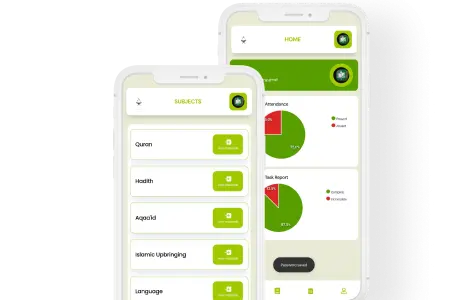
Ilmify supports Egypt’s Islamic education institutions with Arabic-interface Hifz tracking, Muraja’ah management, Ijazah workflow, and Ministry-format reporting. Explore Ilmify →




 Arabic
  English
  Malay
Malay  Urdu
Urdu