

Introduction
Islamic education in the Middle East does not operate in a governance vacuum. Across all seven countries — Saudi Arabia, UAE, Qatar, Oman, Egypt, Bahrain, and Kuwait — Awqaf authorities and Islamic Affairs Ministries play central roles in registering, funding, supervising, and in many cases directly operating the Quran memorisation centres, Tahfiz schools, and Islamic institutes that form the regional education network. Understanding Awqaf and Ministry governance of Islamic education is essential for any administrator seeking to operate within this system — whether applying for registration, accessing state funding, or meeting compliance requirements.
What Are Awqaf and Why Do They Govern Islamic Education?
Awqaf (أوقاف — singular Waqf) is the Islamic institution of endowment: property or funds donated for religious or charitable purposes in perpetuity. Historically, mosques, madrasas, libraries, and hospitals were funded through Waqf endowments. In modern Gulf states, Awqaf authorities manage vast endowment portfolios — real estate, commercial properties, investments — and distribute the income to fund Islamic services including education.
| Awqaf Function | Relevance to Islamic Education |
| Funding Quran centres | Awqaf income funds Dar al-Quran salaries, buildings, and materials |
| Registering institutions | Awqaf or Islamic Affairs Ministries issue operating licences to Quran schools |
| Setting curriculum | Government authorities prescribe or approve curricula for licensed centres |
| Certifying teachers | Teacher qualifications are verified and registered by relevant authorities |
| Organising competitions | National Quran competitions are typically run by Awqaf/Islamic Affairs Ministries |
| Mosque management | As most Quran circles operate through mosques, Awqaf control of mosques extends to education |
The Governance Structure: Country by Country
| Country | Primary Governing Body | Secondary Body | Key Function |
| Saudi Arabia | Ministry of Education (formal schools) | Ministry of Islamic Affairs (mosques, Halaqat) | Dual-ministry oversight; Haramayn under Royal Commission |
| UAE | IACAD (Dubai) / Awqaf Abu Dhabi / Sharjah Islamic Affairs | Federal Ministry of Education | Emirate-level regulation; IACAD licensing of Dubai centres |
| Qatar | Ministry of Awqaf and Islamic Affairs | Ministry of Education and Higher Education | Centralised; one ministry governs both Awqaf and Islamic Affairs |
| Oman | Ministry of Awqaf and Religious Affairs | Ministry of Education | Traditional; Ibadi fiqh influence; mosque-centred governance |
| Egypt | Ministry of Awqaf | Al-Azhar (independent authority) + Ministry of Education | Three-body system; Al-Azhar has independent constitutional authority |
| Bahrain | Ministry of Justice, Islamic Affairs, and Waqf | Ministry of Education | Small state; integrated ministry covers justice, Islamic affairs, and Waqf |
| Kuwait | Ministry of Awqaf and Islamic Affairs | Ministry of Education | Well-funded; state stipends for Huffaz through Awqaf |
Saudi Arabia: Ministry of Education and Ministry of Islamic Affairs
Saudi Arabia’s Islamic education operates under two separate ministerial structures:
Ministry of Education (وزارة التعليم):
- Oversees all formal schooling, including the Islamic studies curriculum in government schools
- Islamic studies (Quran, Tajweed, fiqh, aqeedah, Hadith, Seerah) is mandatory in all grades
- Accredits Tahfiz schools that follow the national curriculum
Ministry of Islamic Affairs, Endowments, Da’wah, and Guidance (وزارة الشؤون الإسلامية):
- Supervises mosques, mosque-based Halaqat, and Dar al-Quran
- Manages imam appointments and mosque educational programmes
- Coordinates with the Haramayn administration (Makkah and Madinah) — governed separately under the Presidency of the Two Holy Mosques
Islamic University of Madinah (الجامعة الإسلامية): Operates under direct royal patronage — an independent body with global reach for higher Islamic education.
UAE: IACAD, Awqaf Abu Dhabi, and the Maktoum Model
The UAE’s federal structure means Islamic education governance varies by emirate:
IACAD — Islamic Affairs and Charitable Activities Department (Dubai):
- Registers and licenses all Quran memorisation centres in Dubai
- The Maktoum Centres for Quran Memorisation are IACAD-operated
- Teachers must hold IACAD-approved qualifications
- Annual inspection and reporting requirements
- Website: iacad.gov.ae
Awqaf and Minors Affairs Foundation (Abu Dhabi):
- Governs mosques and Islamic education in Abu Dhabi emirate
- Runs dedicated Quran memorisation programmes through Abu Dhabi mosques
Sharjah Islamic Affairs Department:
- Governs Islamic education in Sharjah — home to the Holy Quran Academy (Majma’ al-Quran al-Karim) and Al Qasimia University
- Sharjah’s ruler, Sheikh Sultan, is personally committed to Quran education
Federal Ministry of Education:
- Sets Islamic studies curriculum for all UAE government schools
- Coordinates across emirates for national standards
Qatar: Ministry of Awqaf and Islamic Affairs
Qatar benefits from a streamlined governance structure — a single Ministry of Awqaf and Islamic Affairs governs:
- Mosques and mosque education programmes
- The national Dar al-Quran network (70+ branches)
- Tahfiz programmes and teacher salaries
- National Quran competitions
- Curriculum development for Islamic education
Qatar’s oil wealth means this ministry is very well-funded — teacher salaries are competitive, facilities are high quality, and Quran competitions carry significant prizes. The Ministry operates the Dar al-Quran directly rather than licensing private operators, creating more uniformity but less flexibility.
Oman: Ministry of Awqaf and Religious Affairs
Oman’s governance reflects its Ibadi heritage — the country follows the Ibadi madhab rather than the Sunni four (Hanbali, Shafi’i, Maliki, Hanafi), which influences its religious institutional structure:
- Ministry of Awqaf and Religious Affairs governs mosques, Quran circles, and Islamic institutes
- The Ministry of Education handles Islamic studies in government schools
- Community-based education through mosque networks remains strong
- The Ibadi tradition emphasises careful scholarship and modest institutional display — less state-driven competition culture than the Gulf peers
Egypt: Al-Azhar, Ministry of Awqaf, and Ministry of Education
Egypt has the most complex governance structure — three major bodies:
Al-Azhar (الأزهر الشريف):
- Constitutionally independent authority — not under a ministry
- Operates 11,000+ Al-Azhar Institutes (pre-university) with ~2.5 million students
- Al-Azhar University with its faculties (Kulliyyat al-Quran, Kulliyyat al-Shari’ah, etc.)
- Sets its own curriculum, awards its own degrees, trains its own teachers
Ministry of Awqaf (وزارة الأوقاف):
- Governs mosques and mosque-based Islamic education (Kuttab, Halaqat, Dar al-Quran)
- Manages Waqf properties whose income funds Islamic services
- Runs the national Dar al-Quran network alongside Al-Azhar
Ministry of Education:
- Oversees government schools — separate from Al-Azhar Institutes
- Islamic studies included in general curriculum; separate from Al-Azhar’s track
This three-body structure can create jurisdictional complexity — an administrator running a Dar al-Quran in Egypt may interact with both Al-Azhar and the Ministry of Awqaf depending on their affiliation.
Bahrain and Kuwait: State-Managed Islamic Education
Bahrain — Ministry of Justice, Islamic Affairs, and Waqf:
Bahrain integrates Islamic affairs, justice, and Waqf in a single ministry — reflecting the small state’s integrated governance approach. Quran centres require ministry registration; teacher qualifications are verified; curriculum follows ministry guidelines.
Kuwait — Ministry of Awqaf and Islamic Affairs:
Kuwait’s oil wealth means its Awqaf Ministry is generously funded. Distinctive features:
- State stipends (mukafa’at) paid to Huffaz on completion of memorisation
- Subsidised Tahfiz schools with free places for all students
- Competitive Quran prize money in national competitions
- The Kuwait Waqf is one of the largest in the Gulf — funds education extensively
What Governance Means for Quran Centre Administrators
For anyone administering a Quran centre, Tahfiz school, or Dar al-Quran in the Middle East, Awqaf/Ministry governance has direct operational implications:
| Requirement | Typical Requirement |
| Registration/licensing | Operating without registration is illegal — most countries require annual renewal |
| Teacher credentials | Teachers must hold approved qualifications (Ijazah minimum; formal degrees often required) |
| Curriculum compliance | Curriculum must follow or align with state-prescribed framework |
| Reporting | Regular reporting of student enrolment, teacher qualifications, and activity data |
| Facility standards | Physical premises must meet Ministry inspection standards |
| Financial accountability | Centres receiving state funding or Waqf income must maintain auditable accounts |
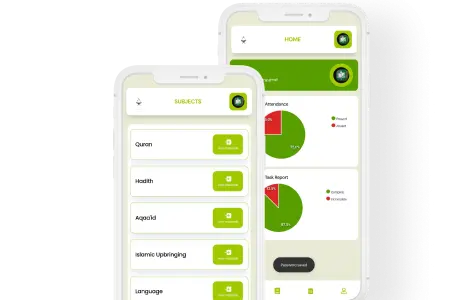
Digital systems that help centres maintain student records, teacher credentials, attendance, and progress reports are increasingly valued by administrators navigating these compliance requirements.
Frequently asked questions
Q: Is it possible to operate a Quran centre in the UAE without IACAD registration?
In Dubai, all Quran memorisation centres must be IACAD-registered. Operating without registration is a legal violation. In other emirates, the relevant authority (Awqaf Abu Dhabi, Sharjah Islamic Affairs) has equivalent requirements.
Q: Do Awqaf authorities fund private Quran centres?
In some countries (Kuwait, Qatar) state Awqaf funds flow to both government-operated and approved private centres. In others (UAE), private centres may access some Awqaf support but primarily operate on fees and donations. The specific mechanism varies by country and centre status.
Q: Is Al-Azhar independent of the Egyptian government?
Al-Azhar has constitutional independence in Egypt — its Grand Sheikh is not appointed by the President and Al-Azhar sets its own curriculum. In practice, Al-Azhar and the Egyptian government have close relations, but Al-Azhar’s academic and religious authority is formally independent.
Q: How do new regulations affect existing Quran centres?
When new regulations are issued (as happened with DGRE in Pakistan, or periodic IACAD updates in UAE), existing centres typically have a compliance window to update their registration, teacher credentials, or facilities. Staying informed of Ministry announcements is an ongoing administrative responsibility.
Q: Does governance quality differ much between GCC countries?
Yes — Qatar and UAE are the most systematically regulated, with detailed licensing requirements and consistent enforcement. Saudi Arabia has strong oversight for formal schools but lighter-touch regulation for mosque Halaqat. Oman’s governance is more community-oriented. Kuwait’s system is well-funded but less tightly regulated than Qatar or UAE.
Conclusion
The Awqaf and Ministry governance of Islamic education in the Middle East is not merely bureaucratic overhead — it is the framework that gives Islamic institutions legitimacy, access to funding, and quality assurance. For Quran centre administrators, understanding which authority regulates your institution, what registration requires, and what reporting is expected is as essential as understanding Tajweed or Hifz methodology. As these governance frameworks increasingly move toward digital compliance systems — online registration, electronic reporting, digital teacher credential databases — institutions that maintain well-organised records will be at a significant advantage.
Ilmify helps Middle Eastern Islamic education institutions meet governance requirements — maintaining auditable student records, teacher credential logs, attendance data, and progress reports in a format ready for Ministry inspection or Awqaf reporting. Explore Ilmify →




 Arabic
  English
  Malay
Malay  Urdu
Urdu